
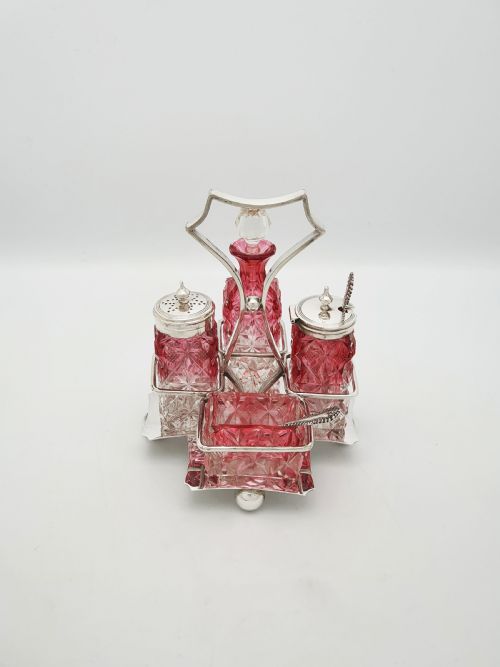


Silver Plated Pepper Caster
These silver plated pepper caster items and related cruet sets bring practical elegance to the dining table.
Silver Plated Pepper Caster
When searching for a silver plated pepper caster, you are examining tablewares designed for dispensing seasoning during meals. These items appear primarily within larger condiment and cruet sets, dating across the Victorian, Edwardian, and Georgian periods. The forms range from standalone pots to elaborate multi-bottle stands and novelty animal shapes.
Most examples you encounter on this page date from the Victorian and Edwardian eras, executed in silver plate, electroplated nickel silver, or cut glass. Bachelor sets and novelty farmyard or equestrian designs represent the more inventive domestic items from these periods. Sets often include original cut glass bottles, cranberry glass liners, or fitted oak trays.
How they were made
The foundation of these pieces relies on base metals coated with a layer of silver via electroplating or older plating techniques. Cut glass and cranberry glass components are shaped with deep facets, paired with metal mounts and pierced tops.
Novelty items utilise detailed casting methods to render farmyard animals, hunting figures, and figural subjects in metal. Fitted stands incorporate materials such as oak and velvet to hold individual bottles securely in place.
Listings feature silver-plate, cut glass, cranberry glass, and oak alongside Victorian and Edwardian periods.
What varies in quality
The distinction between standard domestic items and finer pieces lies in the crispness of the casting and the depth of the metal plating. Novelty cruets and figural pepper pots with articulated details or registration dates often display higher craftsmanship.
The integrity of the glass inserts also influences the standing of a piece, particularly where cranberry glass or heavy cut glass is employed. Complete sets retaining matching bottles and well-preserved silver plate command greater attention.
Mappin Brothers·Walker and Hall·Mappin and Webb
The Silver Plated Pepper Caster Glossary
- Silver Plate
- A metallic object formed from a base metal coated with a thin layer of silver. This technique became widespread during the nineteenth century for domestic wares.
- Cruet Set
- A matched collection of bottles or castors for holding condiments such as oil, vinegar, salt, and pepper. These sets usually sit within a metal or wooden frame.
- Electroplated Nickel Silver
- A base metal alloy of copper, nickel, and zinc coated with silver through an electrical process. This material served as a durable alternative to solid silver.
- Cranberry Glass
- A rich red-pink glass produced by adding gold chloride to the molten glass batch. It is frequently seen in Victorian tableware and cruet inserts.
- Bachelor Set
- A compact cruet or condiment set designed for single person use or smaller dining arrangements. These pieces typically feature fewer bottles than a standard family set.
Silver Plated Pepper Caster: Frequently Asked Questions
What is a silver plated pepper caster used for?
These pieces were placed on dining tables to hold and dispense ground pepper during meals. They formed part of broader condiment services alongside mustard pots and salt cellars.
Over time, they evolved from functional dining implements into decorative table accessories, often housed within larger cruet frames.
How do I date a silver plated cruet set?
Dating relies on stylistic markers, manufacturing techniques, and registration numbers stamped into the metalwork. Victorian and Edwardian pieces exhibit distinct aesthetic traits associated with those reigns.
Design motifs such as novelty animal figures or heavy cut glass help place pieces within specific nineteenth and early twentieth century decades.
What is a bachelor cruet set?
A bachelor set is a smaller version of a standard condiment stand, designed for individual dining or small households. These compact pieces include fewer bottles and take up less table space.
They share the same silver plate and glass construction methods as larger multi-bottle frames.
Are the glass inserts usually original?
Many surviving sets retain their original cut glass or cranberry glass bottles, shaped specifically to fit the metal frames. Glass components were made to match the exact dimensions of each individual holder.
Replacement glass occurs frequently due to the fragile nature of nineteenth-century tableware.