





Vintage Cocktail Glassware
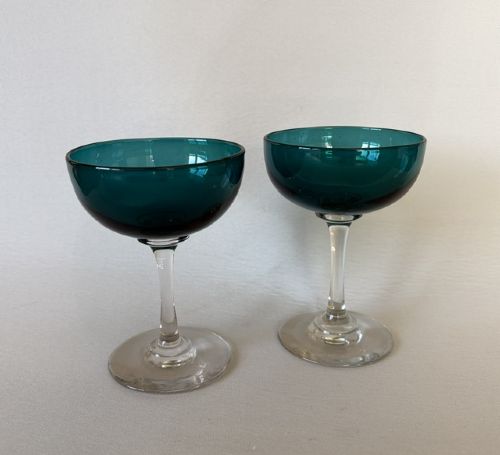
Vintage cocktail glassware brings genuine period character to a modern bar, offering everything from heavy cut crystal coupes to brightly enamelled decanter sets.
Vintage Cocktail Glassware
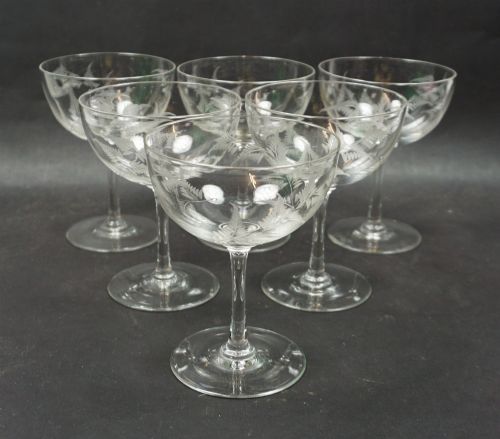
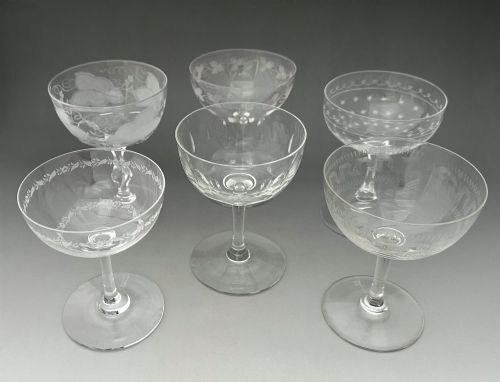
Vintage cocktail glassware encompasses functional drinking vessels and serving sets produced across the Victorian, Edwardian, and Art Deco periods. When searching for vintage cocktail glassware, buyers encounter champagne coupes, liqueur glasses, decanter sets, and complete drinks services intended for entertaining.
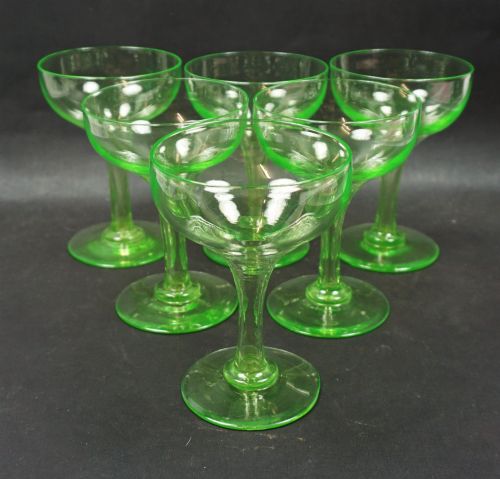
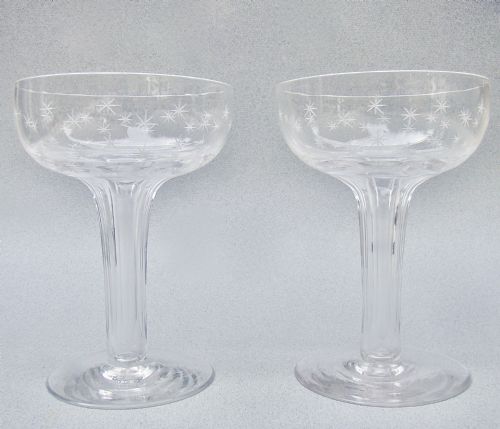
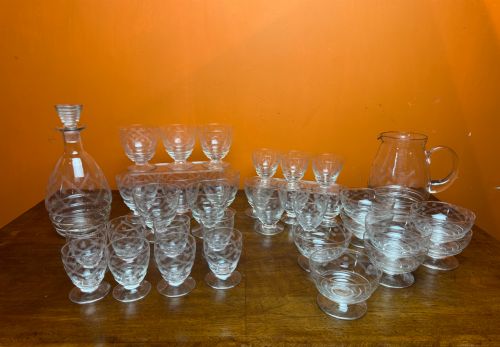
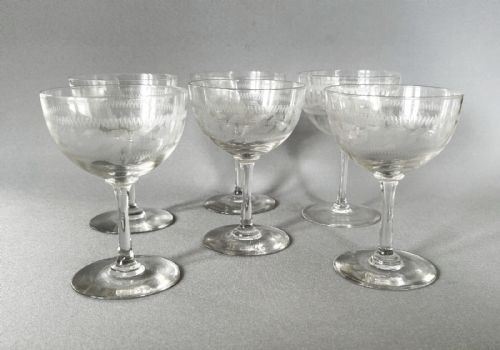
The pieces appearing on this page span diverse stylistic movements including Regency, Bohemian, and Art Deco design. Sets range from small pairs of hollow stem champagne glasses to large suites of drinking vessels numbering over thirty pieces.
Origins vary across English, French, Austrian, and Czech makers, reflecting the changing social habits of the nineteenth and twentieth centuries. The selection centres heavily on champagne glasses, decanter sets, and mixed drinks services.
How vintage cocktail glassware was made
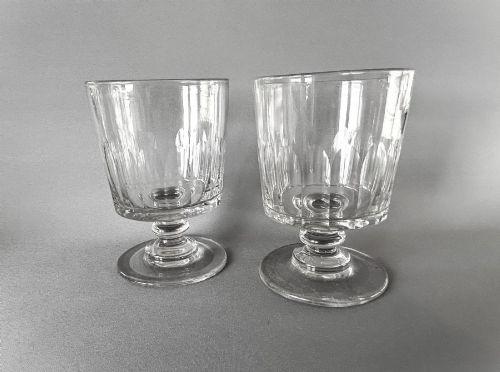
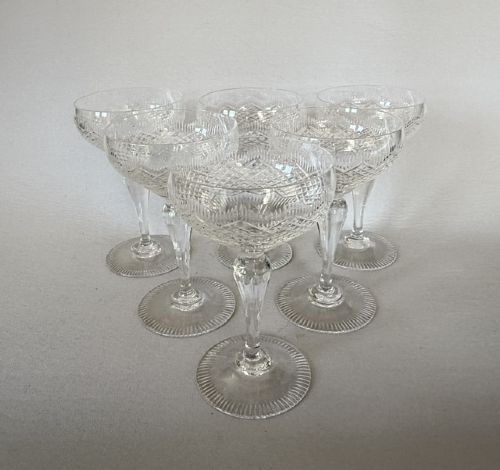
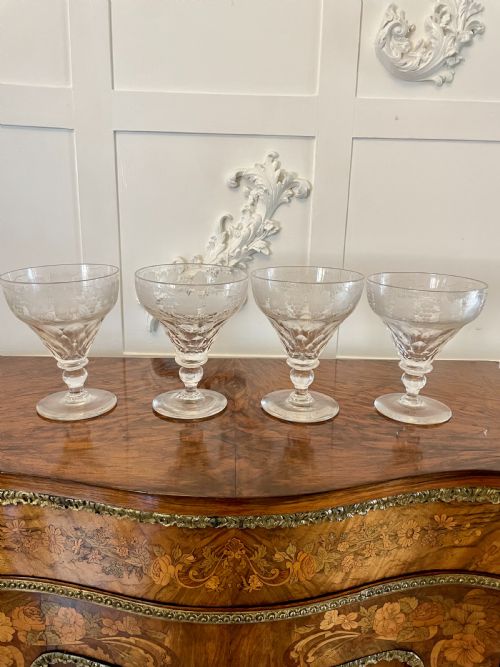
Makers utilised clear glass, lead crystal, and coloured over-crystal, shaping vessels through blowing, cutting, and moulding techniques. Heavy lead crystal provided the weight and clarity required for deep facet cutting on stems and bowls.
Decoration relied on skilled hand work, including star-etching, engraved fruit vines, Greek key patterns, and applied enamel details. Riihimaki and other European workshops employed acid-etching and surface enamelling to achieve contrasting geometric and naturalistic motifs on Art Deco forms.
Vintage Cocktail Glassware Retail Price Guide 2026
Typical asking prices for vintage cocktail glassware among the pieces listed under this phrase on Sellingantiques today, from the lower quarter to the upper quarter. They describe what is for sale here now, not the wider market.
Jazz Man decanter sets bring a lively touch of 1930s rhythm straight to the home bar.
What varies in quality
Quality rests in the crispness of the cutting, the uniformity of the glass body, and the completeness of matching sets. Substantial suites with intact decanters, trays, and matching glasses demonstrate higher workshop ambition than dispersed individual pieces.
The refinement of surface decoration distinguishes standard production from superior work. Hand-engraved fruiting vines and precise enamel application require greater artisan skill than simple moulded decoration, altering the visual presence of the glassware.
Riihimaki
The Vintage Cocktail Glassware Glossary
- Champagne coupe
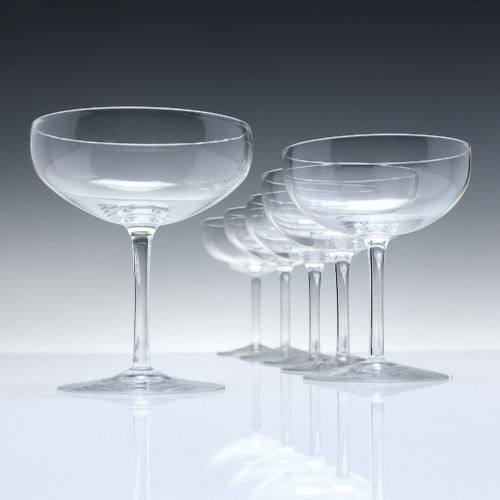
- A shallow-bowled stemmed glass designed for sparkling wine and early twentieth-century cocktails. These vessels often feature cut crystal stems or engraved decoration.
- Over-crystal
- A technique where a layer of coloured glass is cased over a clear crystal body and partially cut away to reveal the contrasting transparent layer underneath.
- Decanter set
- A matched grouping comprising a serving decanter accompanied by a set of drinking glasses, frequently presented on a matching tray for barware use.
- Star-etched
- A decorative motif cut into the surface of glass in the shape of a multi-pointed star. This technique appears frequently on Victorian hollow stem champagne glasses.
- Lead crystal
- A high-clarity glass containing metal oxide that increases weight and brilliance. It permits deeper, sharper facet cutting than standard soda-lime glass.
Vintage Cocktail Glassware: Frequently Asked Questions
How do I clean antique glassware?
Wash vintage glassware by hand in warm water using mild soap, avoiding harsh detergents and modern dishwashers.
Dry pieces promptly with a lint-free linen cloth to prevent water spots on cut crystal surfaces.
Can I use these glasses daily?
These pieces function adequately for occasional entertaining, though heavier crystal and delicate enamel work require careful handling.
Hand-blown vessels possess thinner walls than modern commercial equivalents, making them sensitive to rapid temperature changes.
How do I date a set?
Dating relies on stylistic markers such as geometric Art Deco patterns, Victorian star-etching, or Edwardian Greek key motifs.
Material composition, manufacturing seams, and the presence of lead crystal further help determine the period of origin.
What defines an Art Deco set?
Art Deco glassware typically displays angular motifs, jazzy enamel patterns, or streamlined Czech silhouettes from the 1930s.
Sets from this era often include matching decanters, trays, and cocktail glasses designed for modern domestic entertaining.