
Vintage Coat Peg Rack
A vintage coat peg rack brings practical utility and period character to an entrance hall, combining timber backboards with robust metal hooks.
Vintage Coat Peg Rack
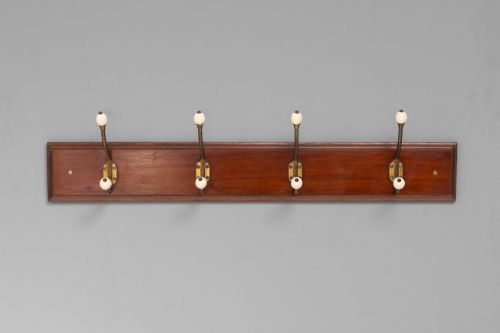
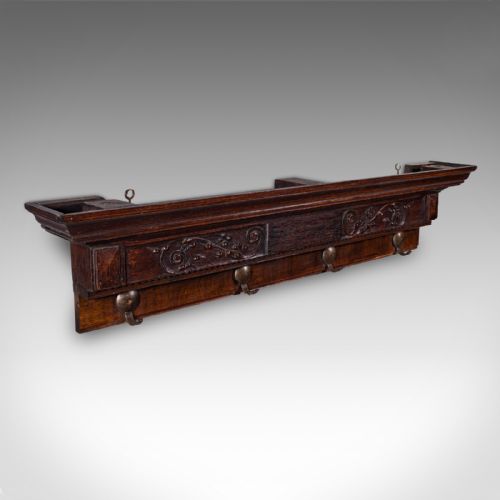
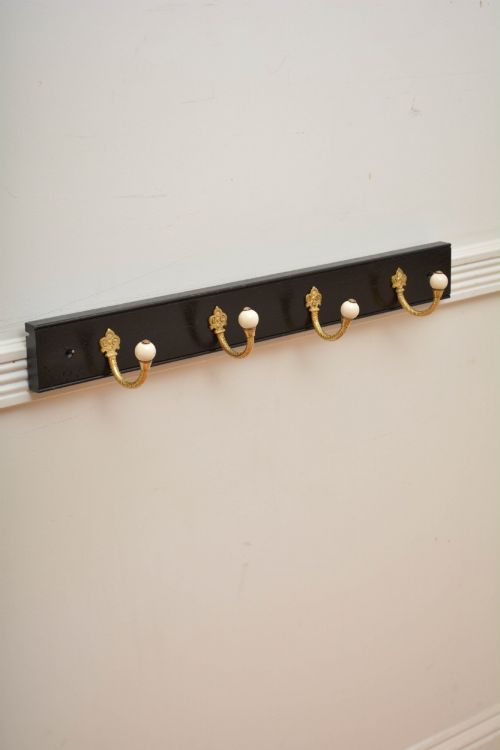
When you search for a vintage coat peg rack, you encounter wall-mounted strips and freestanding stands designed to hold outerwear in hallways and cloakrooms. The most common examples on this page are wall-mounted wooden backboards fitted with metal and ceramic hooks.
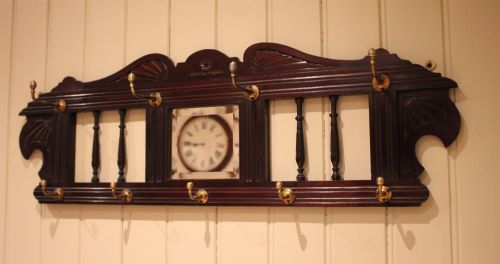
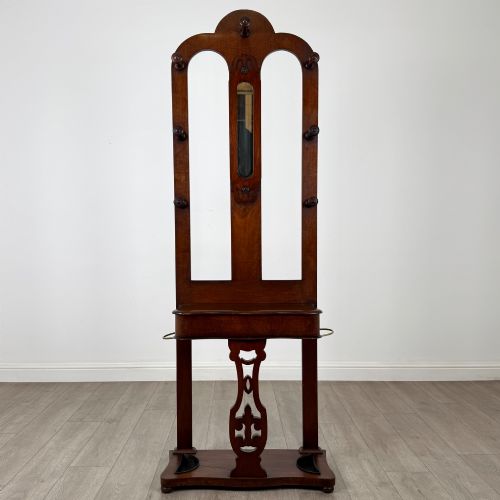
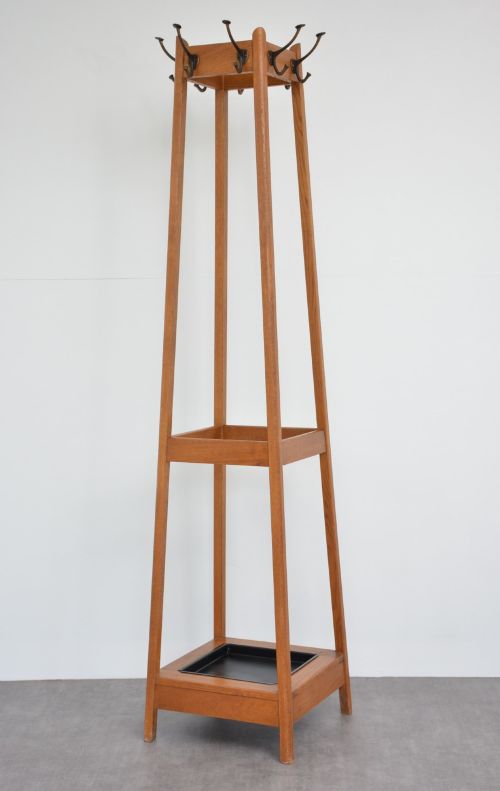
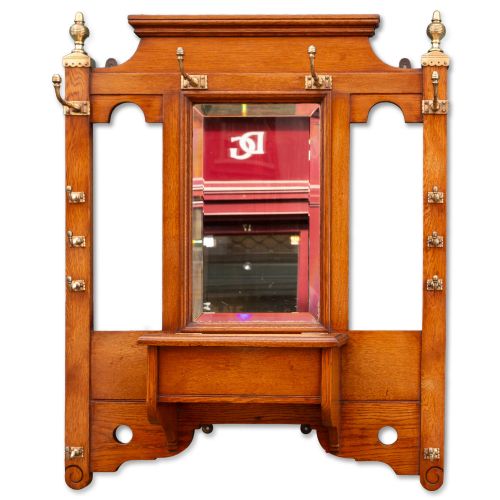
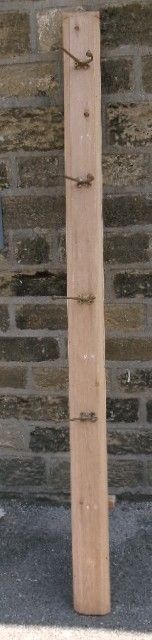
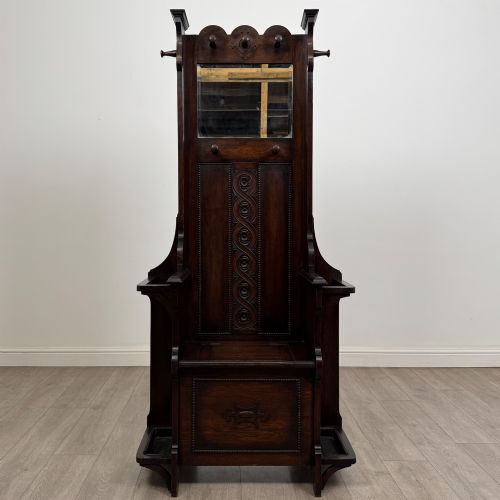
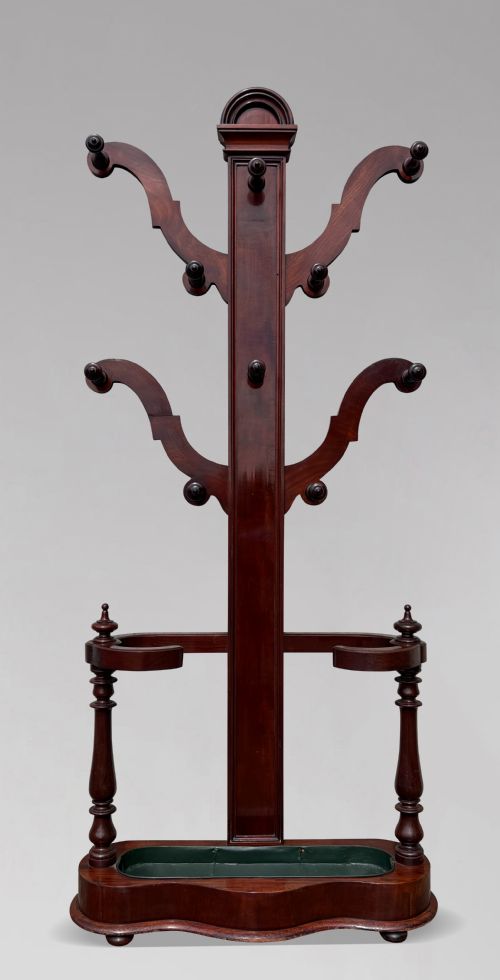
The periods represented stretch across the Victorian, Edwardian, and early twentieth centuries, alongside distinct styles such as Arts and Crafts, Gothic, and French Provincial. Formats vary from simple four-hook pine strips to elaborate mahogany hall stands featuring integrated mirrors and umbrella holders.
How they were made
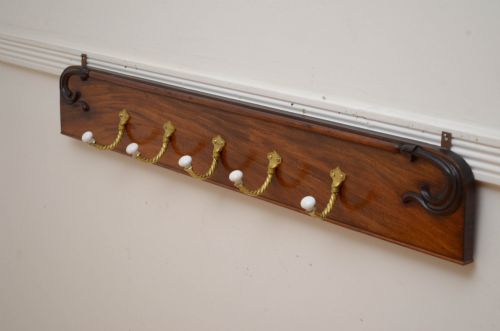
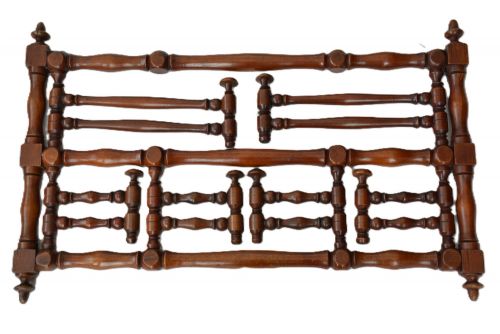
These pieces rely on solid hardwoods like oak, mahogany, walnut, and pine for their structural backboards and frames, often shaped with ebonised finishes or turned details. Backboards provide the rigid foundation required to bear the weight of heavy garments.
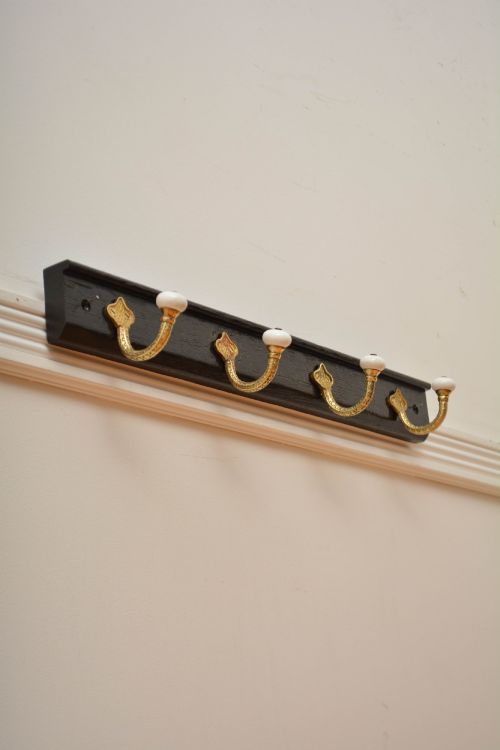
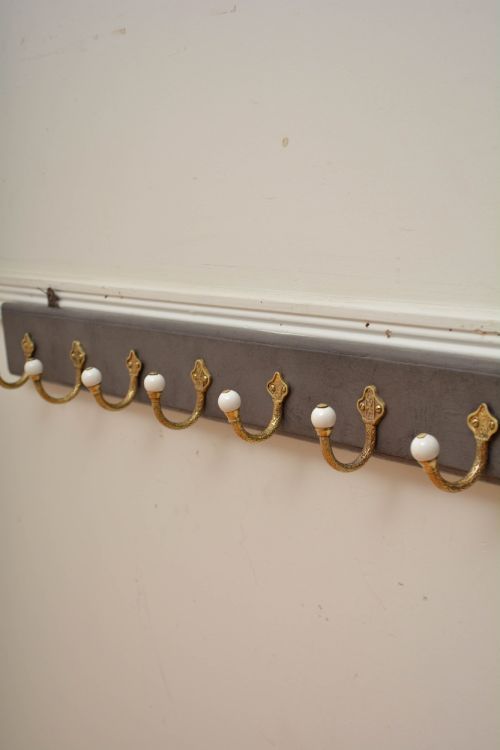
Hooks are principally cast in brass, bronze, iron, and metal alloys, frequently paired with ceramic, porcelain, or wooden knobs to protect fabrics. These metal elements are secured directly to the timber using screw fixings or integrated mounting plates.
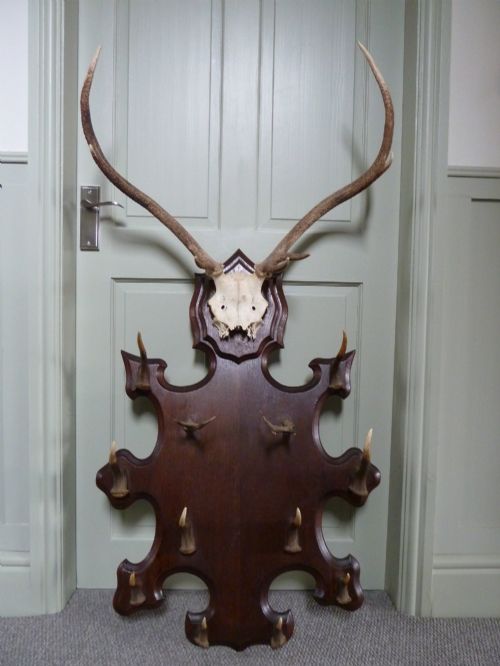
Stags horn and horseshoe mounts appear among the hook designs, bringing eccentric sporting motifs directly into the Victorian hallway.
What varies in quality
The standard of timber preparation and joinery dictates the overall integrity of the piece, distinguishing plain utility items from finer domestic furnishings. Heavier hardwoods and well-figured oaks or mahognies indicate superior workshop selection.
The artistry found in the cast metal hooks and mounting plates elevates the piece, ranging from simple utilitarian iron to chased brass and porcelain-tipped designs. Intricate casting and robust gauge metal reflect greater original manufacture expense.
The Vintage Coat Peg Rack Glossary
- Backboard
- The horizontal or vertical timber strip that anchors the hooks to the wall. It provides structural support and distributes the weight of garments.
- Bentwood
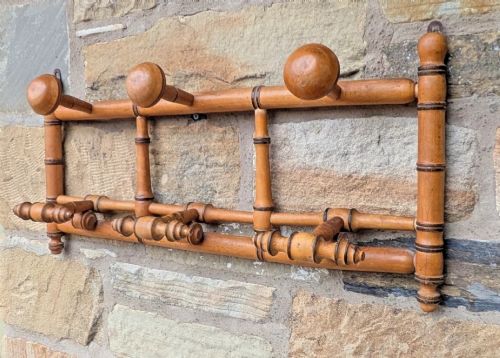
- Wood softened by steam and bent into curved shapes, commonly utilised in hat and coat stands. This technique creates lightweight yet strong frames.
- Hall Stand
- A larger hallway item combining a coat rack, mirror, and umbrella stand. These pieces often feature umbrella drip trays at the base.
- Ebonised
- Timber treated with a dark finish to imitate ebony. This treatment was widely favoured during the Victorian period for contrast against brass hooks.
- Cloakroom
- A dedicated domestic reception space for outdoor garments. Wall racks were routinely installed here for visiting guests.
Vintage Coat Peg Rack: Frequently Asked Questions
How do I hang a heavy coat rack safely?
Wall-mounted racks require secure fixing into solid masonry or direct wall studs to support the weight of heavy garments. Using appropriate screws and rawlplugs prevents the backboard from pulling away under load.
Ensure the fixing points match the pre-drilled holes or solid sections of the timber backboard to maintain structural stability over decades of daily use.
What is the difference between a coat rack and a hall stand?
A coat rack consists primarily of a mounted timber strip fitted with hooks for hanging garments and hats. It attaches directly to a wall to save floor space in narrow hallways.
By contrast, a hall stand is a larger, freestanding item that typically incorporates a central mirror, umbrella holders, and a drip tray alongside the coat hooks.
How do I identify a Victorian coat rack?
Victorian examples frequently utilise dense timbers such as mahogany, oak, or ebonised pine paired with heavy cast brass hooks and ceramic knobs. Their construction often reflects traditional joinery methods and darker finishes popular during the nineteenth century.
Details like turned wooden pegs, chased brass plates, and pegged mortise joints help distinguish pieces from later twentieth-century reproductions.
Can these racks be used in a modern kitchen or bathroom?
These pieces integrate easily into contemporary interiors for hanging kitchen linens, aprons, or bathroom towels. The combination of patinated wood and metal hardware adds texture to modern walls.
Ensure the timber is protected from excessive moisture if placed in a humid bathroom environment to preserve the original finish.