


Vintage Coat Hanger Rail
A vintage coat hanger rail sorts hallway clutter with undeniable character, offering sturdy hanging space forged from brass, iron, and timber.
Vintage Coat Hanger Rail
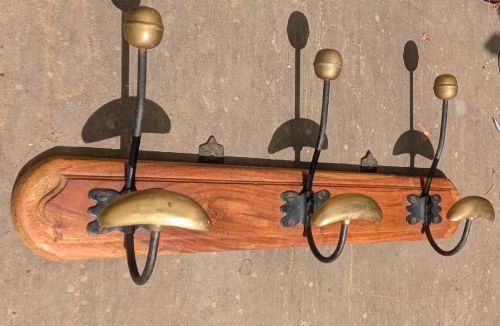
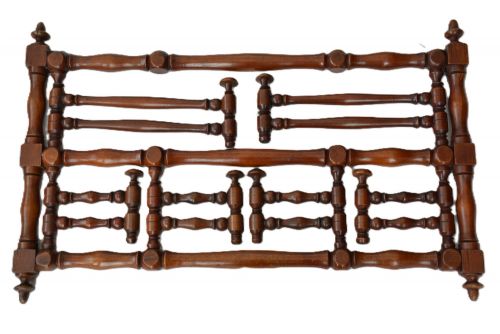
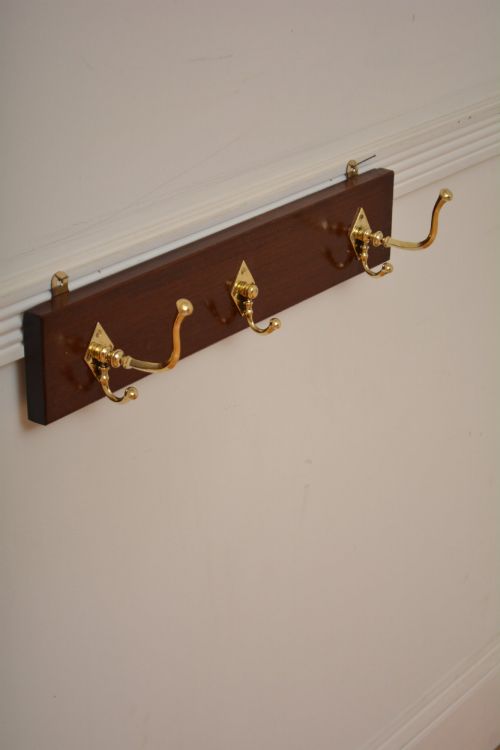
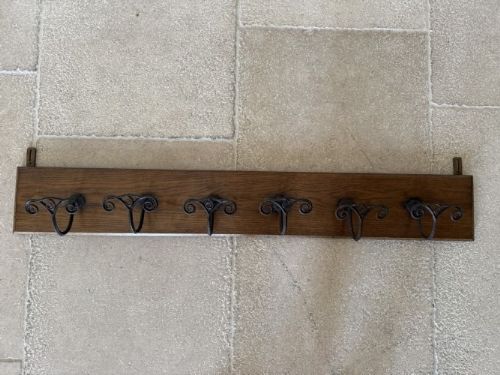
When you search for a vintage coat hanger rail, you are looking at practical wall-mounted hardware designed to hold garments, hats, and kitchen game in hallways and utility spaces. These pieces combine backboards of pine, mahogany, or oak with metal hooks made from brass, cast iron, and wrought iron.
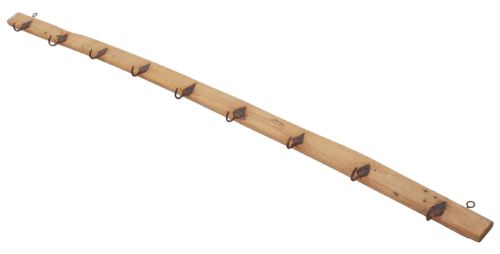
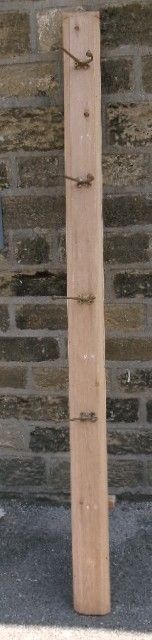
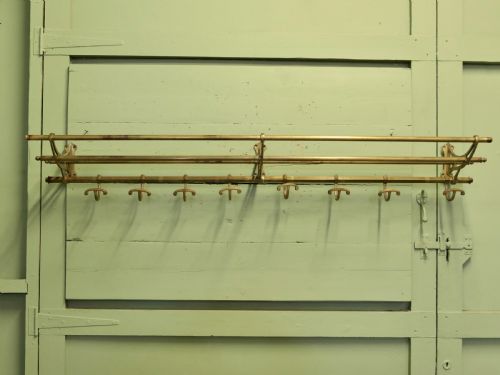
The versions you are most likely to meet on this page span the Victorian era, the Art Deco period, and the Arts and Crafts movement. They range from simple four-hook pine backboards to long French rails and heavy brass hat racks.
Originating from domestic and kitchen settings across the eighteenth, nineteenth, and early twentieth centuries, these items survive as both functional organizers and decorative wall fixtures.
How they were made
Makers constructed the backboards of these rails using solid timbers such as pine, mahogany, and oak, often shaping the wood with pegged joints or chamfered edges for wall mounting. Selected woods provided a sturdy foundation to support the weight of heavy coats and garments.
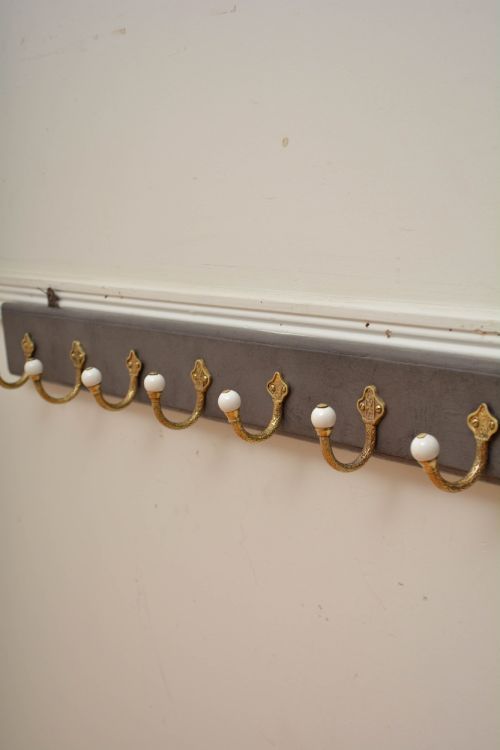
The hooks and mounting plates were cast from brass or forged from wrought iron, sometimes incorporating ceramic elements for decorative contrast. Artisans fastened these metal components directly to the timber backboards using screws or integrated backplates.
Current listings feature pieces spanning the Victorian era through the Art Deco period, utilising brass, pine, mahogany, and wrought iron.
What varies in quality
Quality rests in the weight and casting finish of the metal hooks, where finely cast mounting plates and solid brass show superior craftsmanship compared to plain or lightweight alternatives. The choice of timber also dictates standard, with dense mahogany or seasoned oak offering greater durability than basic pine.
Proportion and length set finer examples apart from standard domestic pieces, particularly in longer rails designed for hats and coats. The harmony between the backboard and the original mounting hardware defines the overall integrity of the piece.
The Vintage Coat Hanger Rail Glossary
- Backboard
- The horizontal strip of timber that supports the hooks and mounts to the wall. It is typically made from pine, oak, or mahogany.
- Game hook
- A specialised pivoting or fixed hook historically used in kitchens to hang game birds and meats. These feature heavily in early country and kitchen racks.
- Hat rack
- A combination rail featuring lower coat hooks and an upper shelf or secondary tier for hats. These are commonly associated with the early twentieth century.
- Mounting plate
- The metal flange or decorative plate attached to the wall or backboard to secure the hook. Well-cast plates add considerable decorative merit.
Vintage Coat Hanger Rail: Frequently Asked Questions
How do I mount a heavy coat rail safely?
Secure the backboard directly into wall studs or use appropriate heavy-duty wall anchors suitable for plaster or brick. Given the weight of cast iron and dense timber, proper anchoring ensures the rail safely supports heavy winter garments.
Check that the mounting holes align with your wall structure before installation to distribute the load evenly across the entire length of the rail.
What is the difference between Victorian and Art Deco rails?
Victorian rails often feature turned wooden elements, ceramic inserts, and ornate cast brass hooks with traditional decorative detailing. They lean towards classic country or formal aesthetic movement styles.
Art Deco rails utilise geometric lines, wrought iron, and streamlined brass configurations that reflect the modernist design shifts of the nineteen twenties and thirties.
Can these rails be used in modern bathrooms?
These rails function well in bathrooms for hanging towels and robes, provided the timber and metal are monitored for moisture exposure. Brass and ceramic components resist humidity well, while older pine or oak benefits from protective sealing.
Ensure adequate ventilation in the room to preserve the historic finish of the wood and prevent corrosion on iron hooks.
How do I clean old brass and timber?
Clean wooden backboards with a soft dry cloth and apply a gentle wax to nourish the grain without stripping the aged patina. Avoid harsh chemical cleaners that can damage historic finishes.
Wipe brass and iron hooks gently with a damp cloth, leaving natural tarnish undisturbed as it contributes to the historic character of the piece.