



Wooden Clothes Rail
A wooden clothes rail brings warmth and practical utility to a room, offering a sturdy frame for garments and textiles.
Wooden Clothes Rail
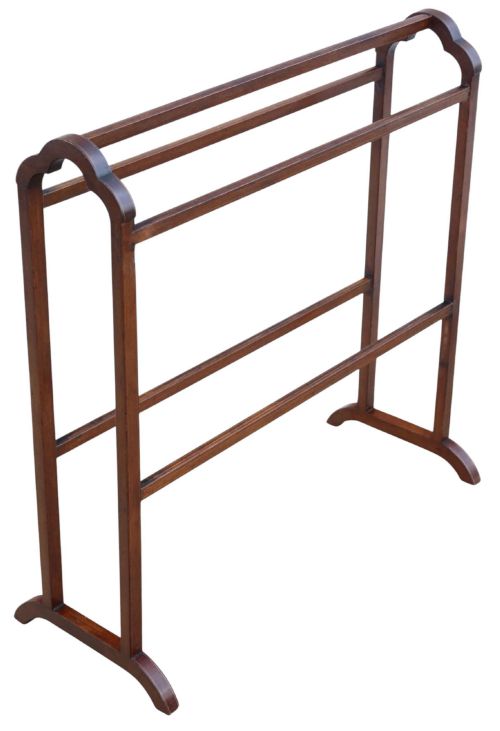
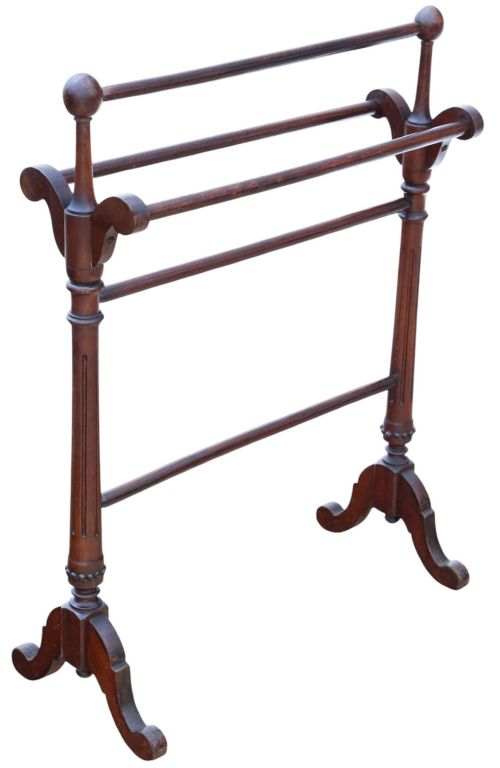
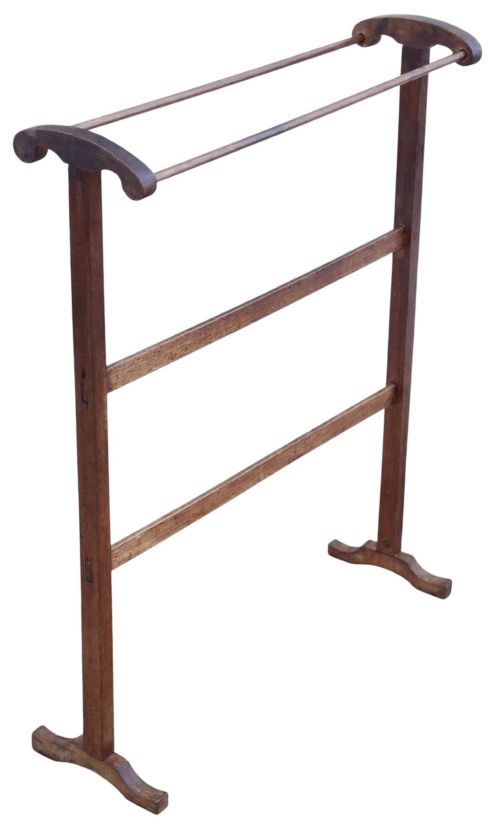
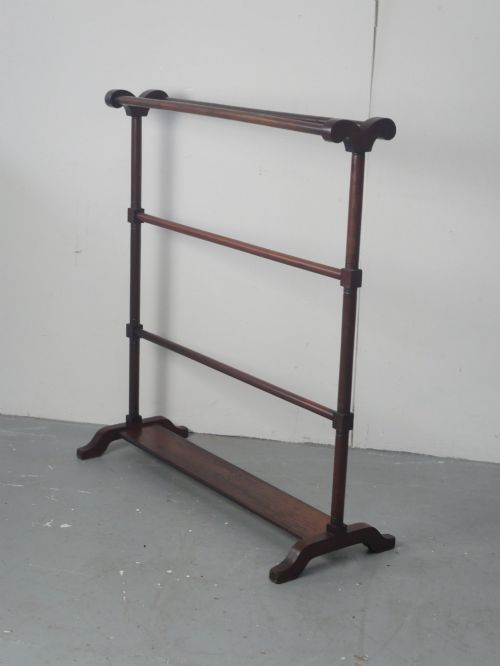
When you search for a wooden clothes rail, you encounter a variety of antique freestanding and hanging pieces designed primarily for domestic organisation and display. The selection spans utilitarian drying equipment and elegant bedroom furniture originating from the nineteenth and early twentieth centuries.
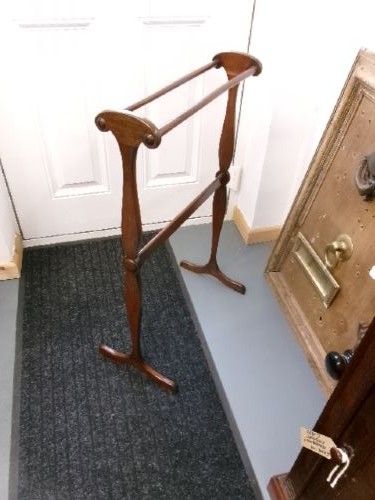
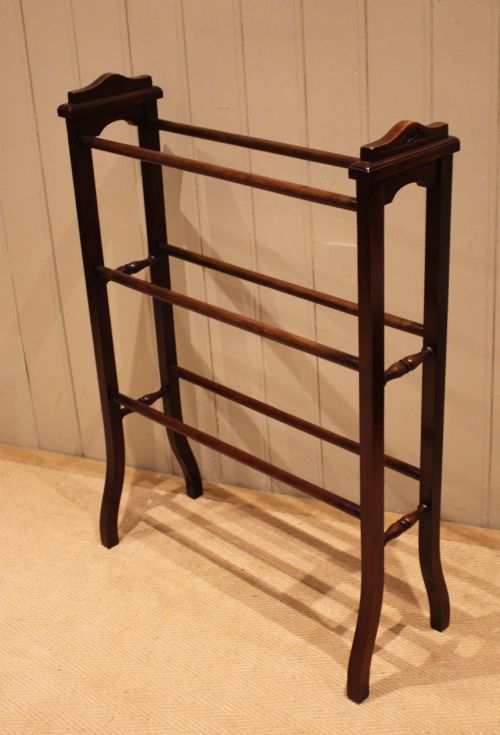
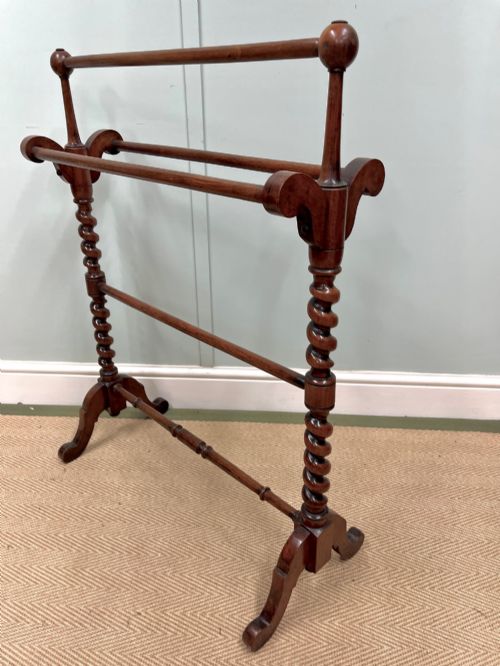
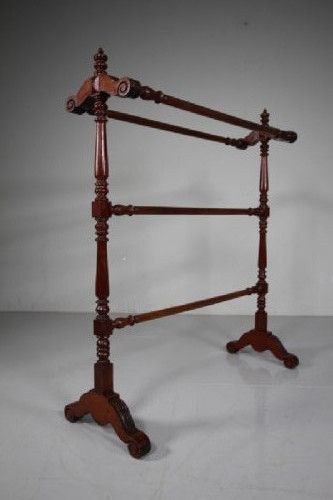
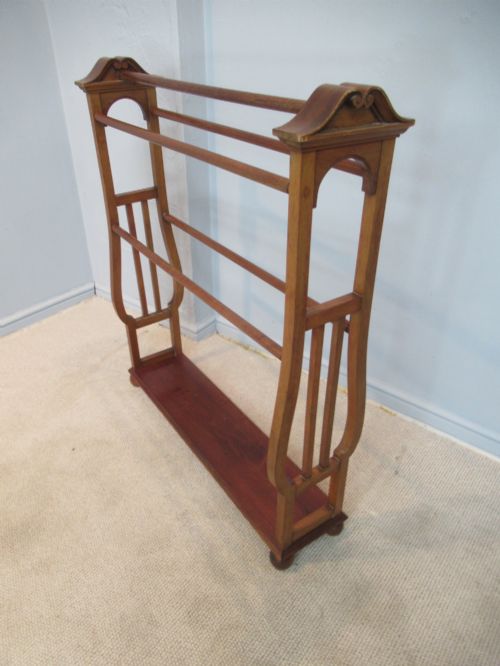
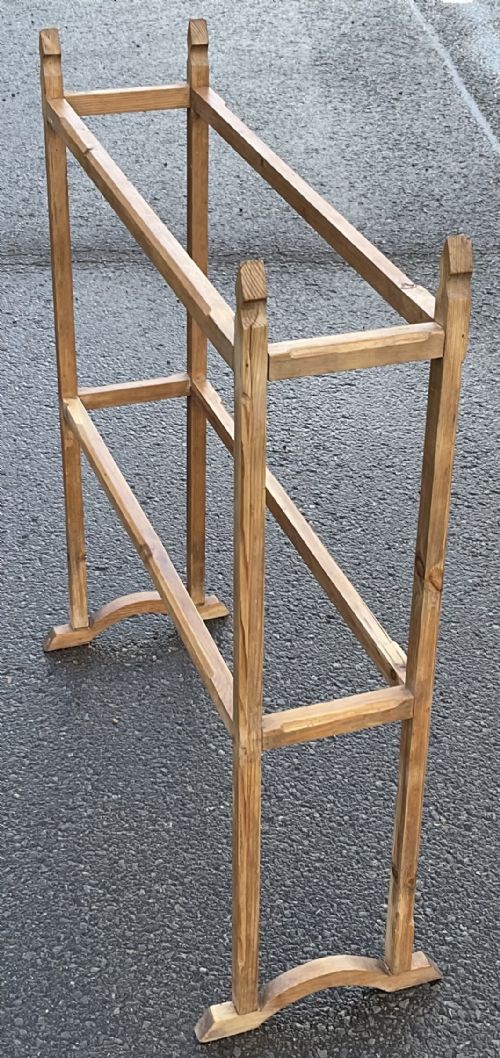
The versions met most frequently on this page are towel rail stands, clothes racks, and robe stands dating from the Victorian and Edwardian eras. These forms range from simple pine airers to large mahogany and oak folding structures with multiple rails.
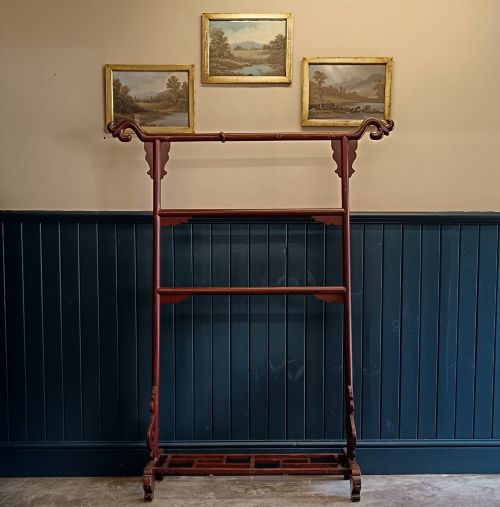
Originating styles stretch from straightforward domestic country pieces to refined Regency designs, French Arts & Crafts pine rails, and carved Chinese lacquered robe stands. Each object reflects the specific domestic requirements of its period, whether for airing laundry in a country house or holding garments in a formal bedroom.
How they were made
Cabinet makers utilised a selection of native and imported timbers, predominantly mahogany, pine, and oak, alongside walnut, elm, and hardwood. These woods were chosen for their structural strength and finished with natural grains, dark polishes, or occasionally black ebonisation and lacquer.
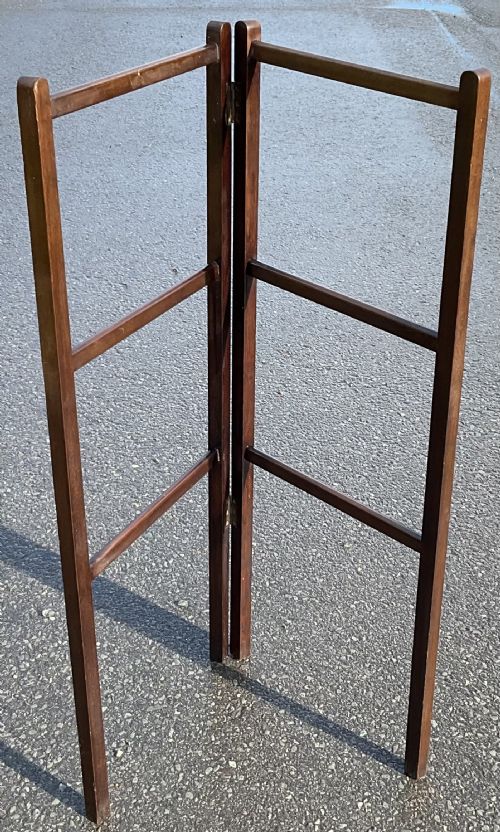
Construction techniques include traditional joinery suited to items subjected to daily movement, such as folding actions on cheval rails and multi-bar frames. Brass fittings frequently secure joints and pivots, while decorative elements incorporate inlaid marquetry, carving, and silhouette shaping.
Materials represented across the inventory include mahogany, pine, oak, walnut, elm, brass, and lacquered wood.
What varies in quality
The distinction between standard utility items and finer examples lies in the selection of timber and the sophistication of the joinery. Denser woods like mahogany and quarter-sawn oak, coupled with tight structural joints, indicate a higher grade of production intended for formal rooms rather than sculleries.
Decorative detail and proportion separate utilitarian airers from statement pieces. Items featuring inlaid woodwork, carved crests, or larger scale proportions demonstrate greater ambition by the maker, elevating a purely functional object into a considered interior furnishing.
The Wooden Clothes Rail Glossary
- Cheval rail
- A standing frame designed to swing or fold on pivots. This configuration allows multiple bars to be angled for efficient drying or display.
- Robe stand
- A tall freestanding rack used for hanging garments and robes. These pieces often feature impressive scale and decorative carving.
- Arts & Crafts
- A design movement prioritising honest construction and visible craftsmanship. Pieces from this tradition often utilise golden pine or oak.
- Ebonised
- Wood treated with a dark finish to imitate expensive ebony. This technique was popular for achieving a striking, uniform black surface on Victorian stands.
Wooden Clothes Rail: Frequently Asked Questions
How were wooden clothes rails used?
These pieces served primarily for drying towels, airing linens, and hanging garments in bedrooms, bathrooms, and dressing rooms.
Folding designs allowed households to adjust the frame for maximum airflow and compact storage when not in use.
How do I date a wooden clothes rail?
Dating relies on identifying the prevailing timber choices, joinery methods, and stylistic influences present in the piece.
Victorian and Edwardian examples often feature mahogany or pine with simple turned uprights, whereas Regency and William IV pieces display heavier proportions and classic architectural turns.
Are these rails sturdy enough for daily use?
Most antique rails were built from solid hardwoods like mahogany, oak, and elm to withstand regular domestic weight and movement.
Freestanding frames remain balanced through robust base construction, though folding hinges should be handled with care.
What is the difference between a towel rail and a robe stand?
Towel rails generally consist of horizontal bars arranged in tiers or folding panels designed for holding linens and lighter garments.
Robe stands are taller, vertical structures built specifically to accommodate hanging clothes and robes, often featuring more substantial decorative carvings.