




Vintage Coastal Art Print
A vintage coastal art print brings the salt air and rolling tides indoors through paper and ink.
Vintage Coastal Art Print
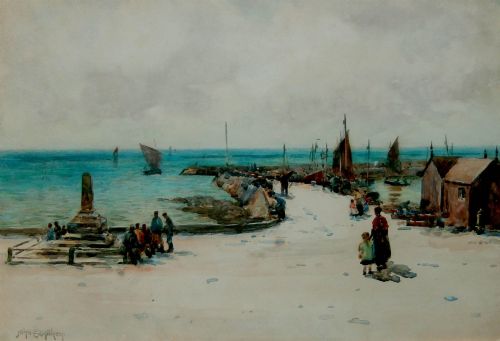
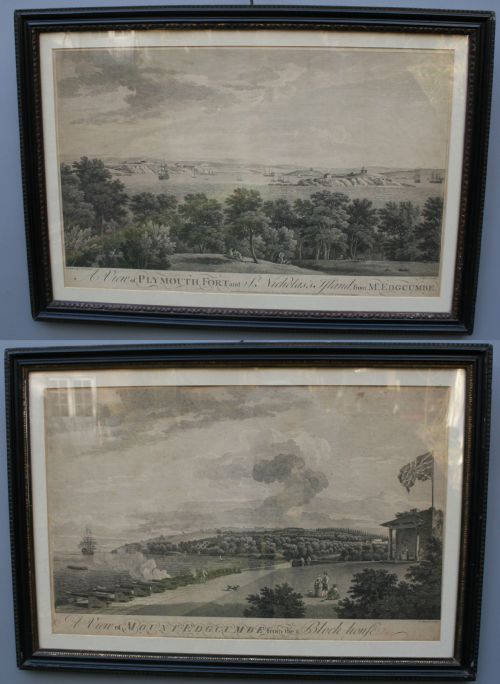
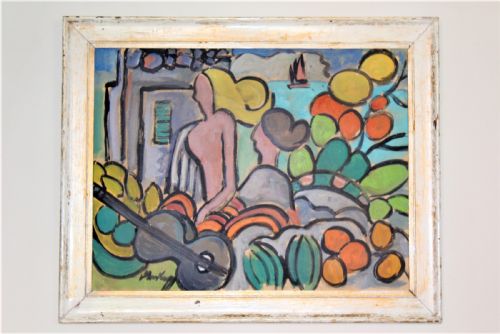
A vintage coastal art print gathers maritime scenes, marine paintings, and engraved views from the nineteenth and early twentieth centuries. These works span Edwardian watercolours, Victorian engravings, and early lithographs depicting harbours, ships, and shorelines.
Buyers meet everything from detailed topographical maps and framed prints to atmospheric watercolours and woodblock prints. The selection favours British landscapes alongside Italian landmarks and Scottish school coastal compositions.
Subjects range from beached fishing boats and North Sea havens to Cardigan Bay sailing ships and St Ives views. Works arrive framed in wood or glass, preserving paper mediums that span the Edwardian era back to Georgian and Victorian periods.
Evaluating quality and execution
Quality rests on the precision of the medium, whether the controlled hand of a watercolourist or the crisp lines of an aquatint and engraving. Finer pieces demonstrate confident handling of light on water and accurate architectural or nautical detail.
Materials contribute to overall grade, noting the preservation of paper, the richness of ink and watercolour pigments, and the integrity of gold leaf accents. Original framing and clear maker attributions elevate individual works above standard decorative posters.
Listings feature paper, wood, glass, watercolour, ink, gold leaf, gilt, and oak across Victorian, Edwardian, and mid-century modern styles.
John E. Aitken·George F Pennington·W. Collard·Jonathan Couch·William Russell Flint·Frank Wood·Norman Janes·Markey Robinson·Thomas Bush Hardy
The Vintage Coastal Art Print Glossary
- Aquatint
- An intaglio printmaking technique that produces tonal areas resembling watercolour washes. It creates subtle gradients suited to sea and sky.
- Lithography
- A planographic printing process using a stone or metal plate. It allows for the commercial reproduction of posters and maps.
- Woodblock print
- A relief printing method where ink transfers from carved wood. It yields bold lines often seen in early twentieth-century British landscapes.
- Etching
- A process where acid cuts into unprotected parts of a metal plate to hold ink. It produces fine, highly detailed linear marks on paper.
Vintage Coastal Art Print: Frequently Asked Questions
How do I date a coastal print?
Examine the paper quality, printing technique, and framing materials alongside any visible artist signatures or publication dates. Victorian and Edwardian pieces often display specific typographic styles and engraving methods characteristic of their decade.
Compare the subject matter and artistic movement, such as British Impressionism or Victorian natural history, to historical periods recorded in the work.
Where should I hang these prints?
Position these works away from direct sunlight to protect delicate paper, watercolours, and ink from fading over time. Rooms with stable humidity help preserve the wooden frames and glass-fronted mountings.
Pair marine watercolours and maps with traditional interiors or mix them into mid-century modern spaces to create a focal point.
What is an aquatint print?
An aquatint is an intaglio printmaking method that achieves tonal variations rather than simple lines. Artists use resin on a copper plate to produce grainy fields of tone resembling watercolour washes.
This technique allows printmakers to capture atmospheric coastal mists, sea spray, and dramatic sunset skies with notable depth.
Are maps considered art prints?
Engraved and lithographed maps from the nineteenth century function as both historical documents and decorative wall art. They often incorporate detailed vignettes of coastal cities, harbours, and ships alongside cartography.
Collectors value them for their precise hand-colouring, fine engraving lines, and record of maritime geography.