







Original Irish Landscape Artwork
Original irish landscape artwork captures fields, coasts and mountains through the eyes of painters working across centuries.
Original Irish Landscape Artwork
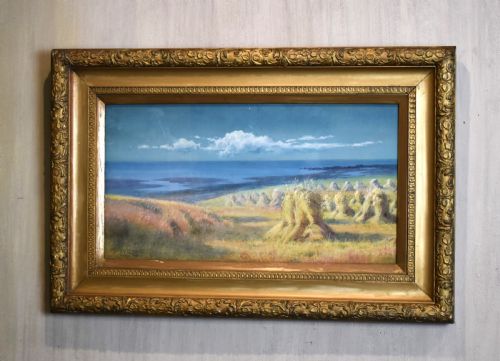
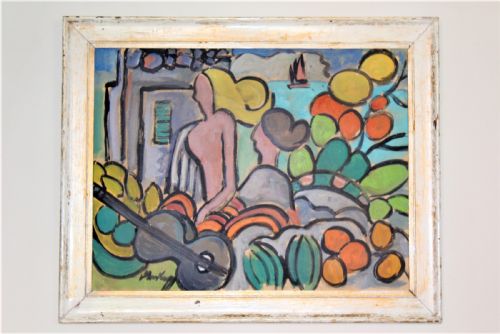
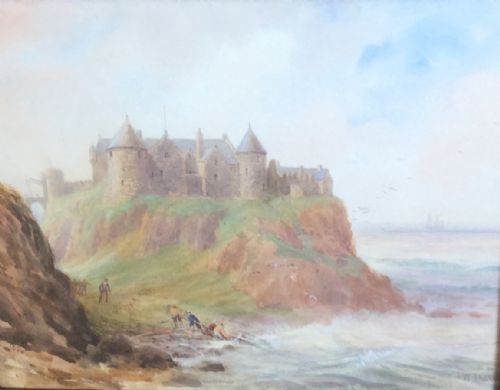
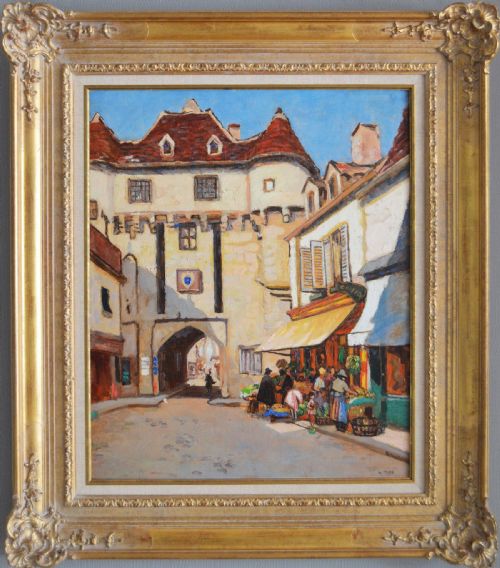
Original irish landscape artwork brings together depictions of rural scenery, coastal views and architectural studies created across multiple eras. Buyers browsing this selection encounter paintings spanning the Georgian period, the nineteenth century and mid-century modern movements. Works on this page capture specific locations such as Connemara Hills, Ballyholme Bay and Dunluce Castle.
The objects take several distinct forms, including oil paintings on canvas or board, delicate watercolours on paper and early pencil sketches. Mid-century impressionism and Victorian realism both appear among the styles represented in these listings. These pieces serve as wall art intended to bring historical topography and painterly interpretations into domestic interiors.
Materials and techniques
Makers utilised traditional mediums such as oil paint applied to canvas or wood boards, alongside watercolour pigment on paper. Watercolour washes create transparent atmospheric effects, particularly suited to coastal mists and changeable skies over hills. Oil paints provide heavier texture and depth, allowing artists to build up rich layers of pigment.
Framing often incorporates wood and gilt surrounds, protecting fragile paper supports behind glass where appropriate. Pencil sketches employ fine lines on paper to record architectural structures and topographical details before any wash or pigment is applied.
Several artists clearly braved damp Irish coastal winds to sketch castles and bays directly onto paper.
Distinctions in quality
Quality rests upon the confidence of the brushwork and the artist's ability to convey light and atmosphere within a specific topography. Stronger examples demonstrate a sure command of composition and proportion, whether rendering a sprawling coastal bay or a tightly framed ruin. Weaker pieces can exhibit hesitant lines or muddy colour mixing that obscures the sense of place.
Condition also influences the overall standing of a piece, particularly with works on paper that remain vulnerable to foxing or fading over time. Original signatures, clear attribution and period framing enhance the desirability of an artwork compared to anonymous or heavily restored examples.
Sir Thomas Newenham Dean·C Caldwell·Sidney James Beer·Sir Francis Leggatt Chantrey·Peter Ghent·Markey Robinson·Charles McAuley·Joseph William Carey·Letitia Marion Hamilton
The Original Irish Landscape Artwork Glossary
- Watercolour
- A painting method where fine pigment is suspended in a water-soluble binder and applied to paper. This technique often produces translucent washes that capture shifting weather and light.
- Oil on Canvas
- Pigment mixed with drying oil applied to a woven fabric stretched across a wooden support. This combination permits rich texture and lasting durability.
- Gilt
- A thin layer of gold leaf applied to wood or plaster frames. This finish adds a reflective border that complements the tones within the painting.
Original Irish Landscape Artwork: Frequently Asked Questions
How do I display these paintings?
Hang these works on walls away from direct sunlight to protect watercolours and oils from fading over time. Ensure proper wall fixings support the weight of wood and gilt framed pieces safely.
Pair these landscapes with complementary interior lighting to highlight the brushwork and tonal variations within the composition.
How are periods identified?
Examine the materials, framing styles and artist signatures to help determine the era of creation. Nineteenth-century works often feature specific paper watermarks or stretcher constructions typical of that time.
Cross-reference the artist's recorded working dates with stylistic clues such as mid-century impressionism or Victorian realism.
What subjects are most common?
Coastal views, hill ranges and historical ruins dominate the rural scenes depicted in these works. Locations across the Irish countryside feature prominently alongside architectural studies.
Artists frequently returned to specific bays and county views to capture changing weather and light conditions.
Are sketches different from paintings?
Sketches rely primarily on pencil or ink lines on paper to record preliminary observations and architectural structures. Paintings utilise wet mediums like oil or watercolour to build full colour and texture.
Both forms offer direct insight into the working process of the artist.