





Vintage Church Candlesticks
These vintage church candlesticks bring heavy brass, iron, and carved wood from altars into domestic rooms.
Vintage Church Candlesticks
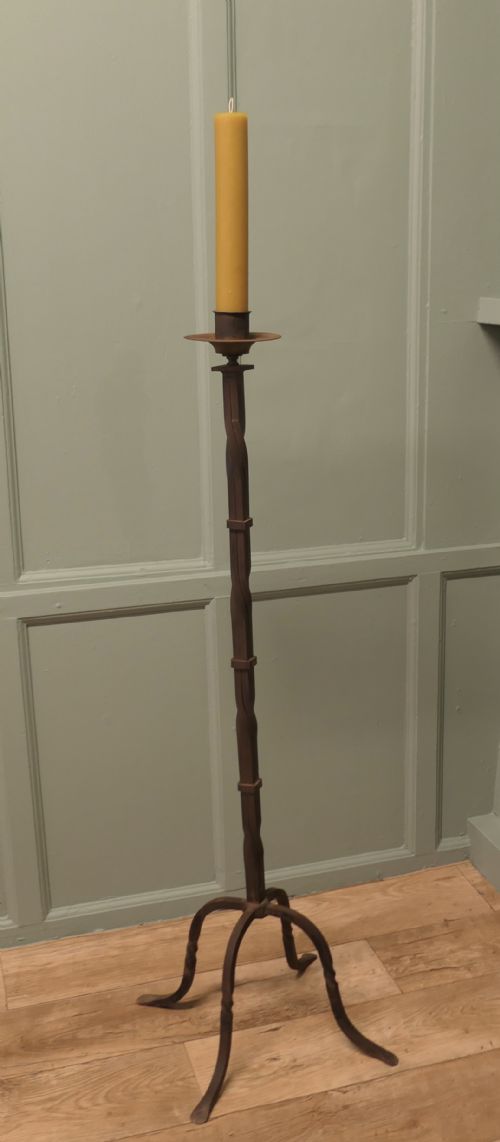
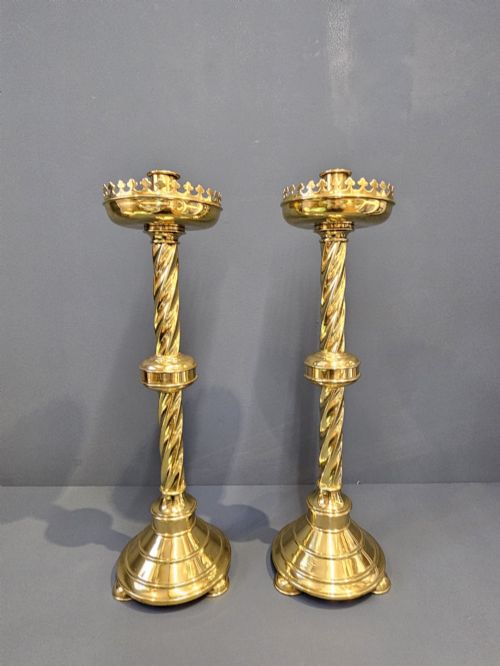
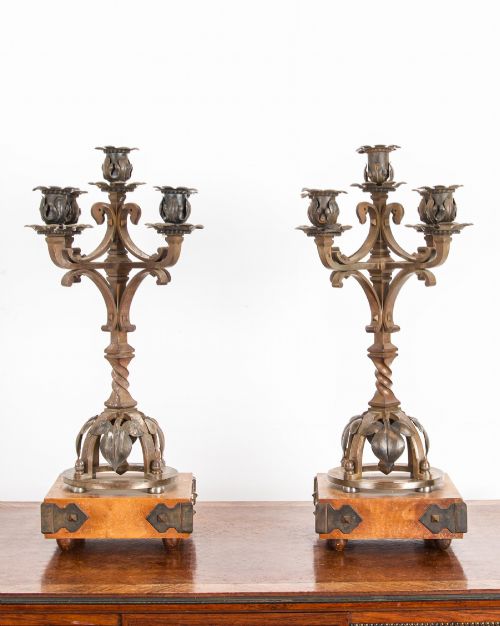
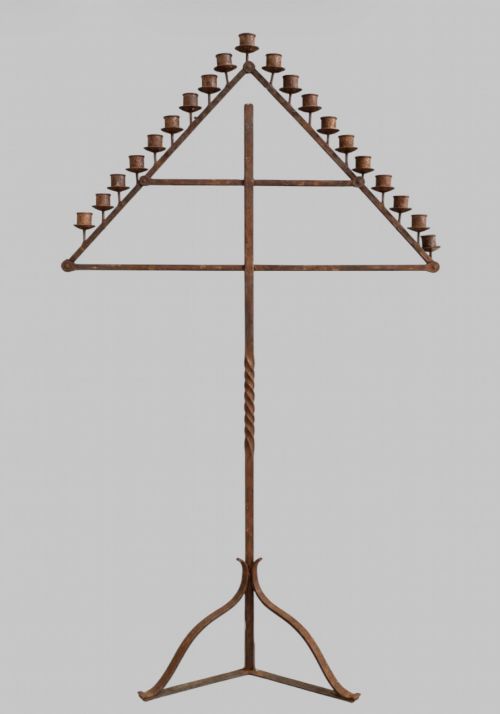
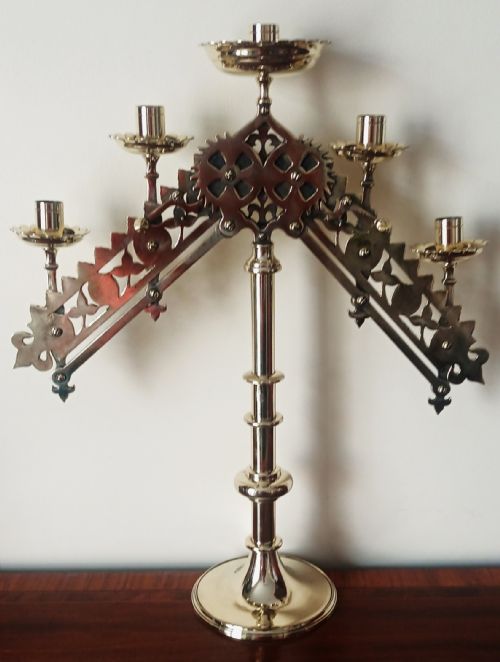
Vintage church candlesticks comprise tall floor-standing columns, altar prickets, and multi-branch candelabra sourced from ecclesiastical settings. The selections here centre heavily on nineteenth-century Victorian brass and bronze pieces alongside architectural wrought iron and carved wooden forms.
Buyers encounter pairs and matched sets spanning the nineteenth century through to the early twentieth century, including Amsterdam School designs and French ecclesiastical adaptations. Many examples originate as altar furnishings or Masonic items, frequently converted into table lamps or standing candle holders.
How they were made
Metal versions utilise cast and turned brass, heavy bronze, and forged wrought iron, often built in graduated heights or assembled with articulated branches. These materials provide the substantial weight required to support tall floor standards and heavy multi-branch candelabra safely.
Wooden alternatives employ carved wood and giltwood, sometimes finished with paint or gilding to emulate richer materials. Structural elements frequently combine brass with iron or wood, particularly in Amsterdam School and Gothic Revival designs.
Vintage Church Candlesticks Retail Price Guide 2026
Typical asking prices for vintage church candlesticks among the pieces listed under this phrase on Sellingantiques today, from the lower quarter to the upper quarter. They describe what is for sale here now, not the wider market.
Listings span the nineteenth century and early twentieth century, featuring brass, bronze, wrought iron, giltwood, and carved wood.
What varies in quality
The standard of a piece rests upon the weight of the metal casting and the crispness of the chased or turned detail. Heavy brass and solid bronze columns demonstrate superior substance compared to lighter composite alternatives.
Design ambition dictates distinction, separating standard ecclesiastical production from ornate Gothic Revival work, architectural floor pieces, and expressive Amsterdam School forms. Proportion and structural integrity determine how successfully these liturgical objects adapt to domestic interior spaces.
T Thomason And Co
The Vintage Church Candlesticks Glossary
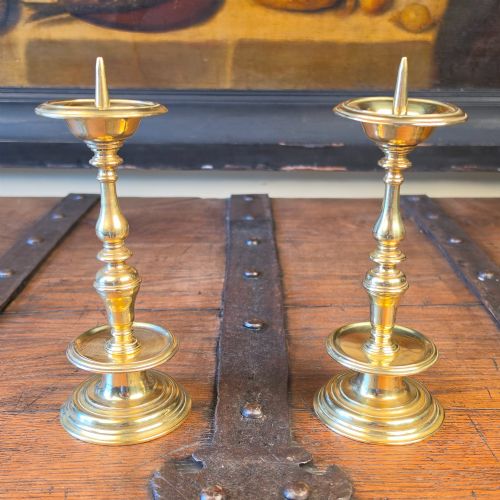
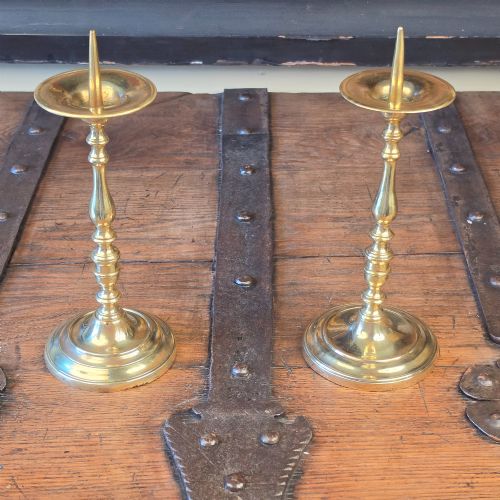
- Pricket candlestick
- A candlestick featuring a sharp metal spike at the top to secure the base of a large candle rather than a socket. This style predominates on church altars.
- Gothic Revival
- An architectural and decorative style drawing inspiration from medieval forms, featuring pointed arches and heavy ecclesiastical motifs. Pieces from this movement dominate nineteenth-century church metalwork.
- Amsterdam School
- An architectural and decorative arts movement originating in the Netherlands around nineteen hundred, characterised by expressive forms and combinations of brass and iron. It yields striking, sculptural candle holders.
- Altar lamp
- A hanging or standing ecclesiastical light fixture designed for liturgical use, frequently converted to domestic electrical use in later periods.
- Corinthian column
- A classical column form featuring ornate acanthus leaf capitals, adapted during the nineteenth century for tall decorative candlesticks.
Vintage Church Candlesticks: Frequently Asked Questions
How do I use a pricket candlestick?
A pricket candlestick requires candles with a small hollow base or a drilled centre hole that sits firmly down onto the vertical metal spike. The spike holds the wax pillar steady during burning.
Most buyers place these tall pieces on large tables, sideboards, or directly on the floor depending on the height of the shaft.
Were these originally used in churches?
These pieces originated as altar furnishings, church lighting, and ceremonial accessories before entering the secular marketplace. Their robust construction reflects the demanding environments for which they were built.
Many retain their original ecclesiastical character alongside later adaptations as table lamps or candle stands.
How do I distinguish Gothic Revival from other styles?
Gothic Revival items display architectural elements borrowed from medieval buildings, including pointed arches, quatrefoils, and heavy structural mouldings. They frequently utilise cast brass with dark patination.
By contrast, Amsterdam School pieces favour expressive, unconventional silhouettes combining brass and iron without direct medieval copyism.
Can floor candelabra be wired for electricity?
Floor candelabra and altar sticks often accommodate electrical wiring through hollow central columns without altering the exterior metalwork. Many examples arrive pre-converted into table lamps or floor lamps.
Converting a piece allows the original ecclesiastical proportions to function safely within modern domestic lighting schemes.