






Vintage Church Brass
These vintage church brass pieces bring solemn dignity and solid weight to secular rooms, shaped by centuries of ecclesiastical devotion.
Vintage Church Brass
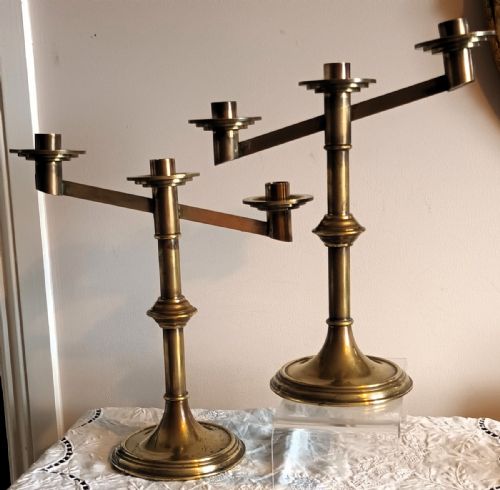
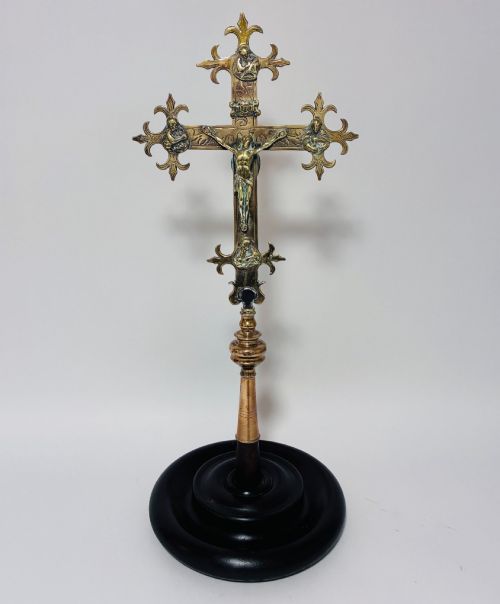
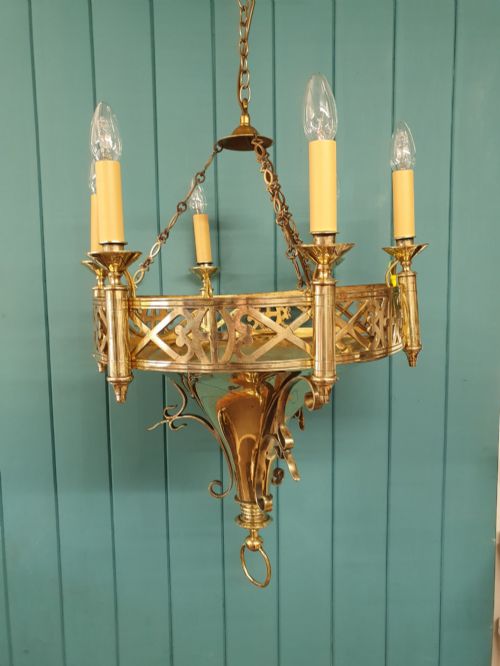
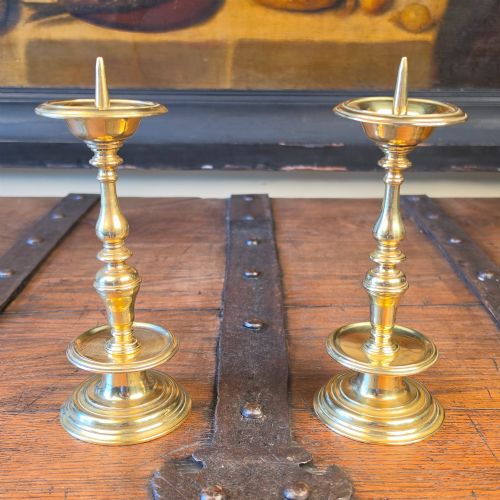
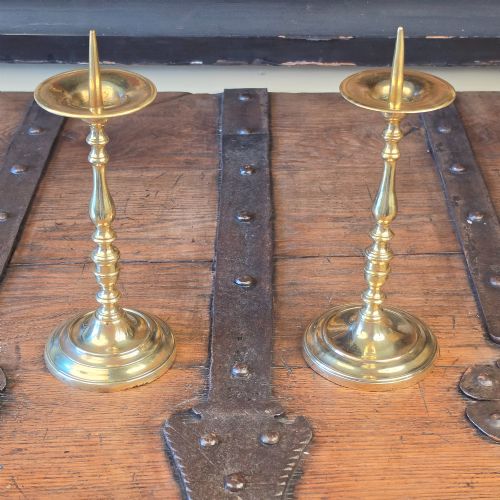
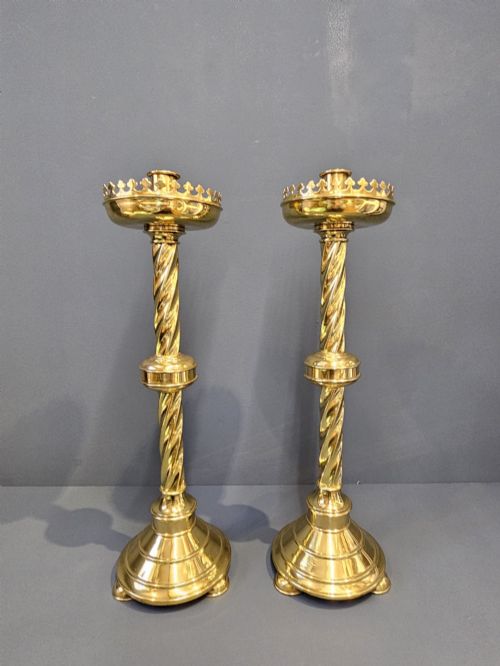
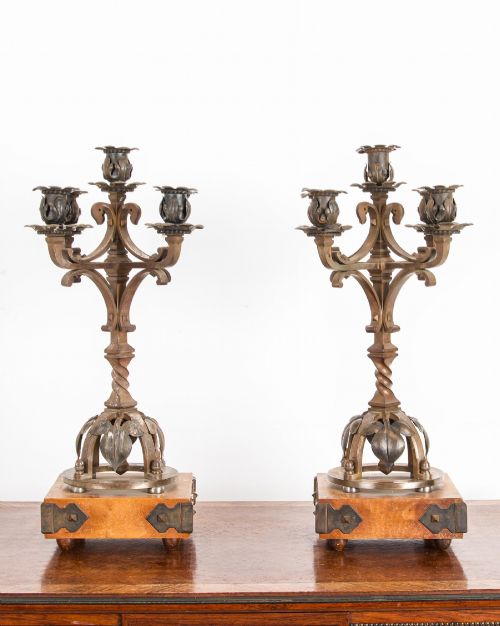
Vintage church brass encompasses liturgical metalwork spanning from the eighteenth century through the Art Deco era, with Victorian and Gothic Revival pieces dominating the selection. Buyers encounter tall altar candlesticks, pricket stands, processional crosses, and multi-branched chandeliers designed originally for solemn rituals. These items carry the heavy patination of years spent in chancels and vestries before finding their way into domestic spaces.
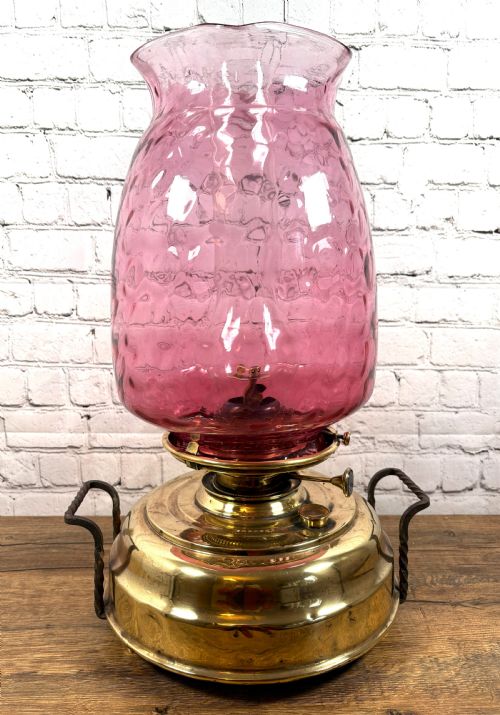
The objects take many functional forms, ranging from towering floor-standing candle holders to small table lamps and hanging bells. Alongside standard brass fittings, makers combined the metal with bronze, wrought iron, wood, and opaline glass to create varied ecclesiastical lighting and furnishings. Amsterdam School and seventeenth-century Baroque styles also appear, showing how later workshops adapted older liturgical templates for contemporary tastes.
Materials and Techniques
Foundry work relies heavily on cast and sheet brass, frequently paired with bronze elements and wrought iron frames to achieve structural stability in tall items. Artisans utilised heavy casting techniques for pricket candlesticks and multi-branch candelabra, ensuring the metal could support thick candles during long services. Gilt finishes and painted decorations occasionally enhance the brass surface, adding colour and catching the dim light of chapels.
Wood and glass play supporting roles in the construction of reading stands, pendant lights, and combination pieces, anchoring the polished metal in heavier organic frames. Carpenters joined oak to brass work on reading slopes and pew ends, while glass makers blew opaline shades for functional chapel lighting. These mixed-media constructions reflect the practical needs of nineteenth and twentieth-century ecclesiastical interiors.
Vintage Church Brass Retail Price Guide 2026
Typical asking prices for vintage church brass among the pieces listed under this phrase on Sellingantiques today, from the lower quarter to the upper quarter. They describe what is for sale here now, not the wider market.
Listings feature items spanning the eighteenth century through the twentieth century, with nineteenth-century Gothic Revival and Victorian designs dominating the selection.
Distinctions in Standard
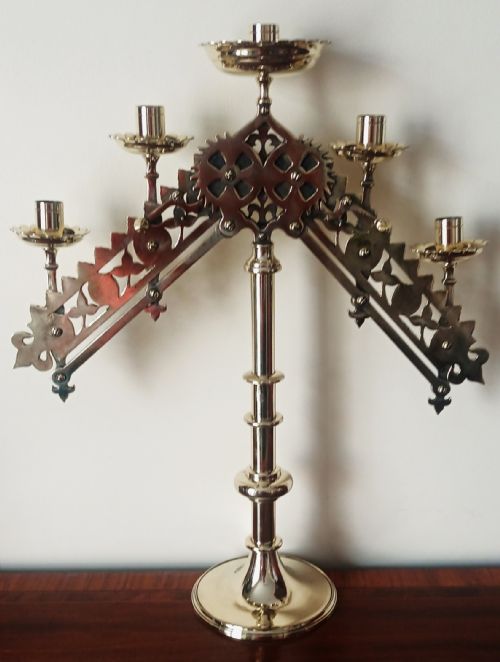
Substance and proportion separate standard production items from exceptional ecclesiastical metalwork, visible in the sheer weight of a cast stem or the balance of a five-branch candelabrum. Superior examples display crisp chasing and deliberate ornamentation along the drip pans and bases, whereas lesser pieces rely on simple turned brass without detailed articulation.
The integrity of assembly determines the longevity and visual harmony of these objects, particularly in tall floor-standing holders and multi-component chandeliers. Well-engineered joints and heavy gauge bases keep tall candlesticks upright and secure, while careless assembly leads to leaning stems and loose fittings that undermine the heavy architectural presence expected from church metalwork.
The Vintage Church Brass Glossary
- Pricket
- A sharp metal spike on a candlestick designed to skewer the base of a large candle. This traditional liturgical form keeps heavy wax tapers steady during long services.
- Processional Cross
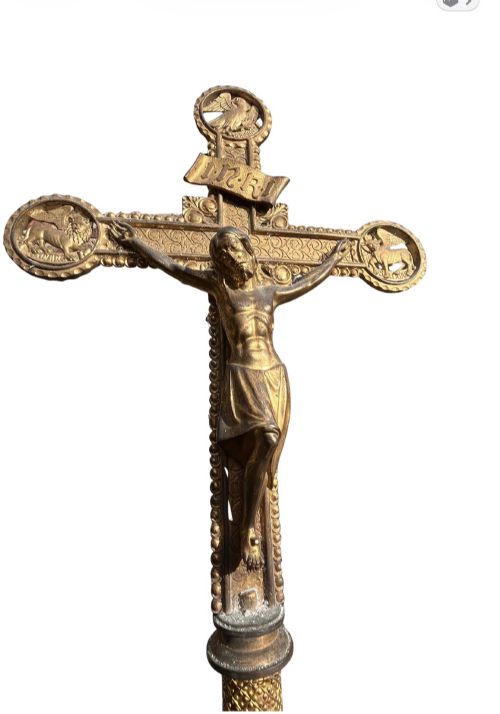
- A crucifix mounted on a long pole, carried at the head of church processions. These objects often feature detailed brass casting and iconography.
- Gothic Revival
- An architectural and decorative style drawing inspiration from medieval design. It is characterised by pointed arches, trefoils, and heavy ecclesiastical ornamentation.
- Candelabrum
- A branched candlestick holding multiple lights on a single base. These fixtures provided substantial illumination for altars and chancels before electric lighting.
- Amsterdam School
- An early twentieth-century architectural and design movement known for expressive brickwork and dynamic metal forms. Pieces in this style combine brass and iron with organic silhouettes.
Vintage Church Brass: Frequently Asked Questions
How were these brass items used?
These objects served practical and symbolic functions within church services, providing illumination, guiding processions, and marking sacred spaces. Tall pricket candlesticks held thick altar tapers, while multi-branch candelabra lit chancels and sanctuaries before the arrival of electricity.
Other items like handbells, lecterns, and reading stands assisted clergy and choir members during liturgy and daily prayer. Their robust construction ensured they could endure constant handling and frequent transport during ceremonies.
How do I live with church brass?
Placing tall candlesticks or heavy floor stands in a room introduces strong vertical lines and historical character. Their polished or patinated surfaces catch natural light effectively, working well against plain walls or dark wooden furniture.
Maintenance requires gentle dusting and occasional cleaning if you prefer a bright finish, though many collectors leave the natural oxidation untouched. Ensure heavy items have stable placement away from high-traffic areas to prevent accidental tipping.
How do I tell periods apart?
Identifying the age of church brass relies on recognising stylistic shifts between Victorian Gothic Revival, Arts and Crafts, and later twentieth-century movements. Nineteenth-century pieces often feature heavy cast ornamentation and strict medieval revival motifs, while later items may show cleaner lines influenced by Art Deco or Amsterdam School aesthetics.
Manufacturing marks, construction methods, and the type of secondary materials like iron or oak also offer clues to dating. Examining the thickness of the metal and the style of the joints helps distinguish older hand-finished work from mass-produced twentieth-century items.