




Vintage Chrome Pendant Light
These vintage chrome pendant light fixtures bring striking lines and industrial shine into modern spaces, offering genuine period character.
Vintage Chrome Pendant Light
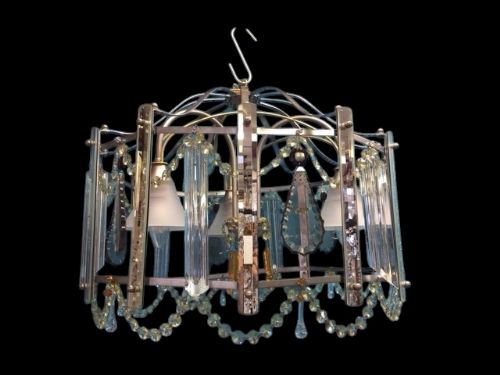
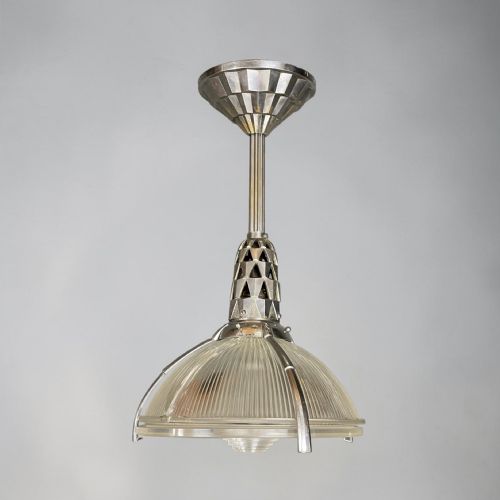
A vintage chrome pendant light sits overhead to cast direct illumination, taking forms from simple suspended shades to multi-tiered chandeliers. When exploring this selection, a buyer encounters ceiling fixtures predominantly rooted in the Art Deco period, often carrying metalwork combined with glass components.
The objects span simpler single-bulb pendants alongside larger suites of hanging lights and lanterns. Origins stretch from British designs to French workshops, reflecting the widespread embrace of metallic finishes during the interwar decades.
Materials and construction
Makers built these ceiling fixtures using sturdy ferrous bases plated in chrome or paired with steel frames. Galleries and structural supports secure shades formed from clear, frosted, opaline, or cut glass.
Designers utilised specialised glass-shaping techniques, producing reeded surfaces, clam shell contours, and fish scale textures that diffuse light across the metal hardware.
Some shades mimic the scaly armour of a fish or the ribbed shell of a clam, proving industrial designers loved the beach.
Assessing quality and craftsmanship
Superior examples demonstrate heavier gauge metalwork and crisper casting in the glass shades, where decorative elements remain sharp and well-defined. The integration between the chrome gallery and the glass component shows deliberate proportion rather than hurried assembly.
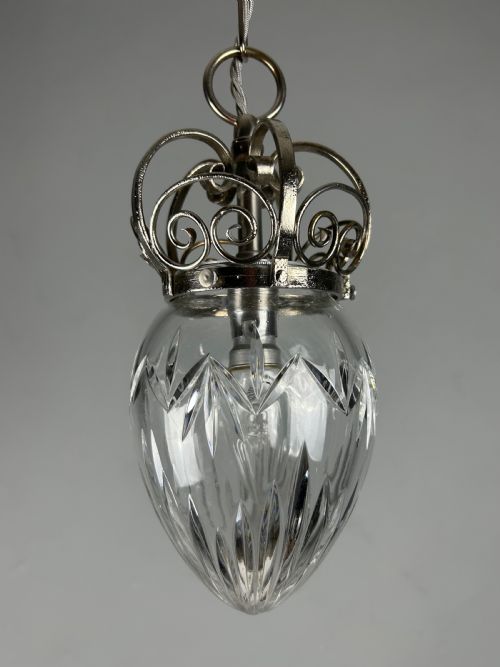
Finer pieces often feature complex shade configurations, such as cut crystal or layered opaline panels, which interact with light more successfully than plain utilitarian counterparts.
Émile-Jacques Ruhlmann
The Vintage Chrome Pendant Light Glossary
- Chrome
- A hard, corrosion-resistant metallic plating applied over steel or base metal to provide a bright, reflective finish. This surface treatment defines the primary aesthetic of interwar industrial lighting.
- Opaline Glass
- A milky, translucent white glass that diffuses bulb glare evenly across a room. It was widely utilised in domestic and commercial pendant fittings during the early twentieth century.
- Art Deco
- A design style spanning the 1920s and 1930s characterised by geometric symmetry, stylised motifs, and sleek metallic surfaces. Most pendant lights from this era exhibit these distinct structural lines.
- Gallery
- The metal collar or mount that grips the upper portion of a glass shade and connects it to the suspension rod or chain. It forms the structural core of a pendant light.
- Bag Chandelier
- A small chandelier configuration where crystal drops are suspended in a bag-like contour beneath the primary frame. These fixtures concentrate illumination through dense arrays of cut glass.
Vintage Chrome Pendant Light: Frequently Asked Questions
How do I hang a pendant light?
Suspension involves anchoring the fixture securely to the ceiling joist or a suitable electrical box while ensuring the wiring meets current safety standards. Professional installation is recommended for older or heavier metal frames.
Adjustment of the drop chain or cord allows the pendant to sit at the correct height above a table or open floor space.
What periods do these lights cover?
The available lighting primarily spans the 1920s and 1930s, capturing the height of the Art Deco movement. These decades introduced new industrial materials and streamlined decorative forms.
Design influences from this era emphasise metallic brightness and geometric glass shaping.
How do I clean chrome and glass?
Maintenance requires gentle wiping of the chrome plating with a soft, dry cloth to prevent scratching the reflective surface. Harsh chemical cleaners can damage both the metal finish and older glass.
Shades can be removed carefully and washed in warm soapy water when they require deeper cleaning.
Can I use modern LED bulbs?
Modern LED lamps fit standard sockets within these vintage fixtures, provided the physical dimensions match the interior space of the shade. They run cooler than traditional incandescent bulbs, which helps protect delicate historic components.
Selecting a warm colour temperature preserves the original aesthetic atmosphere of the interwar period.