





Vintage Chrome Light Fixture
These vintage chrome light fixtures bring clean geometric lines and industrial sparkle to modern interiors.
Vintage Chrome Light Fixture
A vintage chrome light fixture delivers functional illumination defined by the sleek metallic finishes and geometric geometry characteristic of the early twentieth century. When searching for a vintage chrome light fixture, collectors and designers encounter a range of wall lights, pendants, and flush mounts dating primarily from the 1920s and 1930s.
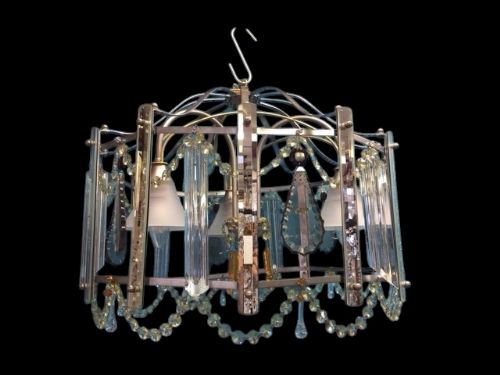
The objects appearing here span multiple forms including trumpet sconces, bag chandeliers, and industrial lanterns. Pieces often incorporate structural metalwork paired with moulded glass elements to diffuse light effectively across living spaces.
French design heavily influences the selection, alongside British Edwardian survivals and streamlined modernist interpretations. These fittings suit domestic settings requiring authentic period character combined with reflective metallic surfaces.
How they were made
Manufacturers built these lights using electroplated chrome over base metals, combined with cast, pressed, or cut glass shades. Structural components relied on steel, brass, and occasional accents of early plastics such as bakelite or catalin.
Glass elements were mouth-blown, opaline, or pressed into satin and frosted finishes to soften the industrial glare of early electric bulbs. Metalwork was spun, stamped, or cast before receiving a protective and reflective chrome or nickel plating.
Galleries and mounting hardware were engineered to hold heavy glass shades securely while exposing minimal fixings. Wiring and internal components varied by decade, reflecting the electrical standards of the period.
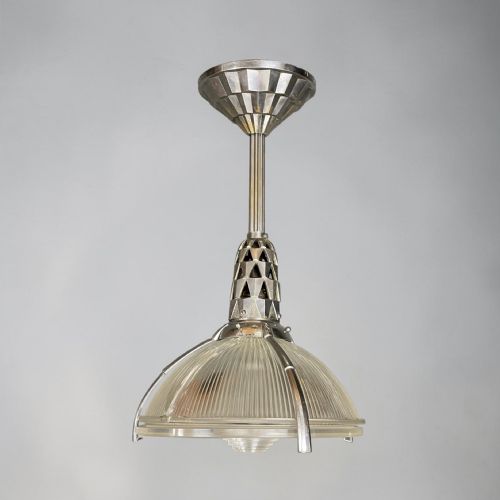
Some pendant lights incorporate fish scale glass patterns, bringing an aquatic texture to industrial interiors.
What varies in quality
Quality in these lighting pieces depends upon the weight of the metal frame and the clarity or depth of the glasswork. Substantial cast bronze or steel chassis plated in thick chrome outperform lighter stamped sheet metal versions.
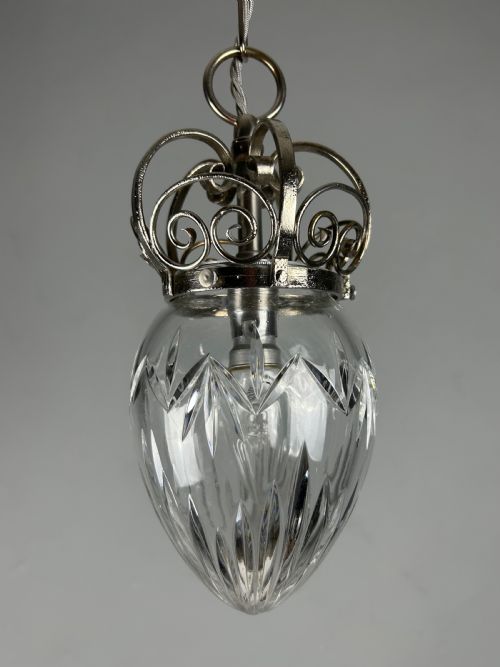
The integrity of the glass component dictates overall desirability, with heavy pressed satin glass and hand-cut crystal holding higher aesthetic value than thin moulded panes. Original matched sets and intact period galleries elevate a piece beyond standard utilitarian examples.
Émile-Jacques Ruhlmann
The Vintage Chrome Light Fixture Glossary
- Chrome
- An electroplated coating of chromium applied to metal to provide a bright, corrosion-resistant finish. This plating gives these lights their characteristic mirror-like shine.
- Opaline glass
- A milky, semi-translucent glass that diffuses light softly across a room. It appears frequently in period pendants and shades.
- Sconce
- A wall-mounted lighting fixture designed to direct illumination upwards or outwards. They often occur in matching pairs for balanced interior schemes.
- Bakelite
- An early form of thermosetting phenol formaldehyde plastic used for switches, collars, and decorative accents. Its dark, lustrous finish contrasts sharply with bright chrome.
- Gallery
- The metal ring or collar that holds a glass shade in place on a pendant or wall light. Original galleries often bear maker marks or specific ventilation slots.
Vintage Chrome Light Fixture: Frequently Asked Questions
How do I wire a vintage light?
Rewiring requires removing old perished cloth or rubber insulation and replacing it with modern braided flex that meets current electrical safety standards. A qualified electrician should handle the installation to ensure the metal chassis is properly earthed.
Many surviving fixtures have already been updated with modern internal wiring while retaining their external period galleries and holders.
Are these lights suitable for bathrooms?
Most vintage wall lights and pendants lack modern Ingress Protection ratings required for wet zones. They perform best in dry living rooms, hallways, or bedrooms where moisture poses no risk to the metal plating.
Consult an electrician regarding local building regulations before placing unsealed period light fittings near water sources.
How do I clean chrome and glass?
Clean chrome surfaces with a soft microfibre cloth and warm soapy water to avoid scratching the historical plating. Avoid harsh chemical abrasives that can strip the metallic layer.
Glass shades can be removed and washed independently in mild detergent before being dried thoroughly and resecured into their galleries.
How do I spot an original piece?
Original pieces display manufacturing methods typical of the interwar period, such as heavier gauge metals, older screw thread sizes, and hand-finished glass components. Look for signs of honest age, including minor patina on the chrome and traditional wiring channels.
Reproductions often feature modern lightweight aluminium alloys and uniform machine finishes that lack the depth of vintage examples.