


Geometric Pendant Lighting
Geometric pendant lighting brings angular form and striking period character to a room through distinctive twentieth-century design.
Geometric Pendant Lighting
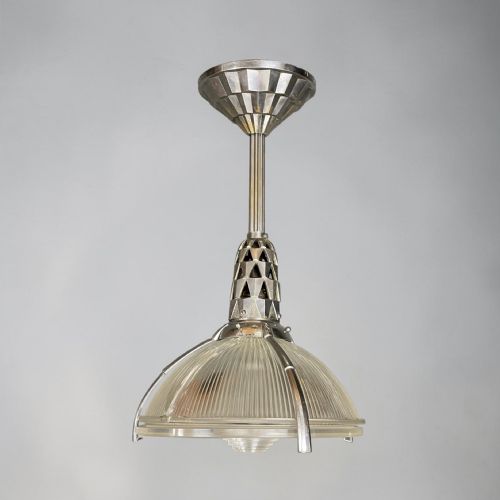
Geometric pendant lighting covers ceiling fixtures, hall lanterns, and chandeliers created during the nineteen-twenties and nineteen-thirties. These pieces take the form of star lanterns, plafonniers, and multi-sided hanging lights that define a space with clean lines.
Buyers browsing this selection will frequently encounter Art Deco ceiling lamps alongside early twentieth-century hanging lanterns. The forms range from simple opaque glass shades to elaborate metal-framed star shapes designed to cast patterned shadows.
The category also encompasses Arts and Crafts hall lanterns and twenty-first-century interpretations of period designs. These architectural fixtures provide overhead illumination while serving as bold sculptural elements in an interior.
How geometric pendant lighting was made
Makers constructed these fixtures using robust metal frameworks of brass, copper, chrome, steel, nickel-plated metal, and bronze to hold the glass securely. These metals were shaped and joined to create sharp angles and symmetrical frames.
Glazing involved frosted glass, bevelled glass, opaque glass, and rock crystal panels fitted tightly into the metal structures. Some designs utilised cast or wrought iron to support heavy glass bowls and geometric panels.
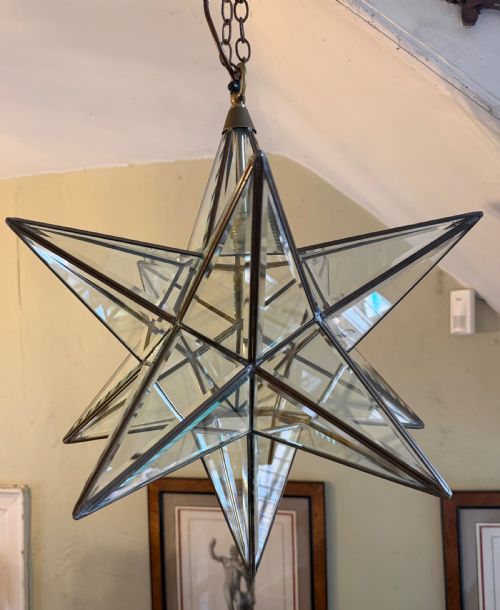
Several fixtures take the form of twelve-point Moravian stars, ready to cast celestial shadows across your hallway ceiling.
What varies in quality in geometric pendant lighting
Quality depends heavily on the precision of the metalwork and the clarity of the glass panels. Finer examples display tight joints, substantial metal gauges, and carefully bevelled or uniform frosted glass.
The integrity of the construction distinguishes standard production from superior pieces. Stronger frames support complex multi-point star designs and heavy chandeliers without sagging or misaligning over time.
Émile-Jacques Ruhlmann
The Geometric Pendant Lighting Glossary
- Plafonnier
- A ceiling light that sits flush or close to the ceiling surface rather than hanging low on a long drop. These fixtures direct light downwards into the room.
- Hall lantern
- An enclosed hanging light designed specifically for narrow entrance spaces and corridors. They often feature protective glass panels set within a metal cage.
- Bevelled glass
- Glass panes with edges cut at an angle to catch and refract light. This technique adds depth and sparkle to the fixture.
- Frosted glass
- Glass treated to have a diffusing surface that softens the glare from internal bulbs. It provides an even, warm glow across the room.
Geometric Pendant Lighting: Frequently Asked Questions
How do I hang a geometric pendant light?
These fixtures suspend from ceilings using chains, rods, or cords attached to a central canopy. Ensure the weight of the metal and glass is supported safely by the ceiling joist.
Adjust the height so the bottom of the fixture clears head height in walkways or sits appropriately above furniture like dining tables.
What rooms suit geometric pendant lighting?
Hallways, entryways, and high-ceilinged rooms benefit greatly from the architectural presence of these hanging lanterns. They also serve as striking focal points above stairwells and in living areas.
Smaller plafonniers work well in compact spaces where low-hanging fixtures are impractical.
How do I clean frosted glass shades?
Remove dust gently with a soft dry cloth before wiping the glass with a mild soapy solution. Avoid harsh abrasives that might damage the surface texture.
Dry the glass thoroughly with a lint-free cloth to prevent water spots before reassembling or rehanging the fixture.
How do I identify an Art Deco pendant?
Art Deco pendants feature symmetrical geometric patterns, stepped motifs, and streamlined industrial materials like chrome and nickel. Look for clean angles and disciplined ornamentation.
These pieces typically date from the nineteen-twenties and thirties, pairing frosted or opaque glass with polished metal frameworks.