


1930s Pendant Fixture
A 1930s pendant fixture brings geometric elegance and period warmth to a room, offering striking illumination through architectural glass and polished metal.
1930s Pendant Fixture
A 1930s pendant fixture embodies the distinctive design vocabulary of the interwar years, primarily drawing from Art Deco aesthetics. These ceiling-hung pieces serve as both functional illumination and sculptural centrepieces within a room.
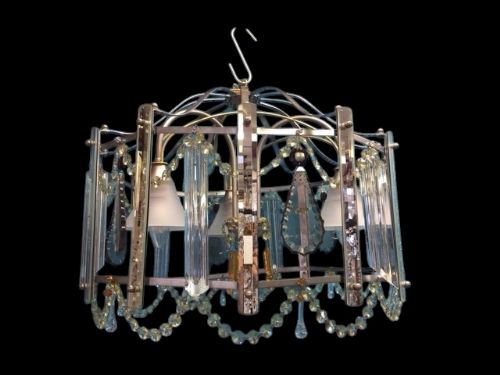
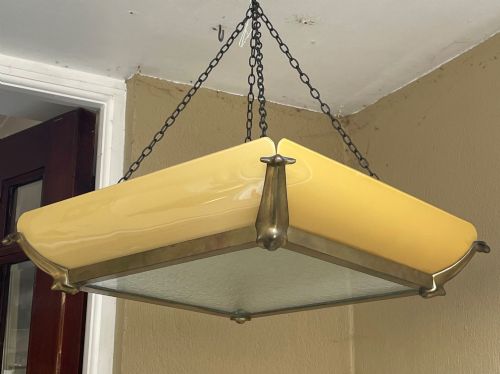
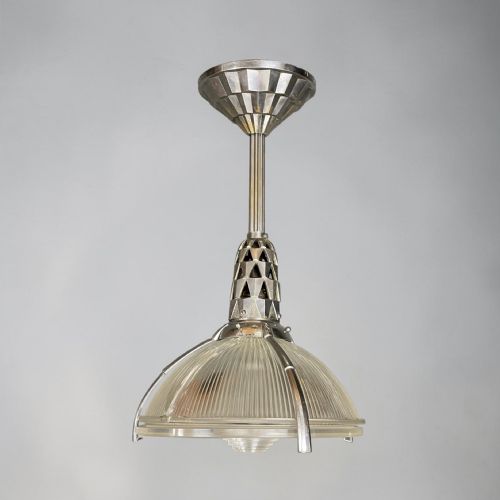
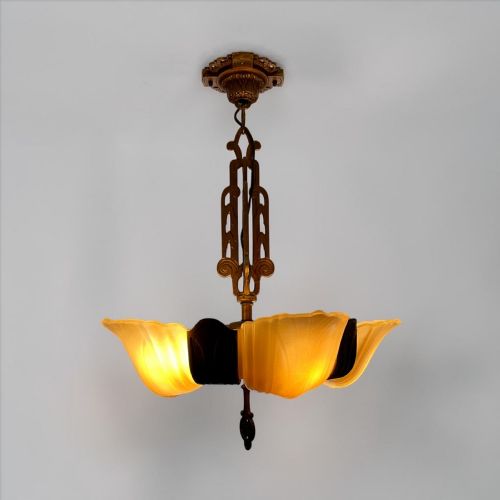
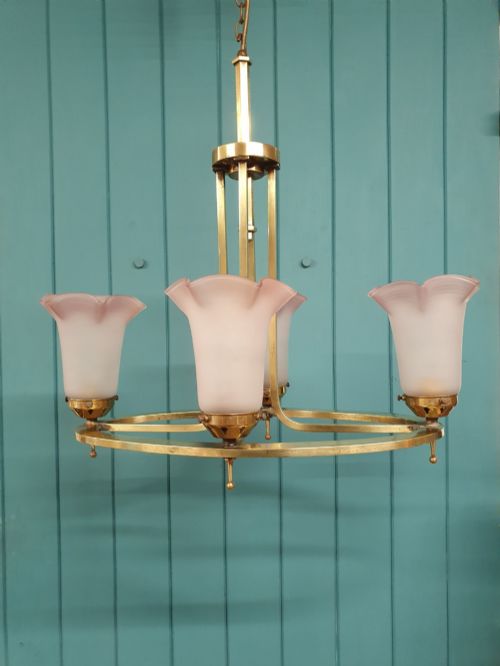
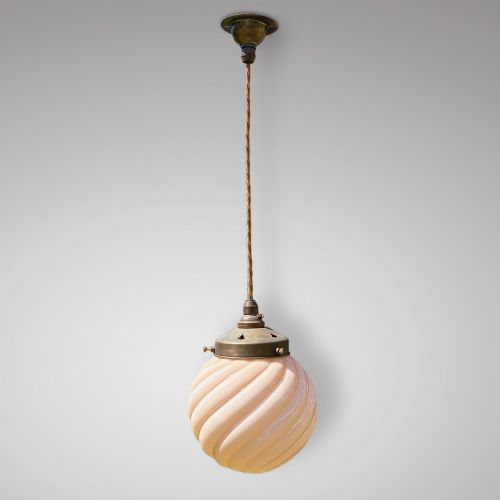
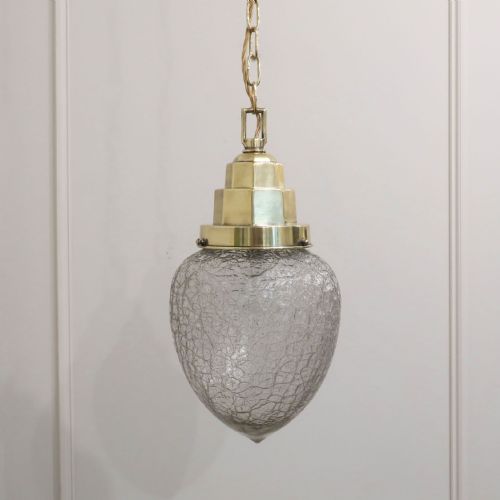
The selections encountered here span individual pendant lights, multi-arm chandeliers, and enclosed lanterns. Formats range from streamlined chrome drops to elaborate slip shade assemblies and decorative glass globes.
Most examples originate from the 1920 and 1930 periods, capturing the shift towards stylised symmetry and industrial innovation. Buyers typically encounter ceiling lighting that employs geometric motifs alongside tactile glass and metal components.
How they were made
Construction relies heavily on structural metals such as brass, chrome, steel, copper, and bronze to form the suspension frames, mounts, and hardware. These materials provide the rigid armature necessary to support substantial glass shades.
Listings feature brass, chrome, steel, and copper paired with frosted, opaline, and crystal glass across ceiling lights and chandeliers.
What varies in quality
Quality in these fixtures is distinguished by the heft and finish of the metalwork, alongside the complexity and thickness of the glass components. Superior examples display crisp casting, precise joinery, and heavy-gauge brass or chrome rather than lightweight alternatives.
The artistic ambition of the glasswork dictates the upper tier of the range, seen in deeply etched crystals, moulded slip shades, and specialised opaline textures. Executions that integrate specialised French glass or robust architectural framing stand apart from standard production pieces.
Émile-Jacques Ruhlmann·Jean Gauthier
The 1930s Pendant Fixture Glossary
- Art Deco
- A design style spanning the 1920s and 1930s characterised by geometric shapes, streamlined forms, and stylised motifs. It heavily influences the silhouette and decorative details of these ceiling lights.
- Slip Shade
- A moulded glass panel that slots directly into a metal frame to form the body of a fixture. These shades are typical of American and European lighting from the period.
- Opaline Glass
- A milky, semi-translucent glass type that diffuses light softly without harsh glares. It appears frequently in spherical and drop-form pendants.
- Chandelier
- A branched hanging light fixture designed to hold multiple illumination points. These range from small multi-arm configurations to large monumental assemblies.
- Lantern
- An enclosed hanging lighting fixture featuring glass panes set within a metal framework of brass, copper, or steel. They are frequently utilised in hallways and entryways.
1930s Pendant Fixture: Frequently Asked Questions
How do I hang a heavy 1930s chandelier safely?
Hanging a heavy period fixture requires securing the weight directly to ceiling joists using a rated electrical box and proper mounting hardware. Consulting a qualified electrician ensures the structural support matches the mass of the metal and glass.
Older wiring within these fixtures should also be inspected and modernised during installation to meet current safety standards while preserving the original exterior components.
What rooms suit a 1930s pendant fixture?
These fixtures suit dining rooms, hallways, and living spaces where a distinct architectural focal point is desired. Compact pendants work well in smaller vestibules, while multi-arm chandeliers anchor larger rooms.
Matching the scale of the fixture to the ceiling height ensures proper clearance and balanced illumination throughout the space.
How do I identify an Art Deco pendant?
Art Deco pendants feature geometric lines, symmetrical patterns, and materials like chrome, brass, and frosted glass. Look for stepped motifs, stylized floral elements, and industrial silhouettes characteristic of the interwar era.
These design cues differentiate the period from earlier Victorian or later mid-century styles.
Can I replace missing glass shades on these fixtures?
Sourcing replacement glass requires matching the precise fitter dimensions, weight, and period style of the original components. Slip shades and moulded globes can be difficult to pair identically due to bespoke manufacturing methods.
Buyers often look for period-appropriate replacements that match the exact opening size and glass opacity of the existing metal frame.