


Vintage Chinese Jade Ornament
A vintage chinese jade ornament brings carved mineral colour and age to a desk or display shelf.
Vintage Chinese Jade Ornament
A vintage chinese jade ornament covers a varied range of carved mineral objects, from desk seals and figural sculptures to pendants and flower jardiniere bonsai. The examples seen on this page span the nineteenth century, the Republic Period, and the nineteen-thirties.
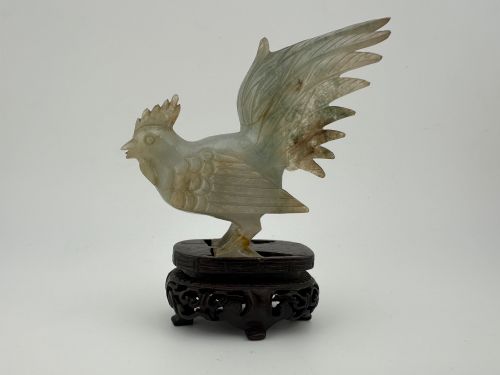
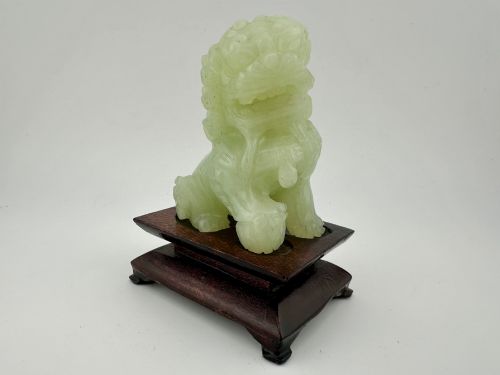
Buyers will most frequently encounter desk accessories, small animal sculptures depicting dogs of fo, roosters, fish, and pixiu, alongside landscape mountain sculptures resting on hardwood stands.
The aesthetic bridges traditional Chinese motifs and Qing Dynasty styles, utilising nephrite jade, hardstone, and jadeite alongside mounts of silver and hardwood stands.
Materials and construction
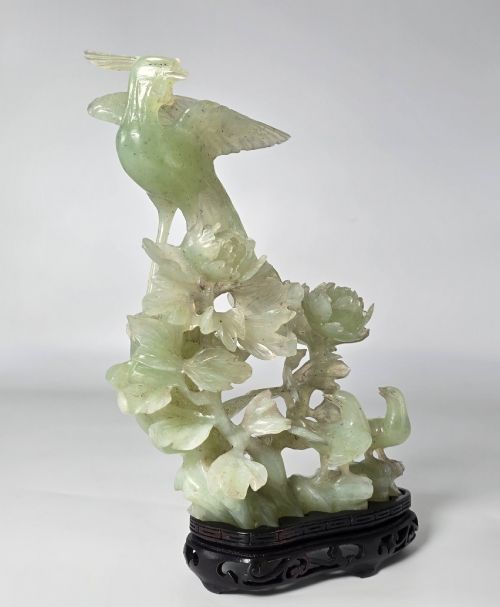
The primary medium is carved nephrite jade or jadeite, shaped into intricate figural groups, birds, and double dragon pendants. Hardstone and stone also appear in these formations.
Many of the larger sculptures and flower jardiniere bonsai incorporate fitted hardwood stands to display the carved mineral components securely.
Silver mounts and enamelling frame the jade elements on items such as magnifying glasses and ashtrays, combining metalwork with carved stone.
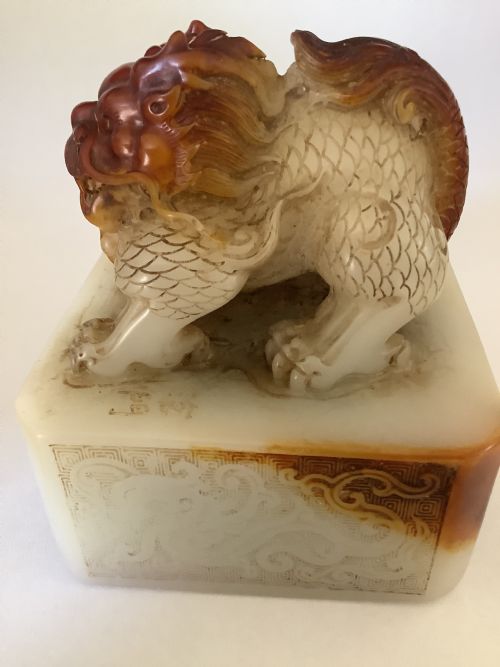
Among the carved fauna are mythical pixiu creatures, watchful dogs of fo, and tiny fish waiting quietly on your desk.
Judging the work
Quality rests upon the depth and detail of the carving, distinguishing simply shaped pieces from highly detailed animal forms and mountain landscapes.
The choice of material creates variation, separating uniform pale green jadeite and nephrite from mixed hardstones.
Associated elements such as silver work, enamelling, and bespoke hardwood stands contribute to the overall execution of the piece.
The Vintage Chinese Jade Ornament Glossary
- Jade
- A dense metamorphic rock encompassing both nephrite and jadeite, prized for its toughness and smooth finish when carved. It has been worked in China for millennia into ornaments and ritual objects.
- Republic Period
- The era in Chinese history running from 1912 to 1949, known for distinctive decorative arts and traditional carving techniques. Pieces from this time often blend classical motifs with new artistic freedoms.
- Qing Dynasty
- The final imperial dynasty of China, lasting from 1644 to 1912, famous for elaborate lapidary work and court arts. Objects associated with this style carry traditional symbolic forms.
- Dog of Fo
- A traditional mythical lion guardian depicted in Chinese sculpture to ward off negative spirits. These figures frequently sit atop heavy desk seals and ornamental blocks.
Vintage Chinese Jade Ornament: Frequently Asked Questions
What is a vintage chinese jade ornament used for?
These items were made as desk accessories, pendants, personal seals, and decorative table sculptures to display in homes or offices.
They function today as cabinet pieces, paperweights, or wearable jewellery depending on the specific form.
How do I tell nineteenth century pieces from later ones?
Nineteenth century examples often incorporate silver mounts, enamelling, or heavy seals alongside the carved stone.
Later items from the nineteen-twenties and thirties include Republic Period pendants and landscape mountain sculptures.
Are all these items made of genuine jade?
The listings include both nephrite jade and jadeite, alongside related hardstones and general stone.
Inspect the material description of each individual piece to understand the specific mineral used.
Do the sculptures come with stands?
Certain larger items, such as mountain landscape sculptures, are supplied with carved hardwood stands.
These bases are specifically shaped to hold the stone securely in place.