




Vintage Chinese Carved Chest
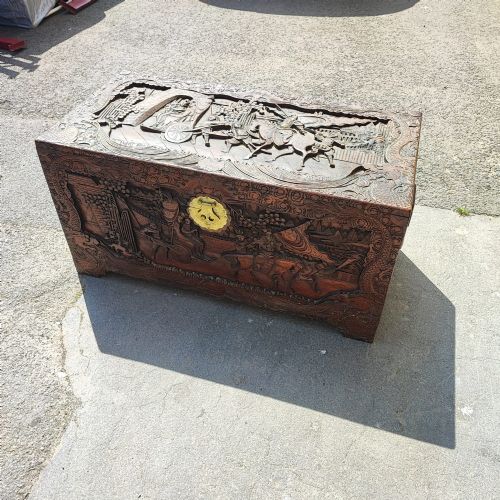
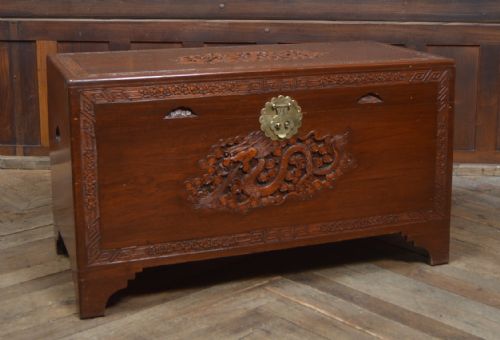
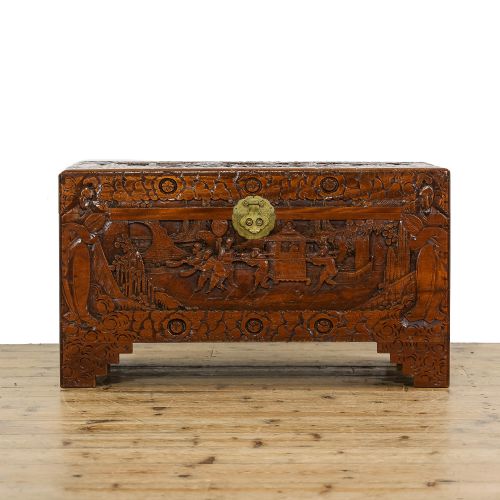
A vintage chinese carved chest is a heavily worked storage piece that brings aromatic wood and deep relief carving into a room.
Vintage Chinese Carved Chest
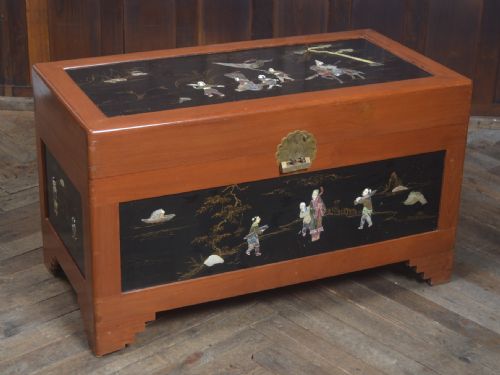
The selection ranges from traditional nineteenth-century camphor chests to pieces showing early twentieth-century influences, including Art Deco limed oak combinations and Republic period work. Alongside standard blanket boxes, you encounter secretaire campaign chests, floor cabinets, and mother of pearl inlaid boxes. Each variant shares a heavy reliance on deep carving and functional storage utility.
Materials and construction methods
The primary material across these listings is camphor wood, valued for its distinctive aroma and resilience. Artisans pair this timber with brass for bound corners, hinges, and heavy locks that reinforce the trunk structure. Hardwood, lacquer, and occasional mother of pearl inlay appear to build up surface texture and contrast.
Carving technique dictates the visual weight of each piece, ranging from shallow incisions to high relief panels depicting figures, foliage, and landscapes. Workshops utilise traditional joinery to accommodate the seasonal movement of timber without fracturing the carved surfaces. Brass banding is typically applied by hand to secure the structural edges of travel and storage trunks.
Listings feature items dated from the nineteenth century through the 1930s, constructed predominantly from camphor wood, brass, and hardwood.
Distinctions in craftsmanship
Quality separates simple utility boxes from masterwork trunks through the depth and clarity of the carving. Superior examples feature crisp, undercut relief work where figures and foliage stand clear of the background timber. Lesser pieces rely on shallow, repetitive stamping or machine-assisted surface scoring that lacks dimensionality.
Material selection and hardware integrity further divide the range. Finer trunks employ unblemished camphor wood with consistent grain patterns and heavy, hand-beaten brass mounts rather than thin stamped metal. The precision of the joinery and the survival of original lacquer or polished finishes determine the upper tier of surviving pieces.
The Vintage Chinese Carved Chest Glossary
- Camphor Wood
- An aromatic timber native to Asia, prized for its insect-repellent properties and distinct fragrance. It forms the structural body of the vast majority of these chests.
- Chinese Export
- Items manufactured in China specifically for Western markets, often blending traditional domestic forms with motifs appealing to European buyers.
- Campaign Chest
- A modular chest designed for easy transport by military officers, featuring recessed brass handles and corner brackets.
- Mother of Pearl
- The iridescent inner layer of mollusc shells, cut into thin pieces and set into wooden surfaces for decorative contrast.
- Republic Period
- The era in Chinese history spanning from 1912 to 1949, characterised by a continuation of traditional crafts alongside emerging modern design influences.
Vintage Chinese Carved Chest: Frequently Asked Questions
What are these chests made of?
The primary wood across these listings is camphor wood, chosen for its durability and pleasant, moth-deterring scent. Secondary materials include hardwoods, lacquer, and brass used for structural binding.
Some pieces incorporate mother of pearl inlay to highlight decorative panels, while others combine camphor with oak in later twentieth-century interpretations.
How were these trunks originally used?
These chests served primarily as durable storage trunks and blanket boxes for household textiles and garments. Their dense wood and tight-fitting lids protected contents from moisture and insects.
Certain specialised forms, such as campaign chests and luggage boxes, were built for travel by merchants or officials moving between regions.
How do I date a Chinese carved chest?
Dating relies on stylistic clues, hardware construction, and timber characteristics recorded across the nineteenth and early twentieth centuries. Nineteenth-century examples often display deep traditional carving and heavy brass work.
Pieces from the 1920s and 1930s may introduce alternative finishes, such as limed oak or distinct Republic period design elements.
How should I care for camphor wood?
Keep the wood away from direct heat sources and extreme humidity fluctuations to prevent the timber from splitting. Dust the carved relief panels gently with a soft brush to maintain the surface.
Avoid harsh chemical polishes that can degrade the natural finish and alter the characteristic aroma of the camphor.