



Vintage Childs Wooden Armchair
A vintage childs wooden armchair brings domestic history into focus through scaled-down furniture made for smaller hands and early sitting.
Vintage Childs Wooden Armchair
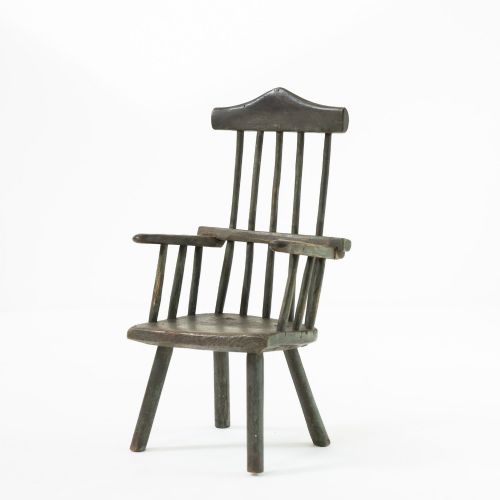
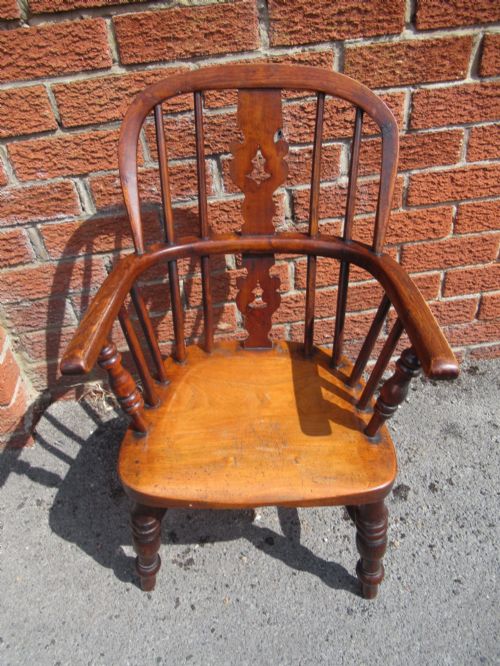
When you search for a vintage childs wooden armchair, you encounter miniature seating created across several centuries, primarily originating from domestic British and European traditions. These pieces mirror adult forms of their respective eras, scaled down for children in vernacular, country, and formal workshop styles.
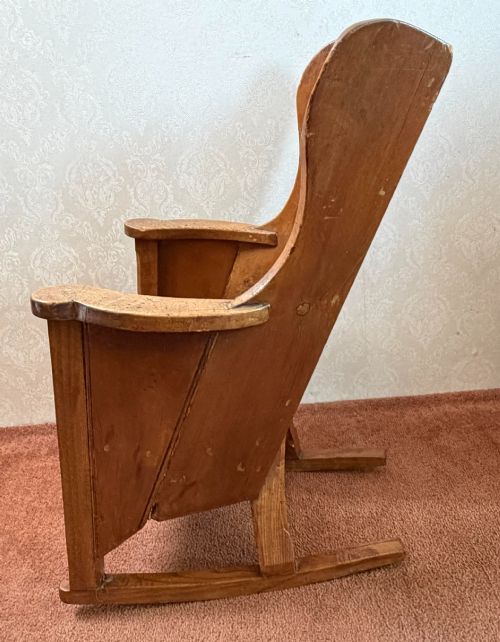
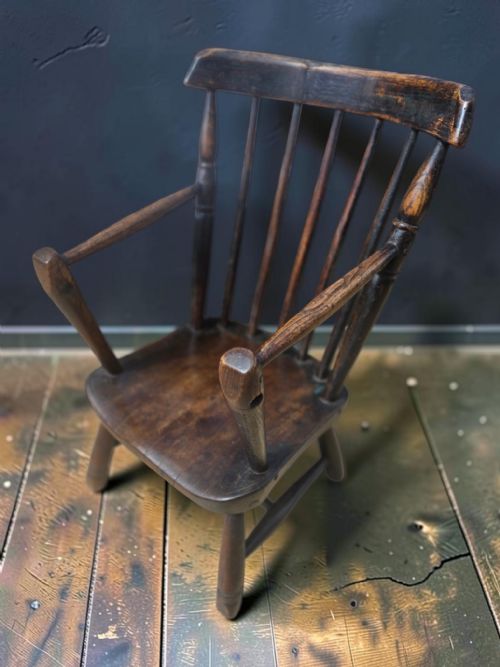
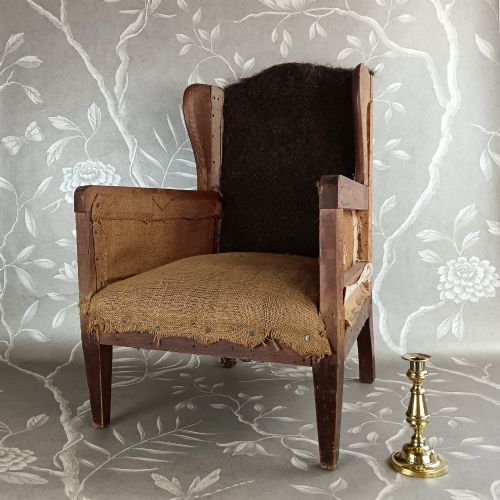
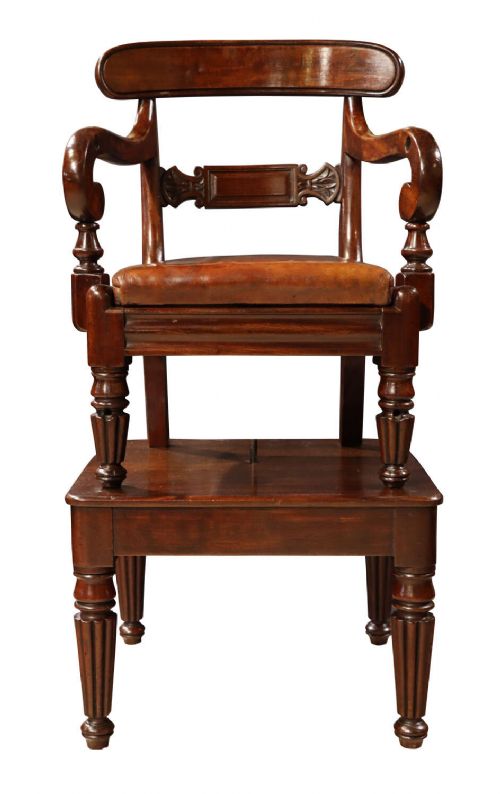
You meet Windsor chairs with hoop backs, ladderbacks with rush seats, wingbacks, and metamorphic high chairs designed to convert into lower seating. Many examples date from the nineteenth century, alongside Georgian precursors and early twentieth-century interpretations.
Makers produced these chairs for everyday nursery use, dining, or play, leading to survival rates that depend heavily on how robustly families treated them. The selection spans simple primitive stick chairs to polished mahogany armchairs on stands.
Materials and construction
Cabinetmakers and country joiners utilised native timbers including elm, ash, oak, yew, and mahogany, often combining two woods in a single chair for strength and contrast. Elm frequently formed the solid seats, while ash and yew provided flexible spindles and arms.
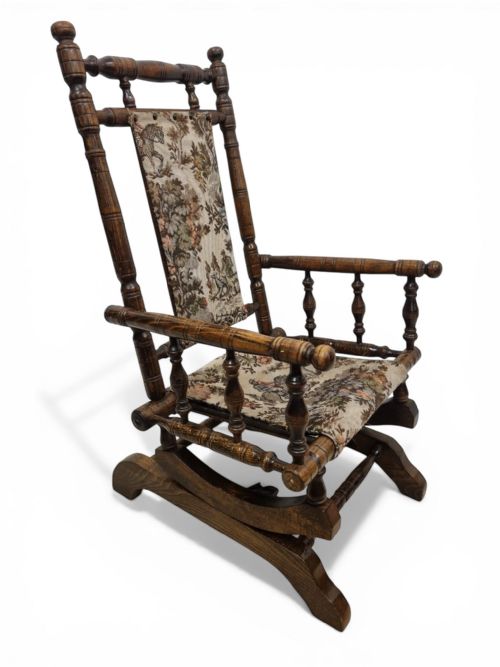
Joinery methods relied on traditional pegging, wedged tenons, and steam-bent hoops to withstand constant use by children. Some pieces feature applied paint surfaces or upholstery in fabric, tapestry, and leather over stuffing.
Some miniature armchairs include tiny turned arm supports that miniature occupants polished smooth with their small hands.
Assessing quality and proportion
Quality rests upon the fidelity of the scaling and the integrity of the timber selection, as some provincial pieces display charming rustic improvisations while others follow strict cabinetmaking rules. The balance between the arms, legs, and backrest determines whether a chair holds visual harmony.
Wear patterns tell a story of longevity, where patination developed through generations of handling adds depth to the wood surfaces. Superior examples retain original components, such as turned stretchers, rockers, or accompanying stands, without intrusive structural replacements.
The Vintage Childs Wooden Armchair Glossary
- Windsor chair
- A chair built with a solid wooden seat into which the legs and back sticks are independently inserted. This construction method provides notable structural rigidity.
- Stick back
- A chair design where turned wooden spindles form the backrest, often associated with vernacular country workshop production. These pieces rely on simple, robust joinery.
- Metamorphic
- Furniture engineered to transform from one functional form into another, such as a high chair converting into a low chair and table. This ingenuity suited growing children.
- Commode chair
- A seated piece housing a concealed chamber pot or receptacle beneath a lift-up seat or drawer. They formed a standard part of domestic child-rearing furniture.
- Potty chair
- A low wooden chair incorporating a pierced seat designed for toilet training infants. They combined safety with domestic utility.
Vintage Childs Wooden Armchair: Frequently Asked Questions
How were these chairs used?
Families used these miniature chairs for feeding, resting, and quiet play in the nursery or parlour. Metamorphic versions allowed parents to adapt a single piece of furniture as the child grew.
Simpler country chairs stood by hearths or shared dining tables, serving the daily routines of nineteenth-century households.
How do I date a wooden childs armchair?
Dating relies on observing construction techniques, tool marks, timber choice, and stylistic parallels to adult furniture of the same decade. Georgian pieces often display different turning details compared to Victorian or Edwardian examples.
Nail types, joint construction, and the presence of original paint or polish also offer clear chronological indicators.
Are these chairs safe for children today?
Most antique children's seating serves decorative or collection purposes rather than modern nursery use. Their historical construction standards and lower safety clearances do not meet current British toy or furniture safety regulations.
Collectors generally display them as sculpture or historical artefacts within the home.