
Vintage Chandelier Light
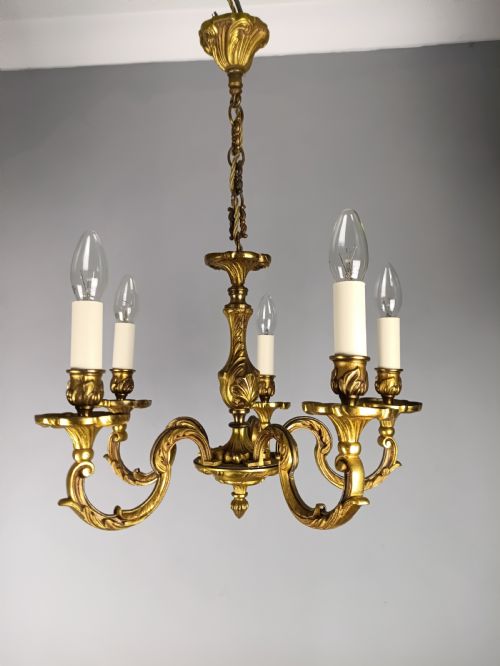
A vintage chandelier light suspends illumination from above, bringing period character and layered sparkle to a room.
Vintage Chandelier Light
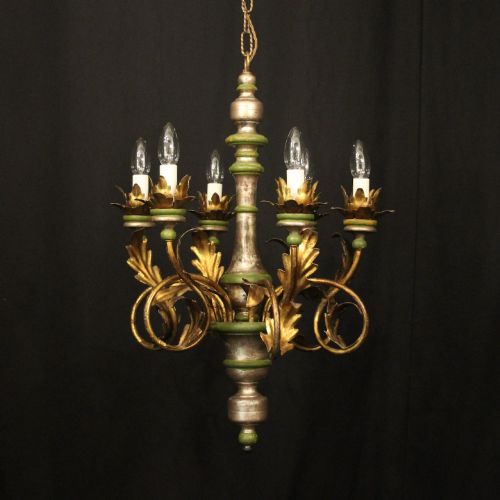
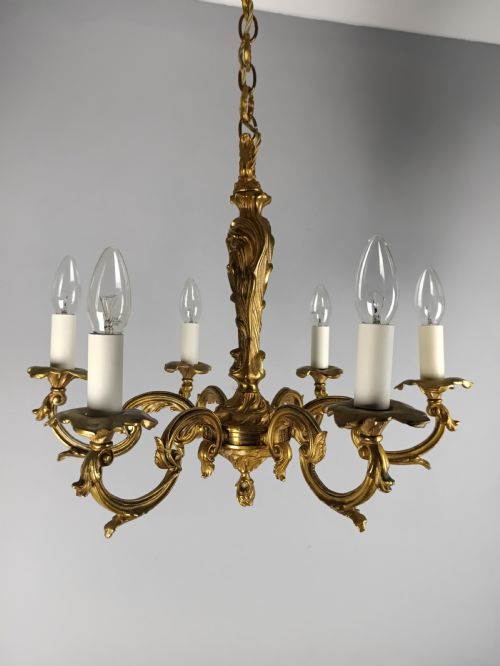
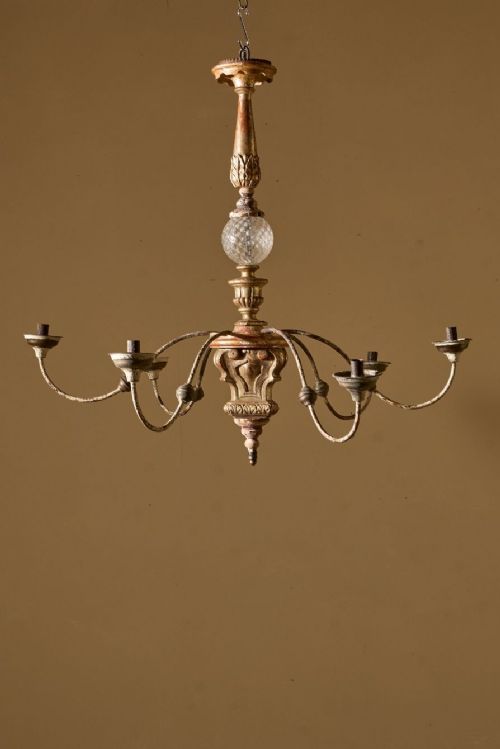
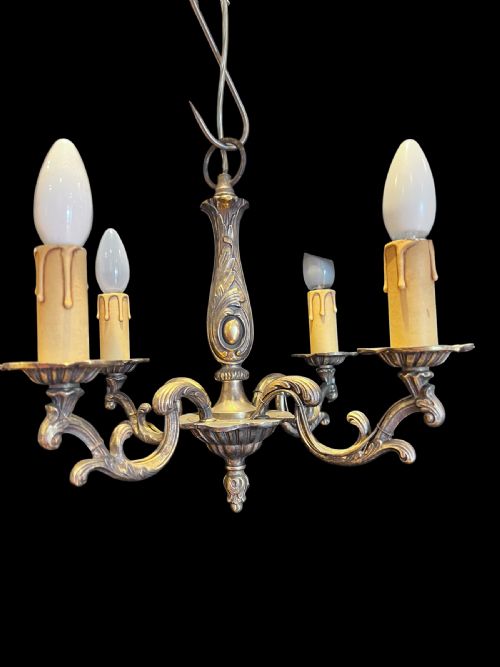
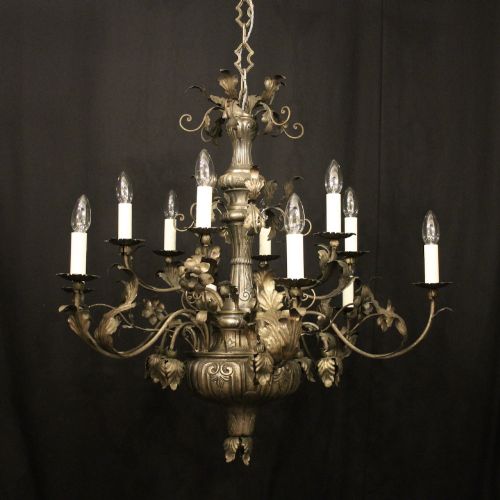
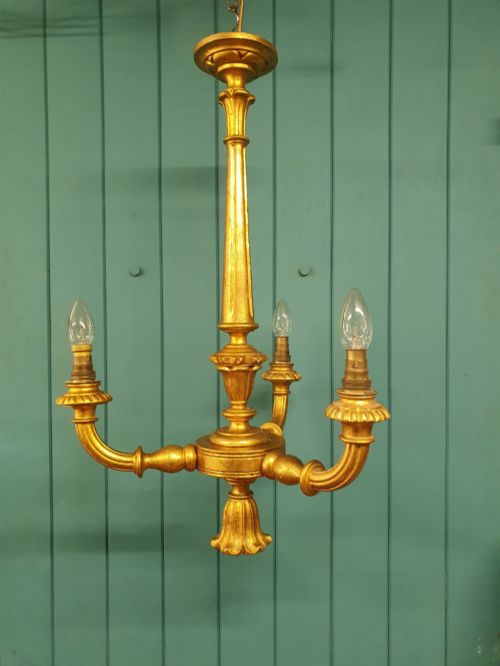
A vintage chandelier light brings overhead illumination through multiple arms, pendants, and lanterns originating from the nineteenth and early twentieth centuries. These fixtures span periods from the Victorian and Edwardian eras up through the 1920 and 1930 decades.
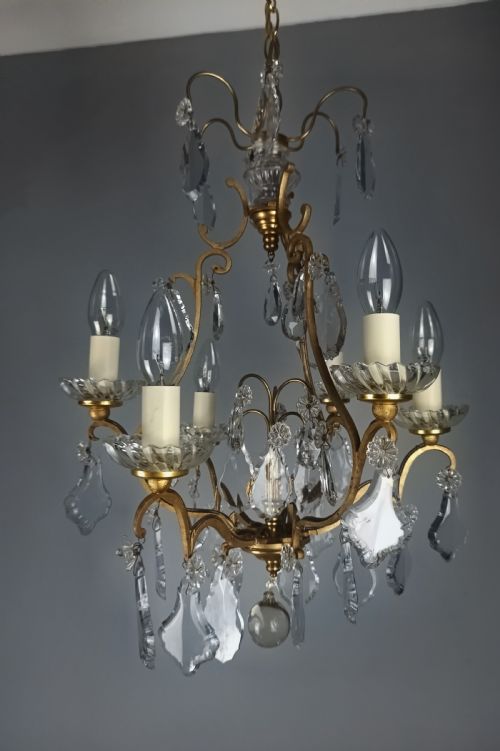
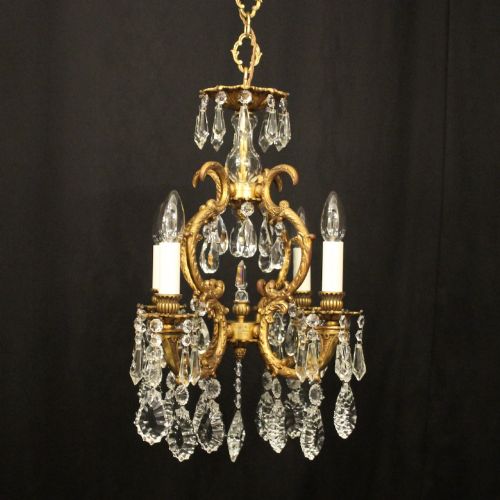
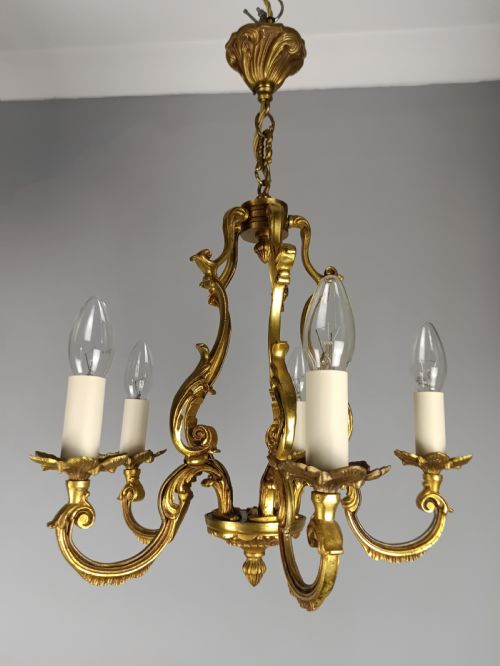
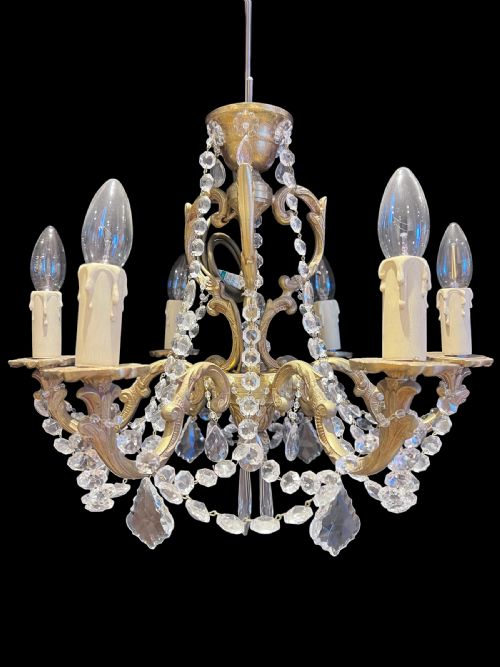
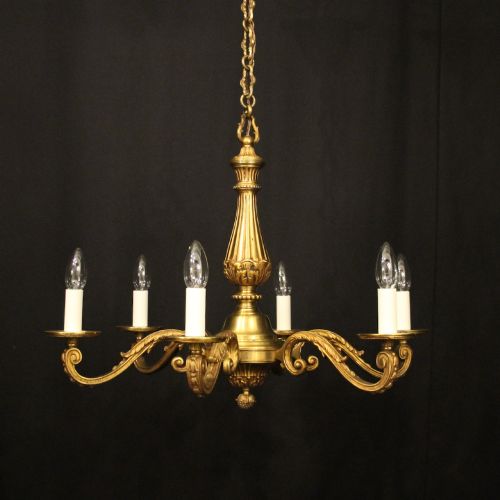
French chateau, Art Deco, Arts and Crafts, and French Empire styles dominate the selection. Buyers frequently encounter multi-light brass and gilt bronze designs decorated with glass drops.
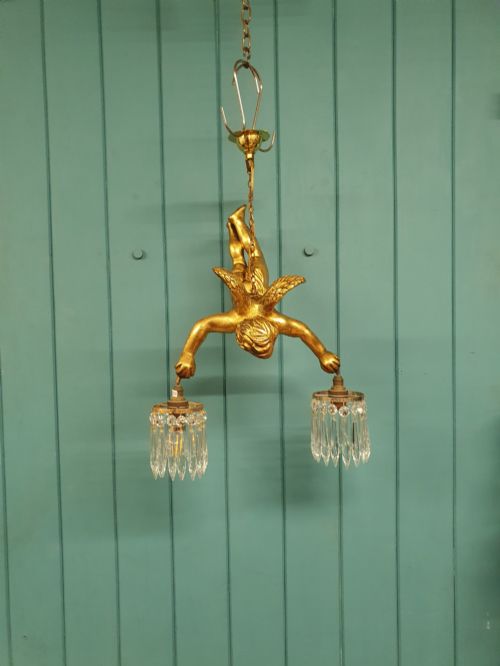
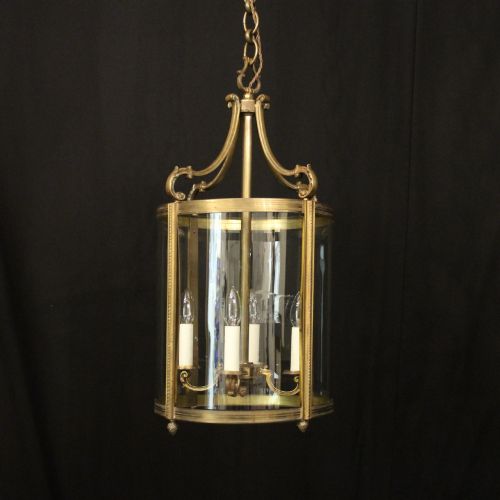
Forms vary from classic birdcage and basket configurations to hall lanterns, spike chandeliers, and geometric slip shade pendants. Origin points centre predominantly on French, English, and Italian workshops.
How they were made
Construction relies heavily on cast and formed metal frames paired with glass elements. Brass, gilt bronze, and copper provide the structural armature for these overhead fittings.
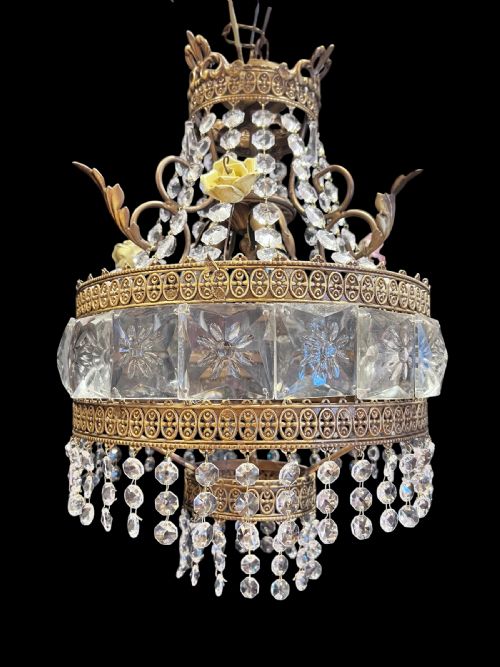
Refractive qualities emerge through cut glass, crystal lustres, bevelled glass plates, and opalescent shades. Metalwork often receives a gilded or polished finish to enhance the reflection of interior light.
Listings feature pieces spanning the 19th Century, Victorian, Edwardian, 1910, 1920, and 1930 periods in brass, glass, crystal, and gilt bronze.
What varies in quality
Quality rests upon the crispness of metal casting and the clarity of the glass or crystal components. Finer examples show hand-chased detail on gilt bronze and intricate cutting on glass drops.
Subtlety of proportion and the integrity of the original frame construction separate standard production pieces from masterworks. The integration of period wiring adaptations and complete pendant drops also influences overall merit.
Émile-Jacques Ruhlmann
The Vintage Chandelier Light Glossary
- Crystal
- High-lead glass valued for its refractive brilliance and clarity when cut into faceted drops and lustres.
- Gilt Bronze
- Bronze metal coated with a fine layer of gold, frequently utilised in decorative French lighting frames.
- Hall Lantern
- A ceiling-hung enclosed light fixture traditionally positioned in entranceways and corridors.
- Slip Shade
- A moulded glass shade fitted directly into a metal frame, common in Art Deco ceiling lighting.
- Tent and Waterfall
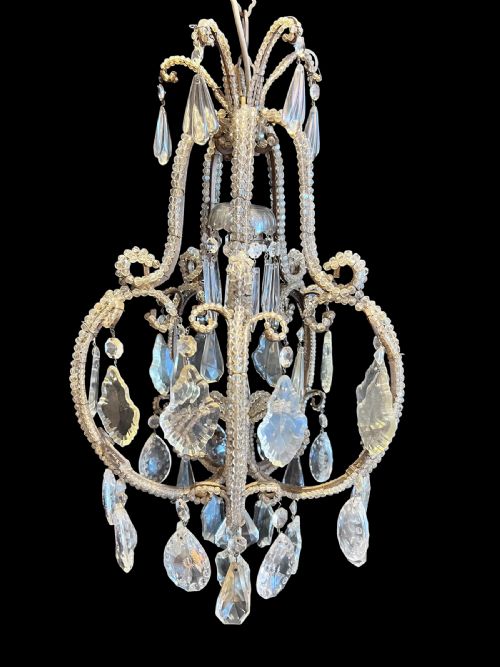
- A chandelier configuration featuring an upper tent of beads falling down into a wider cascade of crystal strands.
Vintage Chandelier Light: Frequently Asked Questions
How do I hang a vintage chandelier light?
Hanging requires a secure ceiling joist and a metal hook capable of supporting the combined weight of the metal and glass components. Professional installation ensures the electrical load is managed safely.
Height placement depends on room clearance, typically sitting above table height or allowing adequate head clearance in hallways.
How do I clean crystal drops safely?
Crystal components benefit from gentle hand cleaning using a solution of warm water and mild dish soap while still attached, or by removing them individually for soaking. Drying with a lint-free cloth restores maximum sparkle.
Avoid harsh chemical sprays that might damage the underlying brass or gilt bronze metal frames.
Are these lights wired for modern use?
Many period fixtures retain older internal wiring or have undergone updates by previous owners to meet contemporary standards. Rewiring by a qualified electrician ensures safe operation.
Bulb sockets can usually be adapted to accept standard modern lamps without altering the external appearance of the fixture.
How do I identify an Art Deco chandelier?
Art Deco lighting from the 1930 period typically displays geometric lines, stylised motifs, and moulded slip shades. Materials lean towards sleek metals and frosted or opalescent glass.
These pieces contrast sharply with the ornate curves of earlier Victorian and French Empire designs.