




Vintage Champagne Bowls
These vintage champagne bowls bring silver plate, cut glass, copper and crystal to the table, offering generous proportions for cooling bottles or serving drinks.
Vintage Champagne Bowls
Vintage champagne bowls encompass a varied group of vessels designed for entertaining, including champagne coolers, wine coolers, presentation bowls and punch bowls. These items date from the nineteenth century through the mid twentieth century, spanning periods such as the Victorian era, Edwardian period and Art Deco years.
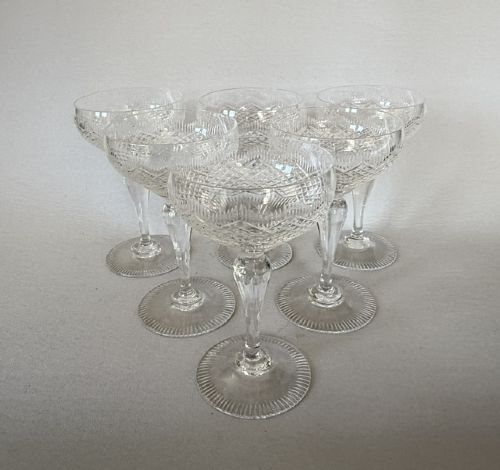
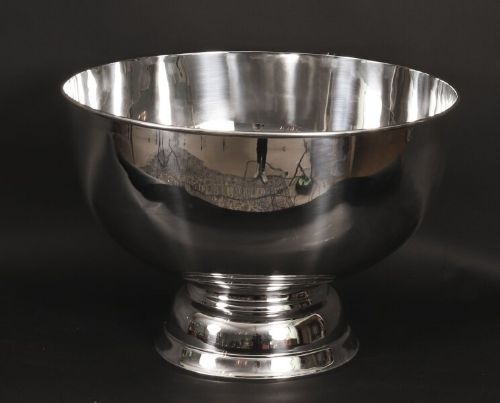
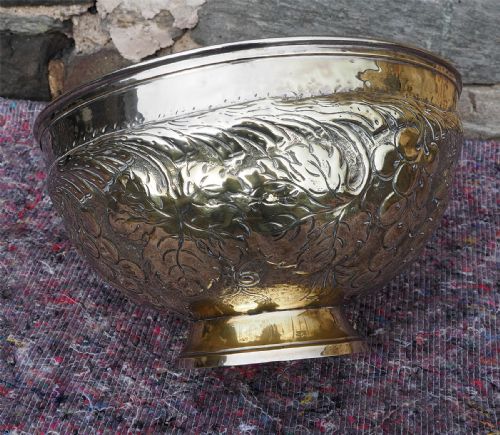
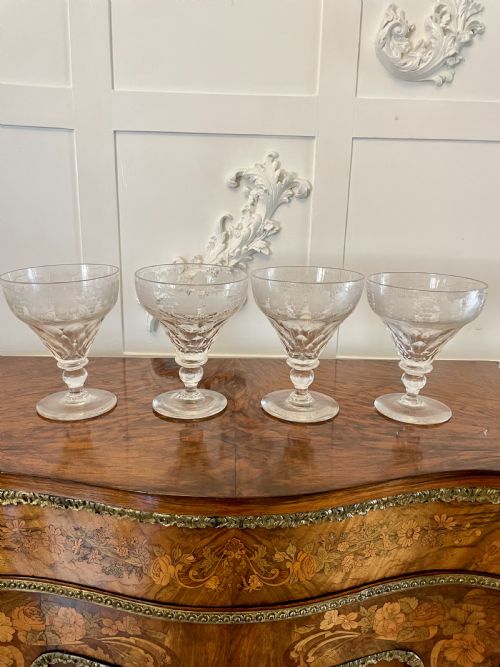
The versions most commonly met on this page range from heavy silver plated coolers to cut glass champagne bowls and engraved glass coupes. Makers utilise materials like silver plate, copper, brass, lead crystal, ruby glass and standard glass across forms that also serve as planters or decorative basins.
Styles represented in these selections stretch from Rococo Revival and Neoclassical Revival to Arts and Crafts and Victorian designs. Buyers encounter everything from large single presentation pieces to matched pairs and sets of smaller glasses.
How they were made
Metal vessels on this page utilise silver plate on copper, solid copper, brass or silver plate, often shaped into punch bowls and coolers with substantial weight. Makers employed techniques of plating, hammering and casting to produce durable items intended for heavy social use.
Glassware items are formed from lead crystal, cut glass, ruby glass and red over crystal, frequently featuring engraved decoration such as fruiting vines. These pieces rely on skilled cutting and engraving techniques applied to blown glass bodies.
Listings combine silver plate, copper and brass with lead crystal and ruby glass across Victorian, Edwardian and Art Deco periods.
What varies in quality
Quality in these bowls depends on the depth and crispness of the cut glass decoration or the weight and finish of the metalwork. Pieces bearing recognised maker marks or specific period styling show greater attention to detail in their handles, bases and rims.
The choice of materials shifts the character of the object, from simple spun brass to heavy silver on copper or layered red over crystal. Superior examples display balanced proportions and precise engraving that remain clear across the entire surface of the bowl.
Mappin & Webb·Barker Ellis
The Vintage Champagne Bowls Glossary
- Silver plate
- A thin layer of silver bonded to a base metal such as copper or brass. This technique allowed makers to produce impressive vessels at a lower cost than solid silver.
- Cut glass
- Glass decorated by grinding facets and patterns into the surface using a wheel. This method creates light-reflecting designs across bowls and coupes.
- Lead crystal
- Glass containing metal oxide that increases weight, brilliance and clarity. It permits sharper cutting and deeper engraving than ordinary glass.
- Ruby glass
- Glass coloured red by the addition of gold or copper compounds during melting. It appears frequently in nineteenth-century decorative tableware.
- Champagne coupe
- A shallow, broad-bowled stemmed glass designed for sparkling wine. Earlier versions often feature hand-engraved patterns.
Vintage Champagne Bowls: Frequently Asked Questions
How were champagne bowls used historically?
These vessels served to chill bottles of wine and champagne at the dining table or sideboard, or functioned as punch bowls for large gatherings. Many doubled as presentation pieces for formal occasions.
Over time, owners also utilised larger basins as planters or decorative centrepieces when entertaining concluded.
What materials do these bowls feature?
The listings include silver plate, copper, brass, lead crystal, ruby glass and clear glass. Metal pieces often combine a base metal like copper with a silver plating layer.
Glass items range from heavy cut crystal to engraved red over crystal coupes.
How do I identify Victorian pieces?
Victorian examples often display heavy cut glass patterns, Rococo Revival influences or ornate engraved decoration such as fruiting vines. These pieces typically date between the mid and late nineteenth century.
Makers working in this era favoured substantial glass thickness and detailed hand engraving.
Are these bowls suitable for modern dining?
Buyers regularly use these coolers and bowls for chilling bottles or serving punches at contemporary dinners. Their robust construction suits practical use alongside display.
Care requirements depend on the material, with plated metals and crystal needing gentle cleaning to preserve their surfaces.