



Vintage Chalk Portrait
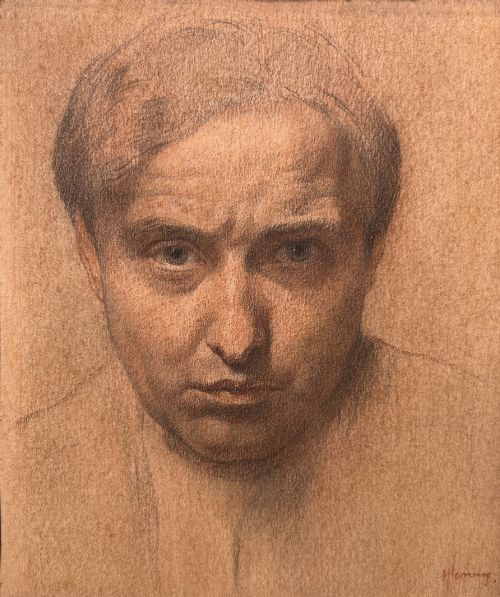
These vintage chalk portrait works capture faces with immediate draughtsmanship, offering buyers character and history drawn directly on paper.
Vintage Chalk Portrait
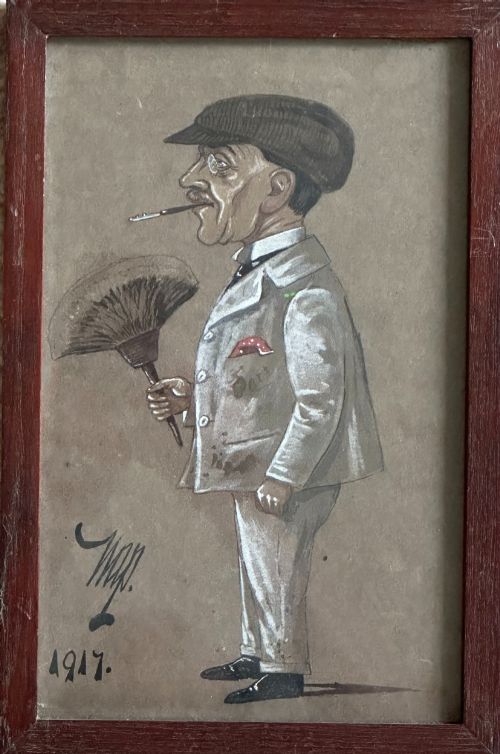
A vintage chalk portrait brings personality and direct hand-drawn observation into a room, often taking the form of a framed original artwork or sketch. You encounter subjects ranging from Victorian gentlefolk and Edwardian gentlemen to expressive life studies from the early twentieth century.
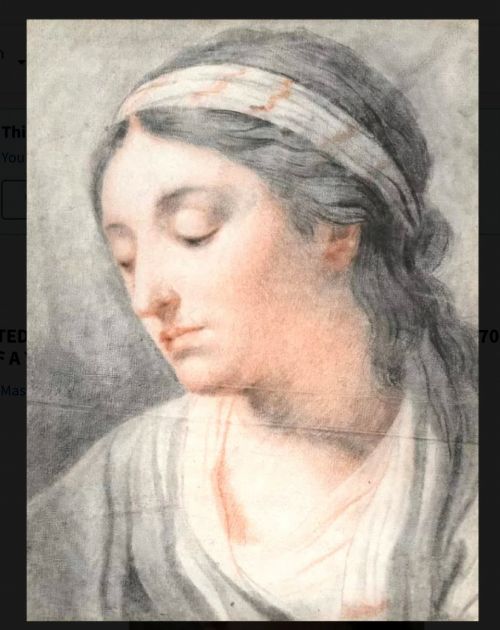
The pieces on this page span several centuries, reaching from eighteenth-century head studies and nineteenth-century pastels on canvas to modernist works from the nineteen-twenties and nineteen-forties. Most examples rely on paper supports housed beneath glass within wood or giltwood frames.
The selection includes formal academic realisations alongside intimate caricatures and quick charcoal studies. Whether depicting historical figures or unknown sitters lost in thought, each drawing preserves the direct touch of the artist's hand.
Distinctions in quality
Quality rests upon the confidence of the draughtsmanship and the psychological depth achieved in the sitter's expression. Superior works demonstrate an economy of line and assured handling of shadow that brings the subject to life without hesitation.
The relationship between the medium and the support also dictates the standing of a piece. Well-preserved pastel or chalk surfaces that retain their powdery texture without excessive rubbing represent the stronger end of the spectrum.
Vintage Chalk Portrait Retail Price Guide 2026
Typical asking prices for vintage chalk portrait among the pieces listed under this phrase on Sellingantiques today, from the lower quarter to the upper quarter. They describe what is for sale here now, not the wider market.
One persistent sitter appears immortalised wearing a distinctive football scarf.
Herbert Johnson Harvey·Arthur Todd·Robin Watt·John Seymour Lucas·George Richmond·Leo Klin·Harry Epworth Allen
The Vintage Chalk Portrait Glossary
- Sanguine
- A reddish-brown chalk used extensively for portrait drawings since the Renaissance. This warm mineral medium allows artists to model flesh tones with notable vitality.
- Pastel
- A dry painting medium consisting of powdered pigment and a binder rolled into sticks. It offers luminous colour saturation when applied to paper or canvas.
- Charcoal
- A lightweight carbonaceous material obtained by heating wood in the absence of oxygen. Draughtsmen utilise it for bold contrasts and sweeping tonal studies.
- Giltwood
- Timber carved and surfaced with a thin layer of gold leaf. Frames executed in this technique frequently house period works on paper.
- Academic Realism
- A style of painting and drawing produced under the influence of European academies of art. It emphasises precise anatomical accuracy and polished execution.
Vintage Chalk Portrait: Frequently Asked Questions
How should I hang a chalk portrait?
Keep these works out of direct sunlight to prevent the pigments from fading over time. Direct light damages fragile dry media on paper.
Position the frame at eye level in a room with stable humidity. Protect the drawing behind glass to shield the delicate surface from dust and moisture.
What is the difference between chalk and pastel?
Chalk is a natural mineral substance that offers firmer lines and muted monochromatic tones. Artists often use it for preliminary studies and expressive sketching.
Pastel incorporates a higher concentration of pure pigment bound into soft sticks. It provides richer colour coverage and a velvety finish suited to finished portraits.
Are these portraits original artworks?
Every piece featured here is an original hand-drawn work rather than a mechanical print or reproduction. You are viewing the exact marks made by the artist's hand.
Makers utilised charcoal, chalk, or pastel directly onto paper or canvas surfaces. This direct application ensures each portrait is a singular historical artefact.
How do I identify the period of a drawing?
Examine the framing materials, the type of paper, and the clothing or hairstyle of the sitter. Clues within the portrait often point towards specific decades like the Edwardian era or the Victorian period.
Signatures, inscriptions, and artist attributions inscribed on the reverse or mount also help date the work. Stylistic indicators such as academic realism reveal the prevailing artistic conventions of the time.