


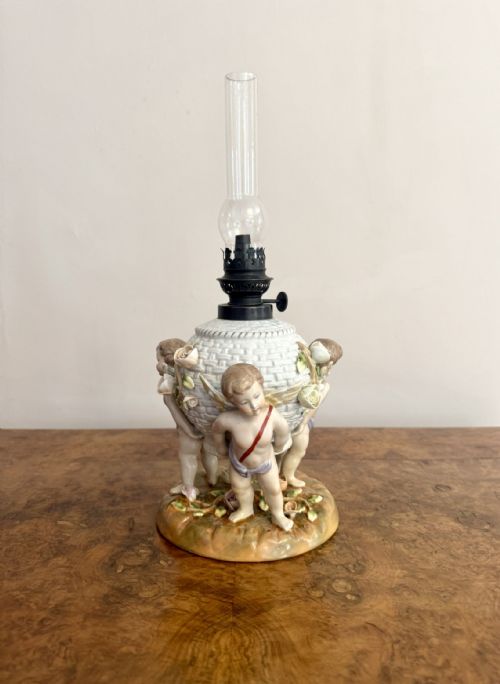


Vintage Ceramic Putto
These vintage ceramic putto figures and decorative objects bring figurative charm to interiors through porcelain, glaze, and gilt detailing.
Vintage Ceramic Putto
When you search for vintage ceramic putto items, you encounter figural groups, centrepieces, lamps, and candelabras spanning the nineteenth and twentieth centuries. The selection includes Continental porcelain groups, German centrepieces with applied roses, and individual figures modelled in various historical revival styles.
The objects take many functional and decorative forms, ranging from table lamps and oil lamps to cache pots, easel mirrors, and graduated jugs. Many pieces originate from notable European factories and encompass periods from the Victorian era through the Edwardian years and into the 1930s.
The style spans Rococo Revival, Renaissance Revival, Art Nouveau, and Art Deco aesthetics, reflecting the changing tastes of European ceramic production. Figures often depict winged cherubs or putti engaged in musical pursuits, gardening, or holding baskets.
Materials and production methods
The pieces on this page are formed primarily from porcelain and ceramic materials, shaped into intricate figural and functional objects. Artisans applied detailed glazes, enamel colours, and occasional gold leaf or gilding to highlight the facial expressions and drapery of the figures.
Many items incorporate auxiliary materials such as brass fittings for lamps and mirrors or glass components alongside the ceramic body. Construction techniques involve moulded figures combined with hand-modelled elements like applied floral decorations and detailed musical instruments.
Vintage Ceramic Putto Retail Price Guide 2026
Typical asking prices for vintage ceramic putto among the pieces listed under this phrase on Sellingantiques today, from the lower quarter to the upper quarter. They describe what is for sale here now, not the wider market.
Listings feature porcelain, ceramic, and glass materials across periods from the 1850s through the 1930s.
Assessing quality in ceramic putto pieces
Application of enamel painting and the precision of the gilding contribute significantly to the visual weight of an object. Complete sets, matched pairs, and items retaining their original functional fittings command greater interest than assembled or altered pieces.
Sitzendorf·Royal Dux Bohemia·Plaue Schierholz·Royal Worcester·Karl Tutter·Meissen·Enoch Wood and Sons
The Vintage Ceramic Putto Glossary
- Putto
- A figure of a small winged infant, frequently appearing in classical art and revival decorative objects. They are often confused with cherubs, though putti are secular motifs.
- Centrepiece
- A large decorative object placed in the middle of a dining table or sideboard. These often take the form of elaborate porcelain bowls supported by multiple putti figures.
- Cache pot
- An ornamental flowerpot container designed to hold a plain inner pot. Examples in this category often feature applied floral decoration and figural supports.
- Candelabra
- A branched candlestick holder designed to support multiple candles. Antique porcelain examples frequently incorporate putti figures climbing the central column.
- Maiolica
- Tin-glazed Italian earthenware of the Renaissance and later revival periods. This technique provides a smooth white surface for vibrant painted decoration.
Vintage Ceramic Putto: Frequently Asked Questions
What is a putto?
A putto is a representation of a small, plump, often winged infant derived from classical art. They appear frequently across European porcelain from the nineteenth and twentieth centuries.
In decorative objects, these figures act as attendants, musicians, or gardeners supporting centrepieces, lamps, and candelabras.
How do I date a porcelain putto?
Dating relies on factory marks, style periods such as Victorian or Art Nouveau, and the specific manufacturing techniques used in the glaze and clay body.
Stylistic cues like Rococo Revival curves or Art Deco lines help narrow the decade of production when combined with maker signatures.
Were these figures used for lighting?
Many ceramic putto pieces incorporate electrical or oil lamp fittings alongside candelabra arms. Manufacturers adapted the popular figural motif to serve functional household lighting roles.
These pieces combine sculptural porcelain forms with brass and glass elements to create decorative light sources.
How do I care for antique porcelain?
Antique porcelain requires gentle cleaning with a soft, dry cloth to remove dust from intricate areas like applied roses and wings. Avoid harsh chemical cleaners that can damage delicate enamel paints or wear away gold leaf gilding.
Display objects away from direct sunlight and areas prone to heavy vibrations to protect fragile protruding limbs and musical instruments.