
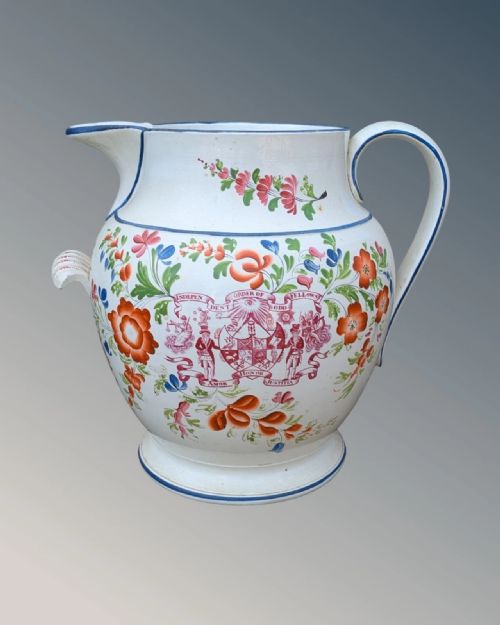


Vintage Ceramic Cream Pitcher
A vintage ceramic cream pitcher brings tactile weight and hand-painted pattern to the table, turning a simple pour of milk into a small daily ritual.
Vintage Ceramic Cream Pitcher
A vintage ceramic cream pitcher is a small pouring vessel designed for milk or cream, appearing in forms ranging from straightforward domestic jugs to sculptural cow creamers and neoclassical ewers. When you search for a vintage ceramic cream pitcher, you encounter domestic items spanning the eighteenth, nineteenth, and early twentieth centuries, made across English, Welsh, and continental potteries.
The pieces listed here represent diverse regional traditions, including Staffordshire pearlware, Gaudy Welsh pottery, and Leeds creamware alongside porcelain pieces from factories such as New Hall and Royal Worcester. Most examples on this page date from the Victorian and Georgian eras, reflecting shifts from earthenware utility to decorative porcelain table service.
Materials and Technique
Potters shaped these vessels using earthenware, creamware, pearlware, stoneware, and porcelain, frequently employing mould-pressed techniques like cabbage leaf moulding or relief decoration. Glazing methods varied from simple salt glaze and clear lead glazes to rich enamel colours, lustre highlights, and touches of gold leaf.
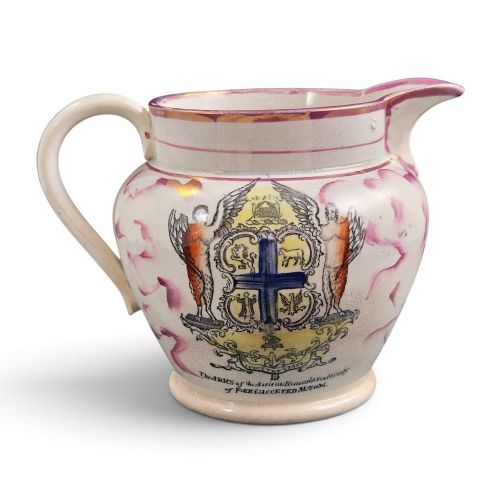
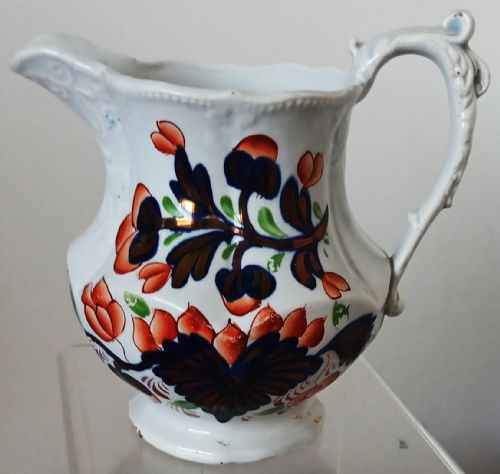
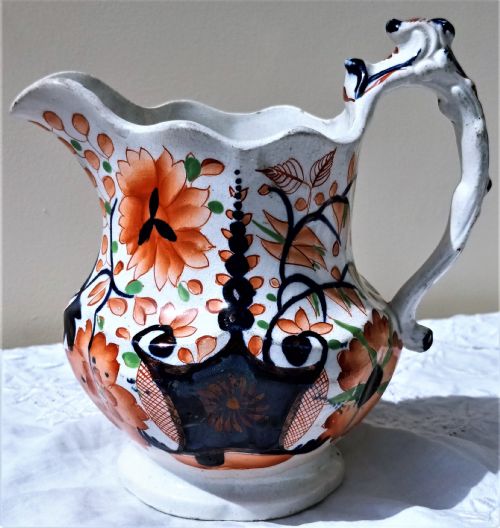
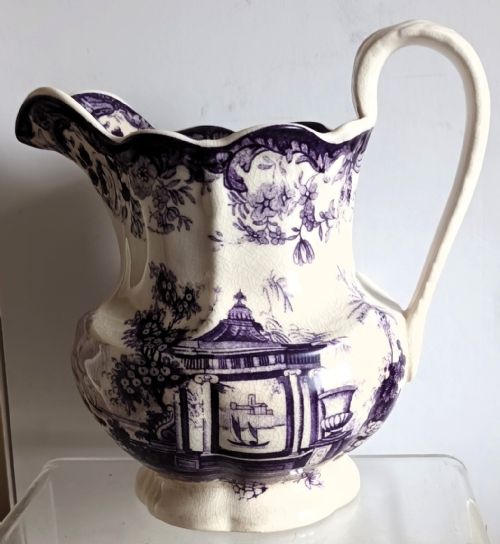
Decoration relied heavily on hand-painting or transfer printing, seen in magenta transfer scenes, intricate bird and insect motifs, and distinctive pattern work like the Gaudy Welsh grape and pagoda designs.
Surprise visitors by pouring milk from an indignant Lord Kitchener's moustache.
Distinctions in Quality
Quality in these pitchers rests upon the crispness of the initial moulding, especially where relief details or cabbage leaf textures meet the body of the clay. Finer pieces demonstrate superior control during kiln firing, resulting in even glaze coverage and precise alignment of transfer-printed or hand-painted details.
The distinction between standard domestic ware and exceptional pieces also lies in the delicacy of the handle attachment, the thinness of porcelain bodies, and the artistry involved in hand-painted pictorial scenes.
Royal Worcester·Jones and Walley·Leeds Pottery·New Hall·Crown Derby
The Vintage Ceramic Cream Pitcher Glossary
- Creamware
- A fine light-coloured earthenware developed in the eighteenth century by English potters, noted for its warm cream hue and clear lead glaze. It became the dominant domestic ceramic material before porcelain took precedence.
- Pearlware
- An refined earthenware introduced by Josiah Wedgwood around 1779, featuring a bluish-tinted glaze designed to mimic the appearance of Chinese porcelain. It served as a common base for transfer-printed tablewares.
- Transfer printing
- A decoration technique where an engraved copper plate transfers a design onto tissue paper, which is then stamped onto the ceramic surface before glazing and firing. This allowed complex pictorial scenes to be produced rapidly.
- Ewer
- A large pitcher or jug with a wide spout and elaborate handle, traditionally used for pouring water at a washstand or for formal display. In later periods, decorative versions functioned primarily as ornamental cabinet pieces.
- Gaudy Welsh
- A type of colourful pottery manufactured in South Wales and Staffordshire during the nineteenth century, characterised by vibrant cobalt blue, iron red, pink lustre, and green enamel pigments.
Vintage Ceramic Cream Pitcher: Frequently Asked Questions
What is a vintage ceramic cream pitcher used for?
These pitchers served primarily at the dining table for holding and pouring cream or milk during tea and coffee service. Over time, many domestic vessels transitioned into decorative display objects or parts of larger tea and bathroom sets.
Today, collectors use them to add historical character to modern tables, or display them alongside other ceramic tableware.
How do I date an older cream jug?
Dating relies on observing material characteristics, such as the warm tone of eighteenth-century creamware or the bluish glaze typical of early pearlware. Form, handle style, and maker's marks or registration numbers also offer clues to the exact period of production.
Comparing decorative techniques like transfer printing styles against known factory timelines helps narrow down the decade.
What is the difference between earthenware and porcelain jugs?
Earthenware is an opaque, porous ceramic body fired at lower temperatures, often used for robust domestic items like stoneware or transfer-printed jugs. Porcelain is a vitrified, translucent ceramic fired at high temperatures, typically associated with finer table services and delicate painting.
Porcelain feels smoother and lighter in the hand, whereas earthenware offers greater thickness and rustic weight.