




Vintage Cattle Landscape Art
These vintage cattle landscape art pieces bring pastoral scenes of the countryside into rooms through oil paint, canvas, and watercolour.
Vintage Cattle Landscape Art
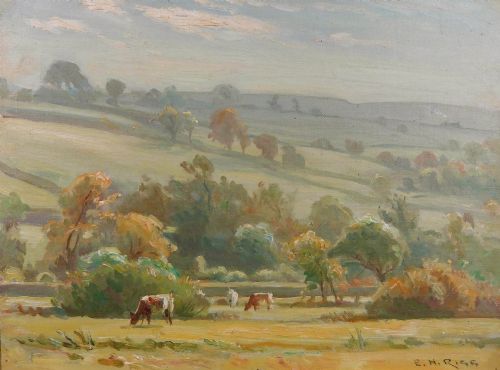
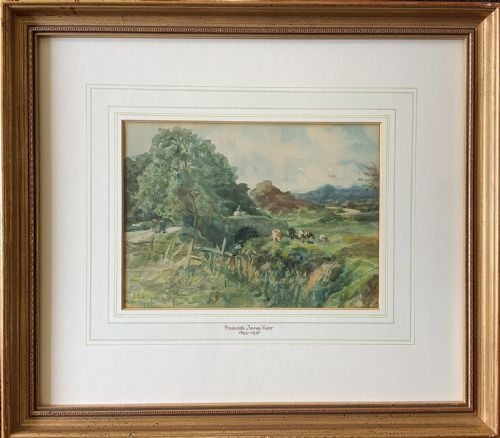
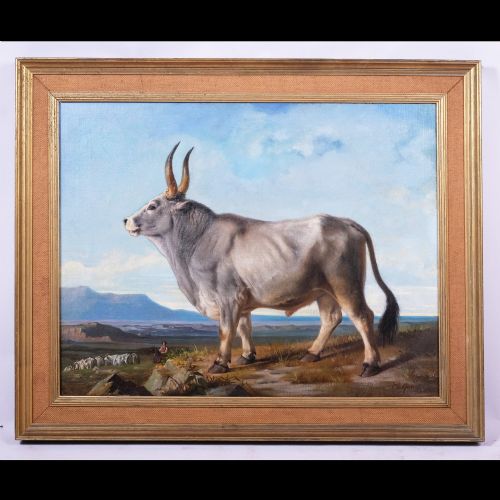
Vintage cattle landscape art covers paintings depicting cows, bulls, and calves situated within rural British and European countryside settings. Buyers searching for vintage cattle landscape art encounter works spanning the eighteenth century through the early twentieth century, taking the form of framed oil paintings and watercolours. The examples found here predominantly showcase Victorian and Edwardian pastoral scenes, capturing agricultural life and livestock near rivers, lochs, and pastures.
Most compositions place domestic animals at the centre of rural topography, often rendered in oil on canvas or watercolour on paper. The selection includes works by named painters alongside pieces originating from the British School. These artworks record specific regional landscapes, from Scottish highlands to Welsh rivers and English pastures.
Materials and methods
Artists painted these works primarily using oil paint on canvas or watercolour on paper, sometimes employing gouache to build opacity and detail. Canvases received layers of pigment to capture the light and texture of rural environments, while watercolours relied on washes for atmospheric sky and water effects. Finished paintings were secured in wooden frames, frequently featuring giltwood finishes or burr wood surrounds.
Makers utilised brushes of varying sizes to render fine details on animal hides alongside broader strokes for pastoral backdrops. Pigments were applied to stretched canvas or heavyweight paper support boards, preserving the compositions through subsequent centuries. Original framing materials often included carved timber mouldings protected by glass for works on paper.
Listings feature works created across the eighteenth, nineteenth, and early twentieth centuries using oil paint, watercolour, and gouache.
Variations in quality
Quality rests in the anatomical accuracy of the livestock and the dexterity with which the artist handles natural light across the landscape. Stronger examples demonstrate precise brushwork that defines the muscle structure of Shorthorn bulls or Highland cattle while integrating them harmoniously into the surrounding topography. Weaker works often rely on formulaic foliage and stiffly posed animals that lack individual character.
The sophistication of the palette and the preservation of the original canvas, paper, and frame further distinguish superior pieces. Works retaining their period frames and untouched paint surfaces carry greater visual coherence than those altered by later interventions or heavy restoration. Masterful atmospheric perspective separates works by accomplished painters from generic provincial watercolours.
William H Myers·Ernest Higgins Rigg·Frederick James Kerr·Henry Robinson Hall·Ernest Pile Bucknall·Eugene Verboeckhoven·Alfred Grey·William Traies·John R K Duff·William Sidney Cooper·Walter J Watson·Alfred de Breanski Sr·Owen Bowen·George Smith
The Vintage Cattle Landscape Art Glossary
- Oil on canvas
- Pigment bound in a drying oil applied to a woven fabric stretched across a wooden frame. This medium allowed artists to build rich textures and deep tones.
- Watercolour
- A paint consisting of colour suspended in a water-soluble vehicle, typically applied to paper. It produces translucent washes of light across landscape scenes.
- Giltwood
- Wood that has been treated with a thin layer of gold leaf or gold paint. Frames built with this technique often enclose Victorian and Edwardian canvases.
- Pastoral Realism
- An artistic style focused on depicting rural life and agricultural scenes with close attention to naturalistic detail. This approach guides many nineteenth-century farm and livestock compositions.
Vintage Cattle Landscape Art: Frequently Asked Questions
What periods do these paintings date from?
The works span multiple centuries, with significant representation from the Victorian and Edwardian eras. Pieces also originate from the eighteenth and early twentieth centuries.
Dates reflect the operational periods of the artists or the stylistic conventions of specific schools. Collectors find works dated from the late 1700s through the 1920s.
How should I hang these framed paintings?
Select wall spaces away from direct sunlight and excessive moisture to protect canvas, paper, and original wooden frames. Adequate spacing allows the pastoral compositions to function as focal points within a room.
Ensure secure wall fixings support the weight of heavier giltwood frames and oil paintings on stretched canvas. Grouping smaller watercolours together creates a balanced display of rural subjects.
How do I identify the medium used?
Examine the surface texture closely under adequate lighting to distinguish between oil paint and watercolour work. Oil on canvas exhibits visible brush strokes and a built-up pigment layer.
Watercolour paintings display flat, translucent washes of colour on paper and require protective glass glazing. Gouache applications present a more opaque, matte finish compared to standard watercolours.