




Vintage Cased Spoons
Vintage cased spoons gather matching sets of silver flatware and condiment implements inside fitted presentation boxes lined with silk or velvet.
Vintage Cased Spoons
Vintage cased spoons comprise matching sets of silver flatware and serving implements nestled inside fitted boxes designed for presentation and safe storage. Buyers search this phrase to find complete matched sets intended for afternoon tea, coffee, fruit, or formal dining.
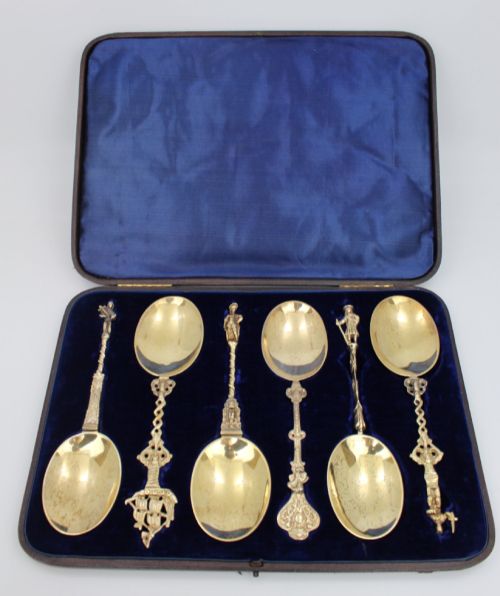
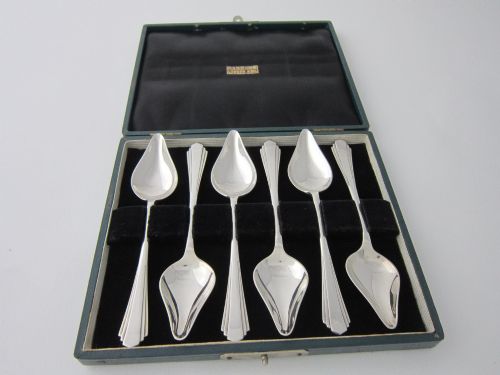
The selections span distinct historical eras from the Victorian and Edwardian periods through the Art Deco years and mid-century British designs. Sets frequently include specialised implements such as coffee spoons, apostle spoons, fruit sets, and cruet accessories housed in their original cases.
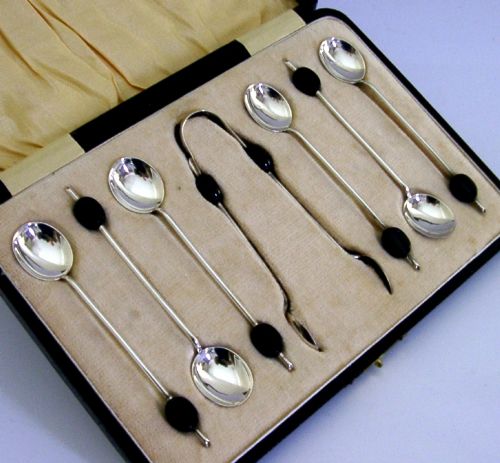
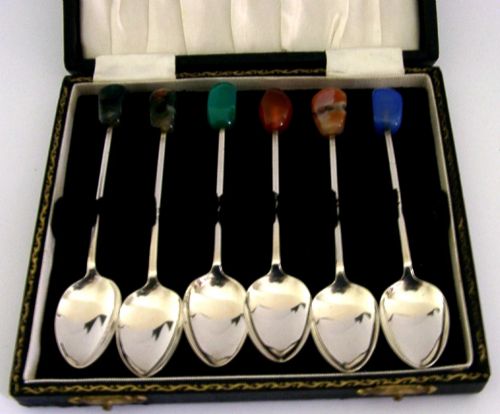
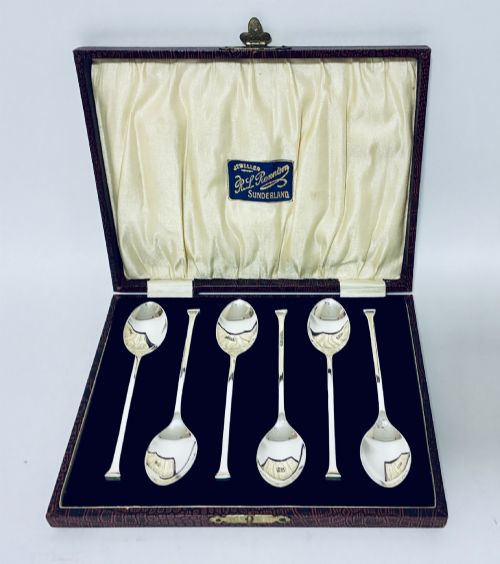
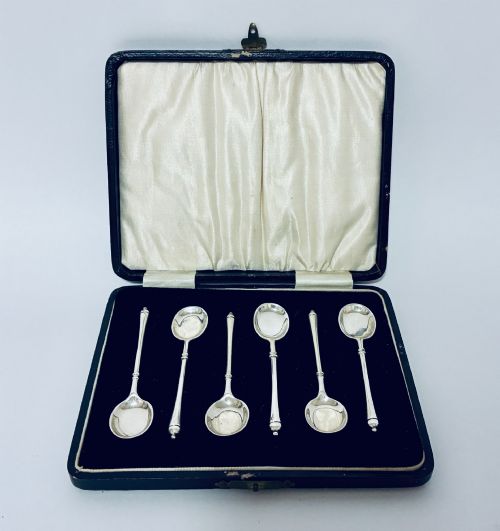
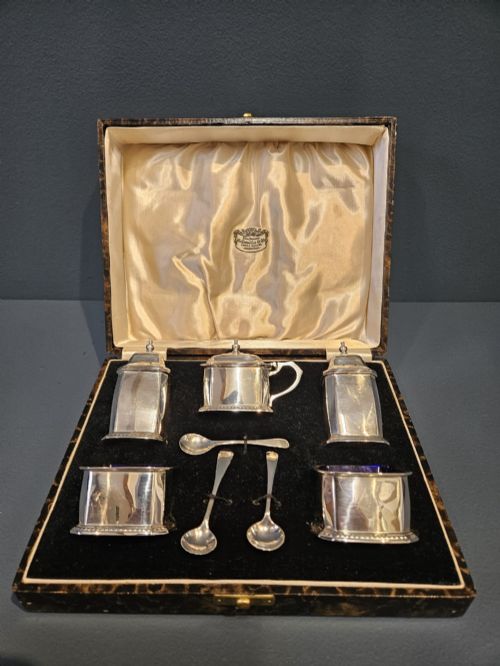
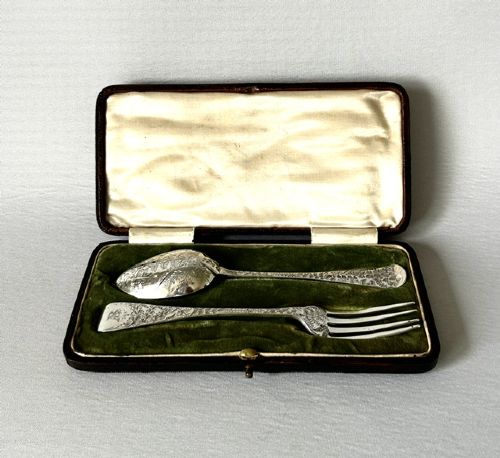
Examples on this page appear in various configurations, ranging from simple teaspoons to elaborate sets paired with sugar tongs or butter knives. The protective casing often utilises leatherette or wood lined with satin and velvet to secure each individual piece.
Materials and Construction
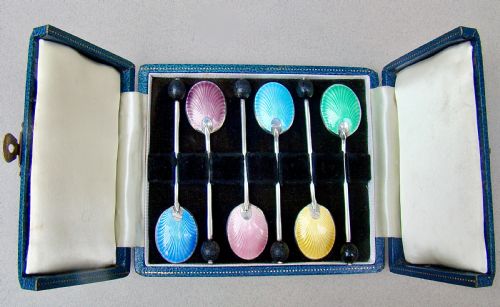
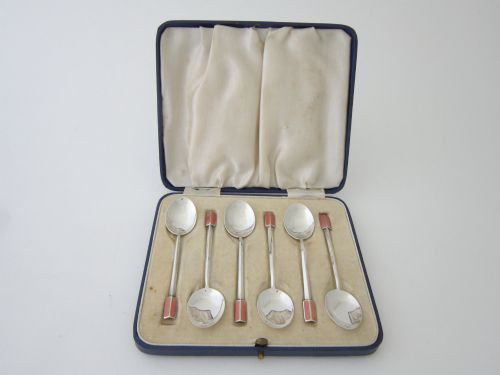
Makers shaped these spoons primarily from sterling silver and silver-gilt, occasionally applying translucent enamel in guilloche patterns during the Art Deco period. Metalworking techniques combined traditional silversmithing for the bowls and stems with specialised casting for decorative knops and engraved detailing.
The protective presentation cases relied on sturdy timber foundations covered in leather, leatherette, or textured cloth. Inside these boxes, bespoke compartments were lined with plush velvet, silk, or satin to cradle the silver securely.
Vintage Cased Spoons Retail Price Guide 2026
Typical asking prices for vintage cased spoons among the pieces listed under this phrase on Sellingantiques today, from the lower quarter to the upper quarter. They describe what is for sale here now, not the wider market.
Materials recorded across the inventory include sterling silver, silver-gilt, enamel, velvet, satin, silk, and leatherette.
Grading Quality
Quality rests on the integrity of the original fitted case and the preservation of the matching set within. Complete sets containing every original spoon and matching accessory command greater interest than assembled groups.
The execution of decorative elements, such as intricate enamel work or hand-engraved gilding, distinguishes standard production from finer workshop output. Clear hallmarks stamped into the silver confirm the maker and assay office, anchoring the provenance of each set.
Turner & Simpson·Deakin & Francis·The Goldsmiths & Silversmiths·Josiah Williams & Co·David Andersen·Wilmot Manufacturing Co·Hukin & Heath·Walker and Hall·Cooper Brothers and Sons·Robert Stebbings
The Vintage Cased Spoons Glossary
- Guilloche enamel
- A decorative technique involving precise mechanical patterns engraved beneath translucent coloured enamel layers. This method appears frequently on twentieth-century coffee spoons.
- Silver-gilt
- Sterling silver coated with a thin layer of gold, often termed vermeil. This finish protects the underlying metal and adds a rich yellow hue.
- Cruet set
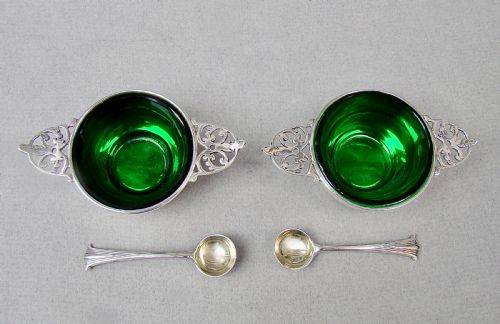
- A matched group of small containers and spoons designed for condiments such as salt, pepper, and mustard. These sets often share a fitted box with related tableware.
- Apostle spoon
- A decorative spoon featuring a small figure of an apostle cast at the end of the handle. Complete sets traditionally represent all twelve figures.
- Hallmark
- A series of official marks stamped into precious metals indicating the standard of purity, the assay office, and the date of manufacture.
Vintage Cased Spoons: Frequently Asked Questions
What are cased spoons used for?
These sets served formal dining, tea service, and special gift occasions such as christenings or weddings. The fitted boxes protected delicate silver and enamel flatware when not in use on the table.
Today, collectors utilise them for entertaining or display, keeping the implements safely stored in their original presentation linings just as intended by the original makers.
How do I identify the date of my spoons?
Dating relies primarily on the silver hallmarks stamped onto the back of the stems or bowls. These tiny symbols reveal the assay office and the exact year letter for manufacture.
Stylistic cues, such as geometric Art Deco shapes or ornate Victorian engraving, also help narrow down the production era when hallmarks are rubbed or unclear.
Are enamel spoons fragile?
Enamel requires careful handling because the glass paste fused to the silver can chip or crack under sharp impacts. Gentle washing by hand preserves the glossy finish.
Storing the spoons securely within their original velvet or silk-lined slots prevents the pieces from rubbing against one another and damaging the decorative surfaces.
What is the difference between tea and coffee spoons?
Coffee spoons are noticeably smaller in scale, designed to stir demitasse cups after a meal. Teaspoons possess slightly larger bowls suited for standard teacups and saucers.
Both forms appear frequently in fitted vintage boxes, sometimes accompanied by matching sugar tongs or lemon forks.