



Vintage Canteen of Cutlery Table
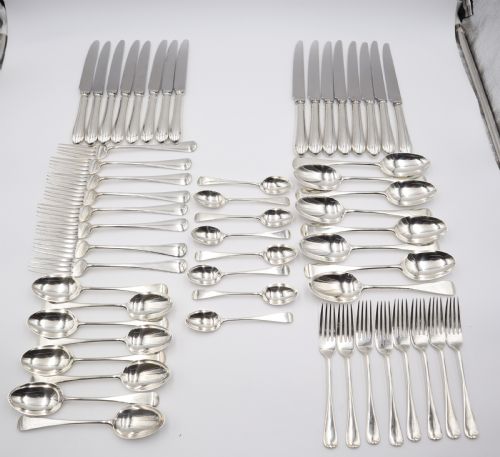
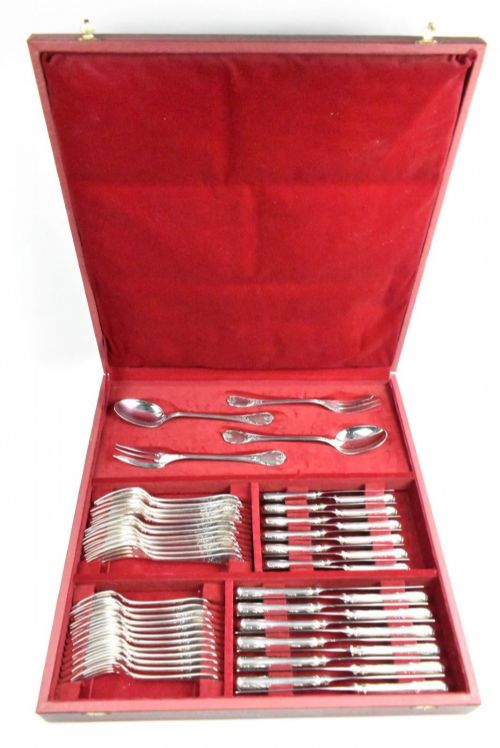
These vintage canteen of cutlery table pieces combine fitted storage and dining sets, offering a complete service within fitted chests.
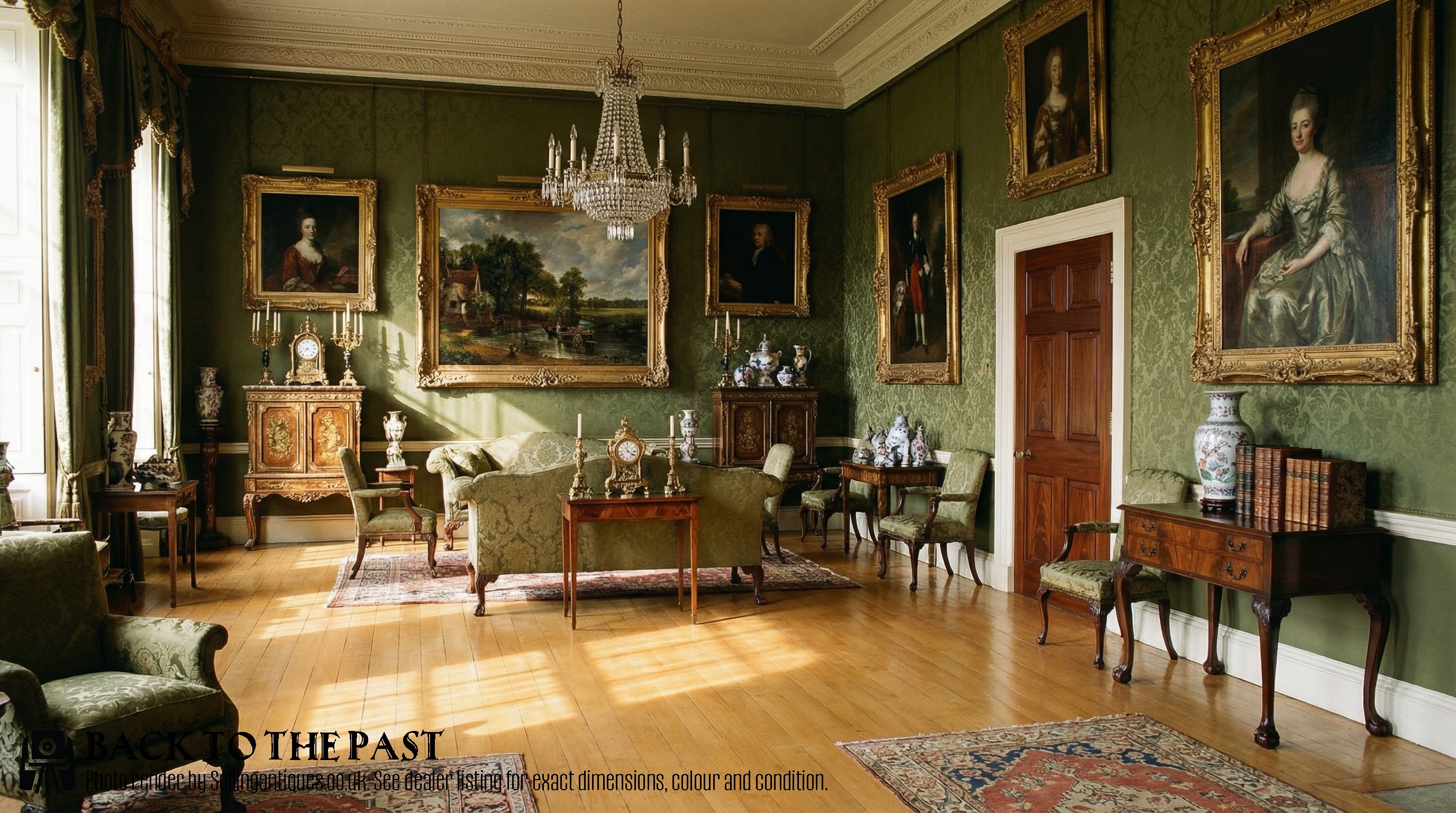
Vintage Canteen of Cutlery Table
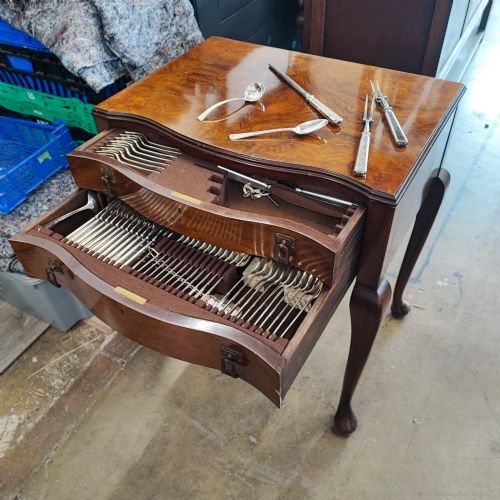
A vintage canteen of cutlery table provides organised storage for flatware while serving as a functional furniture piece in the dining room. These objects encompass cutlery canteens, sets, chests, and canteens on stands.
The selections span the Victorian, Edwardian, 1910, 1920, and 1930 periods, incorporating styles such as Art Deco, Traditional, Rococo Revival, and Queen Anne Revival. Oak, mahogany, and walnut provide the exterior housing for the sets.
Buyers frequently encounter fitted chests and canteens containing complete dining implements, often lined with fabric or felt to protect the contents. The configurations range from modest settings to extensive multi-piece services.
How they were made
Woodworking forms the foundation of these pieces, utilising durable hardwoods such as oak, mahogany, and walnut to construct sturdy tables, chests, and canteens. These timber housings are fitted with specialised interior slots and compartments designed to hold individual flatware pieces securely.
The internal contents combine silver plate, sterling silver, and steel components, paired with felt or fabric linings to cushion the implements. Sheffield manufacturers employed traditional metalworking techniques to shape the flatware and hardware.
The inventory spans Victorian, Edwardian, and Art Deco periods, encompassing both table forms and portable chests.
What varies in quality
The standard of timber selection and cabinetwork distinguishes different examples, with finer pieces exhibiting sophisticated joinery and choice wood grains. The choice between solid oak, mahogany, or walnut cabinetry reflects the original tier of production.
Completeness and material purity further define the range, from silver-plated sets to substantial sterling silver services by notable makers. The sophistication of the internal lining materials and the intricacy of the flatware patterns contribute to the overall execution.
Christofle·Tiffany·Walker & Hall·Mappin & Webb
The Vintage Canteen of Cutlery Table Glossary
- Canteen
- A fitted box, chest, or table designed specifically to hold and organise a set of cutlery. These containers feature dedicated slots and trays for each utensil.
- Flatware
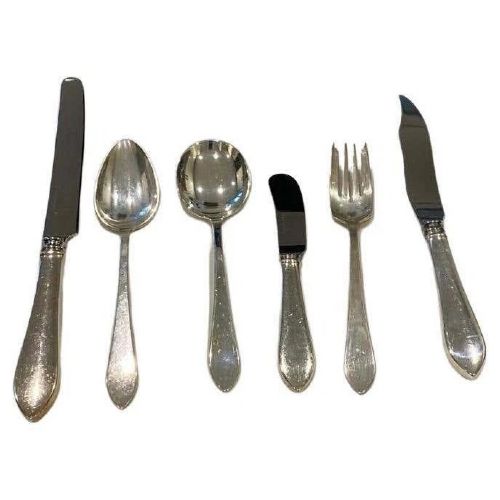
- Table utensils including knives, forks, and spoons used for dining. These items are typically housed within the canteen or chest.
- Silver Plate
- A base metal coated with a thin layer of silver through electroplating. This technique provided the appearance of solid silver at a lower production cost.
- Sterling Silver
- An alloy consisting of pure silver and other metals, usually copper, to increase durability. Items made to this standard carry specific purity hallmarks.
- Felt
- A textile material produced by matting, condensing, and pressing fibres together. It lines the interior compartments of canteens to prevent scratching on the metal implements.
Vintage Canteen of Cutlery Table: Frequently Asked Questions
What is a canteen of cutlery table?
A canteen of cutlery table is a dedicated piece of furniture that houses a complete set of dining utensils within fitted drawers or compartments. These items combine the utility of flatware storage with the presence of a standalone table or chest.
Such pieces range from Edwardian oak stands to walnut-cased chests. They ensure all dining implements remain organised and protected in one accessible location.
How do I date a vintage cutlery canteen?
Dating these pieces involves examining the overall style, timber choices, and construction methods characteristic of periods like the Edwardian era or the 1920s and 1930s Art Deco movement. Maker marks stamped on the silver or steel components provide precise attribution.
Cabinetry details such as brass hardware and specific wood veneers also help determine the era of manufacture. Comparing these elements against known records narrows down the production window.
What materials are used in these canteens?
The exterior housings utilise hardwoods including oak, mahogany, and walnut. Interiors are typically lined with felt or fabric to cushion the contents.
The cutlery itself consists of steel, silver plate, or sterling silver. Brass is frequently utilised for locks, hinges, and exterior handles.
How should I care for a wooden cutlery chest?
Maintaining the timber exterior requires gentle cleaning with appropriate wood care products to preserve the finish of the oak, mahogany, or walnut. Keeping the chest away from direct heat sources prevents the wood from warping.
Inspecting the interior fabric lining ensures the flatware remains free from moisture accumulation. Regular use and proper closing of the fitted drawers keep the mechanical joints functioning smoothly.