



Vintage Caned Dining Chairs
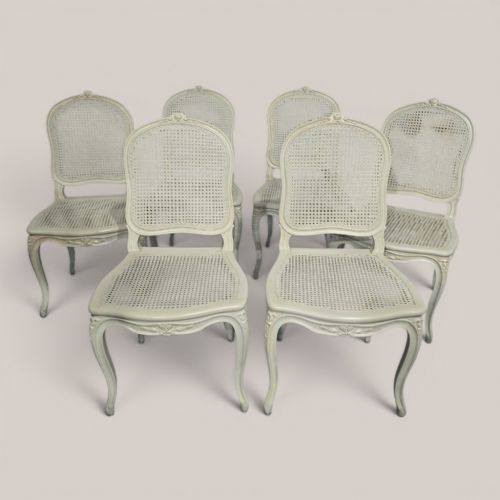
These vintage caned dining chairs bring woven texture and period form to the table, offering a lighter silhouette than solid timber.
Vintage Caned Dining Chairs
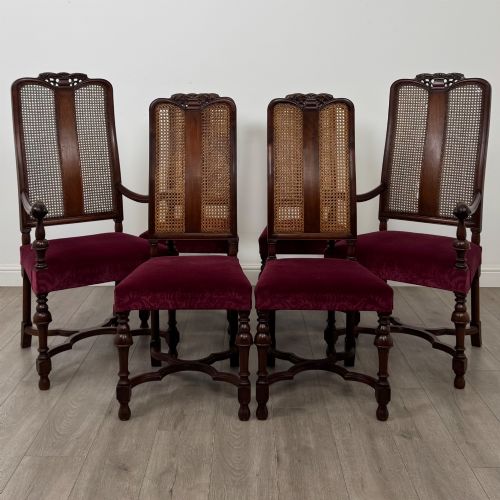
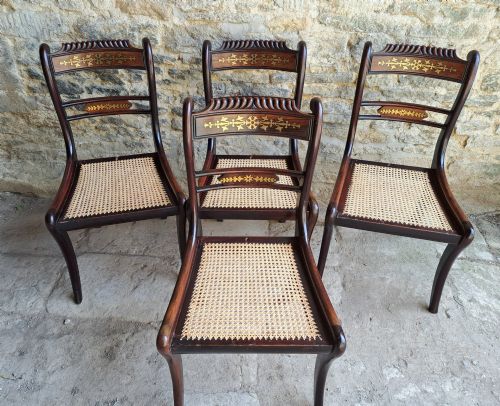
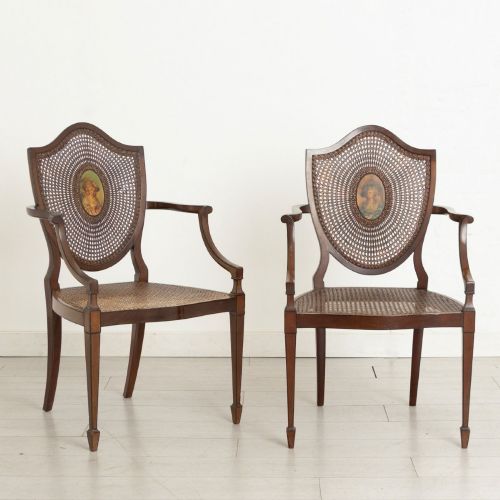
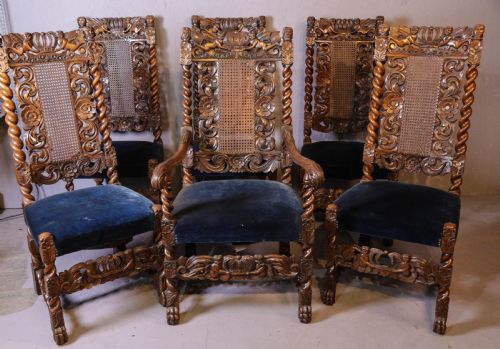
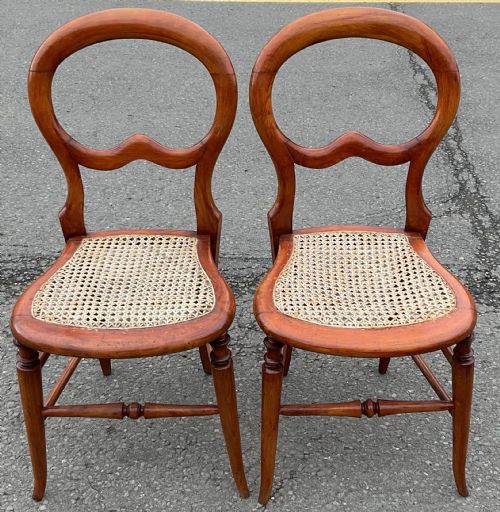
Vintage caned dining chairs span formal Regency mahogany designs with sabre legs and giltwood highlights, alongside revival pieces in oak and walnut drawing upon Carolean, Jacobean, and William and Mary styles. Buyers encounter both single side chairs and larger matched sets, frequently featuring woven cane panels to either the seat or the backrest.
The selection encompasses French Bergere chairs with upholstered cushions alongside British dining seats in mahogany, rosewood, and oak. Pieces range from grand sets intended for formal dining rooms to lighter occasional chairs and bedroom seating.
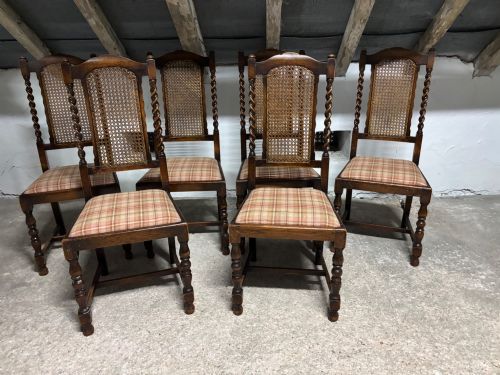
Earlier interpretations echo Georgian and Regency lines, while twentieth-century workshops produced revivals utilising traditional turned legs, barley twists, and elaborate hand carvings. This mix allows rooms to balance structured timber frames with the visual lightness of woven cane.
Materials and construction
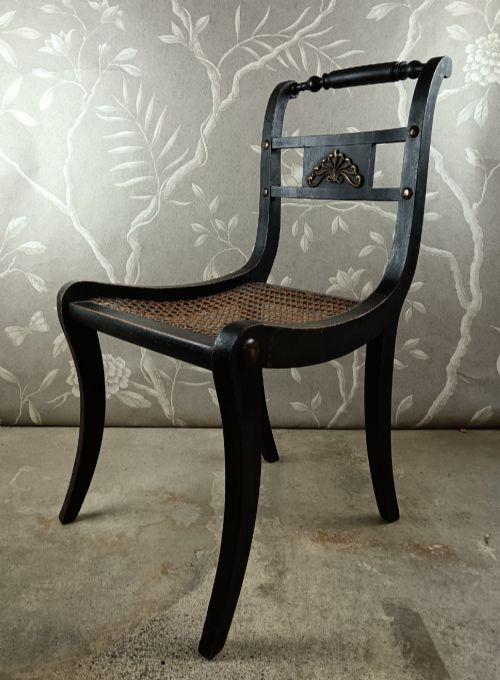
Framing relies predominantly on hardwoods such as mahogany, walnut, oak, and rosewood, occasionally finished with ebonising, gilt, or scumble paint. Artisans shaped these timbers into curved sabre legs, turned supports, and pierced back rails.
Caning employs split rattan woven through drilled holes in the timber frame or fitted into a designated groove using a spline. This flexible mesh provides resilient support while maintaining an open, airy structure.
Additional detailing incorporates brass inlay, elaborate hand carving, and turned barley twist legs. Where seats or backs utilise fabric, materials like velvet are applied over traditional padding.
Several diminutive children's chairs wait patiently in the selection, proving that miniature seating demands just as much joinery skill as full-sized dining sets.
Craftsmanship and condition
Quality rests upon the crispness of the timber carving, the precision of the joinery, and the integrity of the woven cane work. Finer examples display tight, uniform cane weaving that bears weight evenly across the frame without sagging.
The choice of primary timber heavily influences the standing of a piece, with dense grain, rich figuring, and original surface finishes commanding greater appreciation. Matching sets demonstrate higher initial investment than assembled groups or single side chairs.
Gillows·Waring & Gillow
The Vintage Caned Dining Chairs Glossary
- Cane
- A woven material derived from the peeled stem of the rattan palm, utilised for flexible and breathable chair seats and backs. It offers lightweight strength.
- Bergere
- A French-style armchair or dining chair featuring an enclosed upholstered seat and typically a caned backrest. These frames often exhibit decorative hand carving.
- Sabre leg
- A concave, outwardly curving leg shape popular during the Regency period. It tapers toward the foot to impart a sense of movement.
- Barley twist
- A type of furniture turning resembling a spiral helix, frequently seen on seventeenth-century revival oak frames from later periods. It requires skilled lathe work.
- Scumble paint
- A decorative surface finish applied to imitate the grain of more expensive timbers or to create mottled patterns. It appears on nineteenth-century country pieces.
Vintage Caned Dining Chairs: Frequently Asked Questions
How do I care for vintage cane seats?
Keep caned panels hydrated by occasionally wiping them with a damp cloth on the underside to prevent the rattan from becoming brittle. Avoid placing them near direct heat sources.
Weight distribution matters greatly for longevity. Using suitable seat pads or cushions distributes pressure evenly across the woven strands during extended sitting.
Can broken cane seats be repaired?
Traditional hand-woven cane can be completely replaced by a skilled restorer who threads new rattan through the existing holes in the timber frame. Spline cane involves pressing the mesh into a groove.
Repairs restore both structural integrity and the original aesthetic balance of the chair, ensuring it remains functional for daily use.
Are these chairs suitable for daily dining?
Many sturdy hardwood frames and resilient cane panels handle regular meals comfortably, provided the construction remains tight and stable. Lighter occasional or bedroom chairs suit occasional seating better.
Adding slim squab cushions protects the woven surface from direct wear while increasing comfort during longer dinner parties.
How do I identify a Regency caned chair?
Look for characteristic design elements such as ebonised finishes, gilt highlights, brass inlay, and sweeping sabre legs. Timbers from this era are typically mahogany or rosewood.
Proportions tend to be refined and classical, reflecting the influence of French Neoclassical and British Regency taste from the early nineteenth century.