


Vintage Cane Bedroom Chair
A vintage cane bedroom chair brings lightness and texture to a room, using woven panels to create seating that remains airy.
Vintage Cane Bedroom Chair
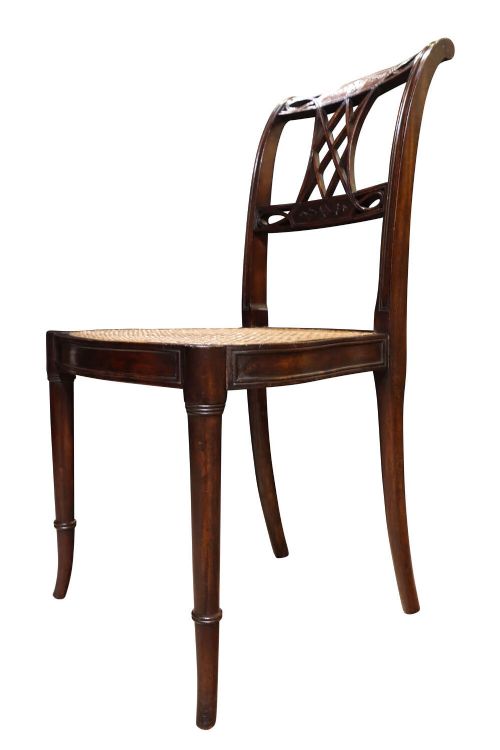
A vintage cane bedroom chair is a seating form designed primarily for private chambers, appearing in various stylistic iterations across multiple decades. Buyers searching this phrase encounter lightweight occasional seats, tub armchairs and boudoir designs intended for domestic repose. The selection spans the Regency, Victorian and Edwardian eras, alongside later pieces from the early twentieth century.
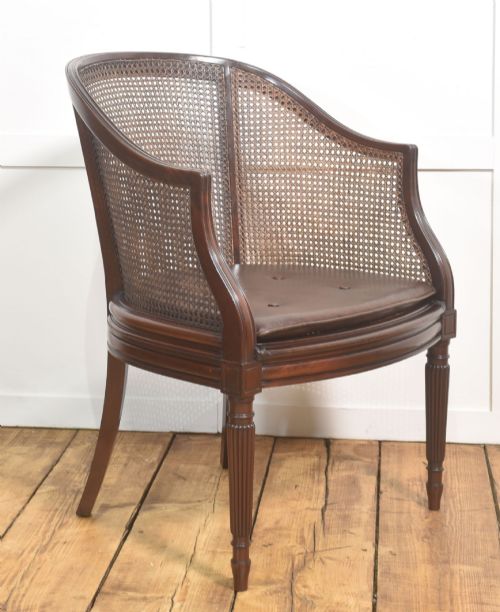
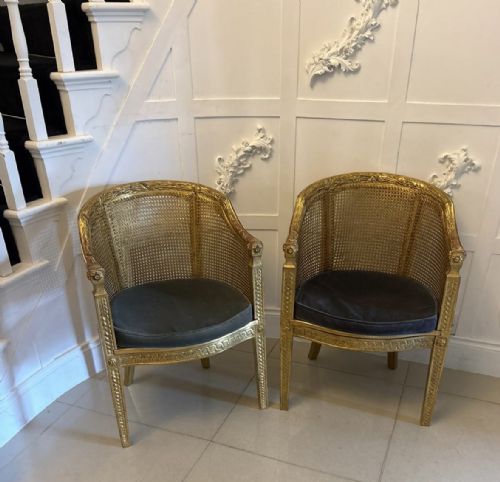
Forms range from simple side chairs and open armchairs to bergere models with enclosed woven sides. Materials frequently combine timber frames with woven organic seating, creating a distinctive profile that contrasts solid structure with open mesh work. These items function equally as decorative accents and practical furniture.
Origins stretch from British workshops to French ateliers, incorporating regional interpretations of classical and revival styles. Pieces maintain a domestic scale suited to bedrooms, dressing rooms and smaller reception spaces. The combination of turned woodwork and woven panels defines the visual character of the category.
How they were made
Construction relies upon traditional timber framing joined with mortise and tenon techniques, paired with hand-woven organic materials. Workshops utilised mahogany, oak, walnut and beech, often applying paint, scumble finishes or gilt to the structural elements. Simulated rosewood and ebonising also appear as surface treatments on frames.
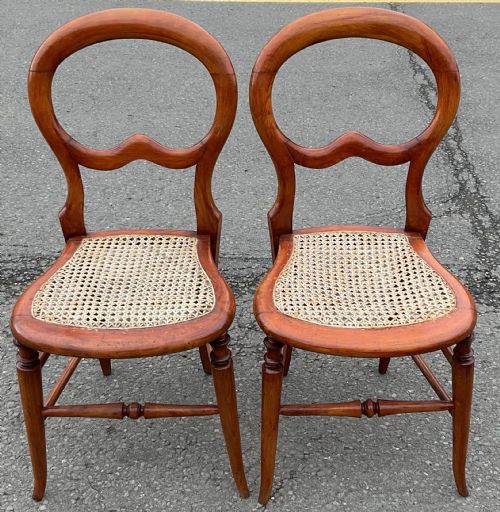
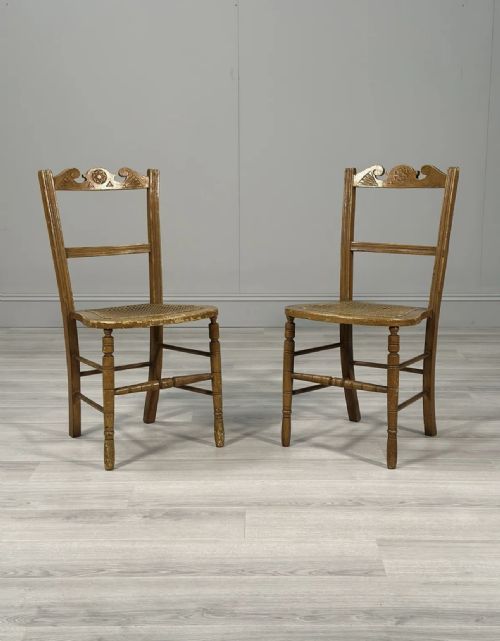
The characteristic seating and back panels employ woven cane or rattan cane, threaded through drilled holes in the wooden rail or held within channels. Turning, carving and inlay work decorate the structural uprights, legs and splats, ranging from bamboo turnings to elaborate giltwood flourishes.
Hardware and secondary elements incorporate brass details and occasional fabric upholstery pads, complementing the primary wood and woven surfaces. Frames demonstrate structural joinery designed to support the tension of woven seating panels without heavy bulk.
What varies in quality
Quality rests upon the tightness and regularity of the woven cane work, alongside the structural integrity of the underlying timber frame. Superior examples display even, uniform strands within the woven panels and robust joinery that resists movement under weight. Lesser execution reveals brittle strands, uneven tension or loose joints.
The sophistication of the timber carving and the finish of the surface dictate the standing of a piece within its period. Original painted or gilded surfaces hold greater distinction than later amateur interventions. Masterly turning, such as complex bamboo imitation or crisp classical reeding, separates workshop production from standard output.
The Vintage Cane Bedroom Chair Glossary
- Cane
- The peeled bark of the rattan palm, split and woven into open mesh patterns for seats and backs. It provides flexible strength and visual lightness.
- Bergere
- A closed armchair with upholstered or cane-filled sides and a loose seat cushion. Originating in France, it offers a wider, deeper seat than a standard side chair.
- Ebonisation
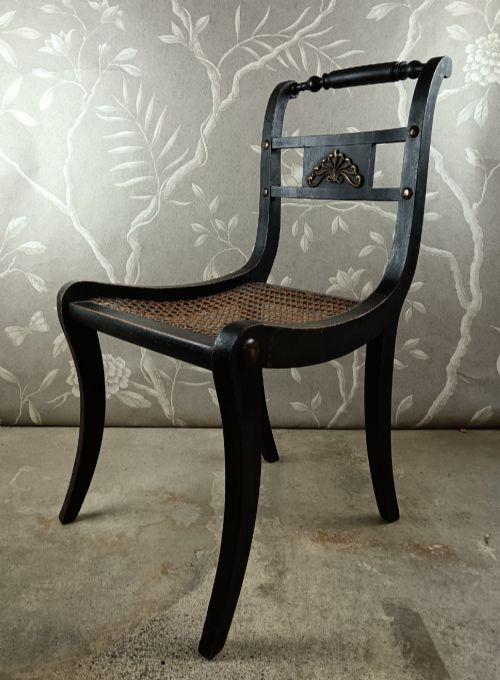
- The process of treating light timber with chemical stains or paint to imitate ebony. This finish was favoured during the Regency period for dramatic contrast.
- Scumble paint
- A translucent decorative paint layer dragged or textured over a base colour to simulate grained wood or create a mottled finish. Victorian makers used this technique on secondary timbers.
- Lyre back
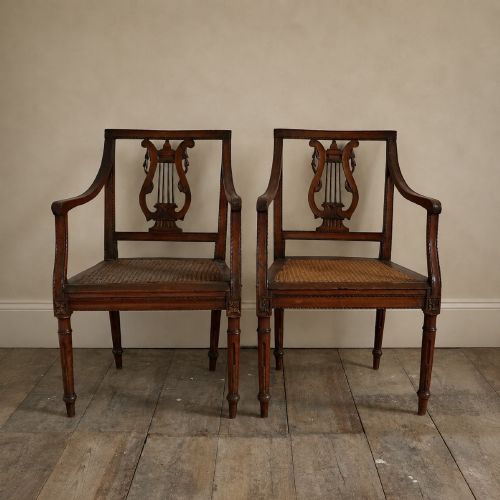
- A chair back shaped in the form of an ancient Greek lyre instrument. It appears frequently in Regency design.
Vintage Cane Bedroom Chair: Frequently Asked Questions
Are these chairs sturdy enough for daily use?
Most vintage cane bedroom chairs suit regular domestic sitting when the woven panels remain taut and undamaged. They were built for lighter domestic duty rather than heavy lounge use.
Heavier occupants should exercise care with older woven surfaces, as aged material loses some of its original elasticity over decades of service.
How do I care for the woven cane?
Maintaining woven panels involves gentle dusting and occasional damp wiping to prevent the natural material from drying out and becoming brittle. Keeping them away from direct heat sources preserves the flexibility of the rattan.
Applying a light moisture treatment can help maintain the resilience of older cane strands without clogging the open mesh.
How can I tell a Regency piece from an Edwardian one?
Regency examples often feature ebonised finishes, sabre legs or classical motifs like lyre backs reflecting early nineteenth-century neoclassical tastes. The timber work tends to be crisp and restrained.
Edwardian interpretations generally show softer revival forms, lighter mahogany frames with decorative inlay, and a less severe structural outline suited to comfortable bedroom settings.
What is the difference between a side chair and an armchair?
Side chairs lack armrests and have a compact footprint designed to slide beneath dressing tables or stand against bedroom walls when not in use. They offer a simpler silhouette.
Armchairs include structural supports for the arms, offering a broader seat and a more enclosed posture suited to reading or resting in a chamber.