

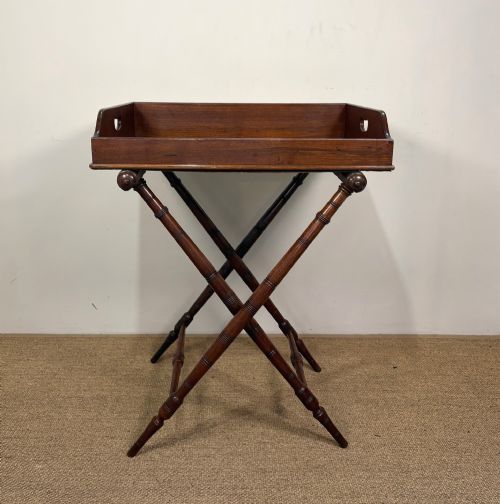


Vintage Butler Tray Top
These vintage butler tray top pieces are traditional serving surfaces and folding stands built for practical utility.
Vintage Butler Tray Top
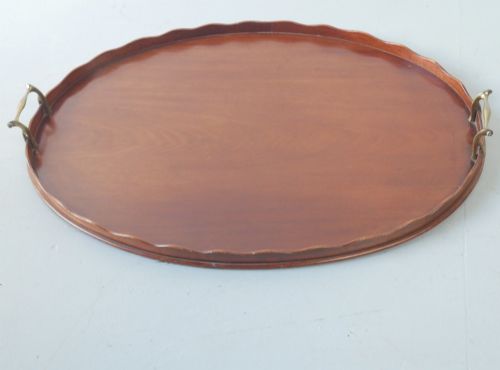
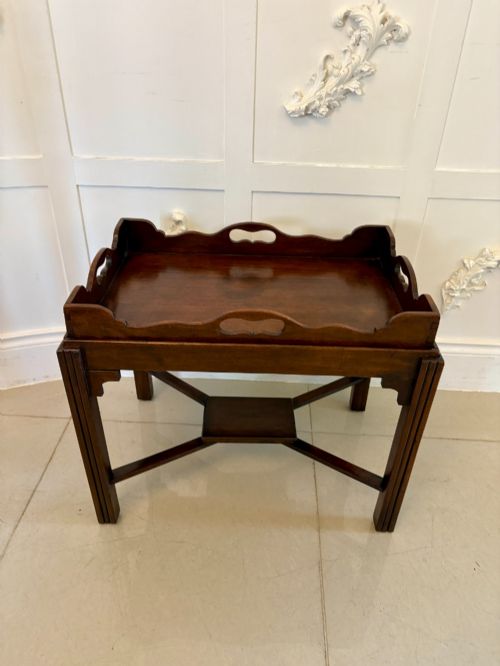
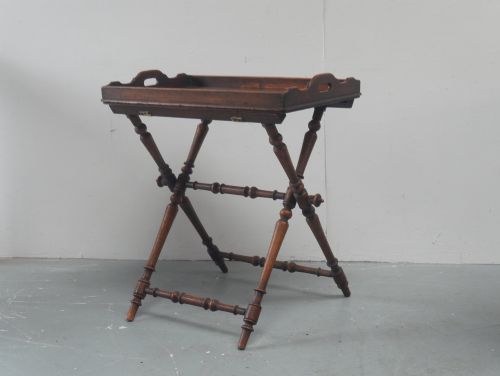
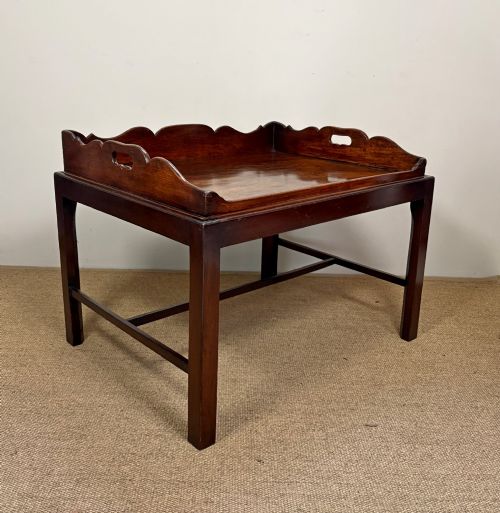
A vintage butler tray top search brings up portable serving trays and folding stands spanning the eighteenth century to the early twentieth century. These items combine a removable tray with a folding or fixed base, serving variously as occasional tables, coffee tables, and serving trays. Examples range from simple oak frameworks to refined mahogany folding butler tray on stand assemblies.
The most common versions met on this page are nineteenth century mahogany and oak pieces. Buyers encounter plain folding stands alongside serving trays featuring raised rims and carry handles. Styles shift from Georgian and Regency lines to Edwardian variations and English Country interpretations.
How they were made
Cabinet makers utilised dense timbers such as mahogany and oak for structural durability and repeated folding action. Brass hinges and fittings reinforced corners and joints on campaign and folding variants, ensuring the tray locked securely onto the stand. Paper maps and glass occasionally surfaced on specialised serving trays, while paint decorated Venetian rococo surfaces.
Joinery techniques focused on robust side joints and stable cross stands to support weight during transit and service. Wood surfaces received polished finishes that highlighted natural grain patterns across tables and serving trays.
Vintage Butler Tray Top Retail Price Guide 2026
Typical asking prices for vintage butler tray top among the pieces listed under this phrase on Sellingantiques today, from the lower quarter to the upper quarter. They describe what is for sale here now, not the wider market.
What varies in quality
Quality rests in the precision of the timber selection and the integration of the tray with its stand. Finer pieces demonstrate careful figuring in the mahogany or oak, alongside well-fitted brass hardware that operates smoothly without play.
Proportion and structural integrity distinguish simpler utility items from superior examples. Better workmanship appears in the crispness of shaped gallery edges and the stability of folding legs when fully assembled.
The Vintage Butler Tray Top Glossary
- Butler tray
- A portable serving tray with raised sides, often fitted with cut-out handles for lifting. It typically lifts off an independent folding stand.
- Stand
- A collapsible or fixed wooden frame designed to support a tray at table height. These structures often feature X-frame or folding leg designs for compact storage.
- Campaign
- A style of portable furniture built for travel with recessed brass hardware and folding elements. These pieces originated to serve officers on military campaigns.
- Gallery
- A raised wooden border surrounding the perimeter of a tray to prevent items from sliding off during transport. Galleries can be solid or pierced with hand grips.
- Venetian Rococo
- A decorative style characterised by ornate painted finishes and curved forms. This aesthetic appears on specialised decorative tray tables.
Vintage Butler Tray Top: Frequently Asked Questions
What is a butler tray top?
A butler tray top is a removable wooden tray featuring raised edges, designed to sit upon a folding or fixed wooden stand.
These pieces function as versatile low tables and serving equipment across historic domestic interiors.
How were butler trays used?
Servants used these trays to carry food and drink from kitchens to dining spaces before placing them onto dedicated folding stands.
They also served as portable desks or general utility tables in campaign and country house settings.
Are the trays fixed to stands?
Most traditional butler trays lift entirely off their folding wooden stands for easy transport and storage.
Some variants integrate the top more permanently or convert into low coffee tables.
How do I date a butler tray?
Dating relies on timber selection, structural joinery, and the style of brass hardware fitted to the corners.
Earlier pieces from the eighteenth century typically show rich mahogany and hand-cut joinery, whereas Edwardian and later examples exhibit different turning and finish traits.