



Vintage Bureau Plat
A vintage bureau plat offers a refined freestanding writing surface, uniting historical French cabinet-making with functional elegance for modern interiors.
Vintage Bureau Plat
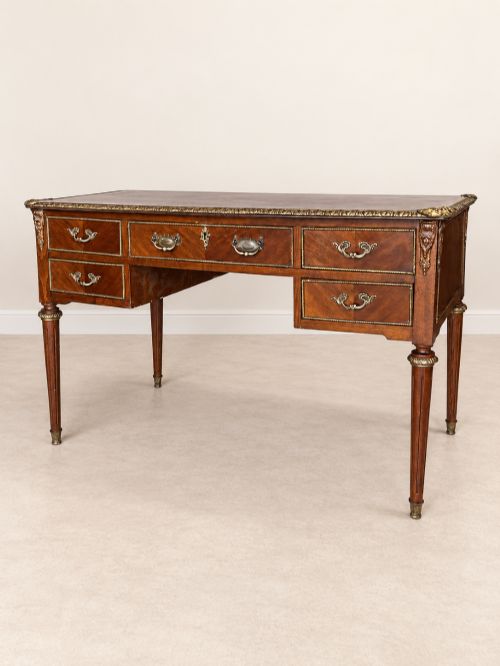
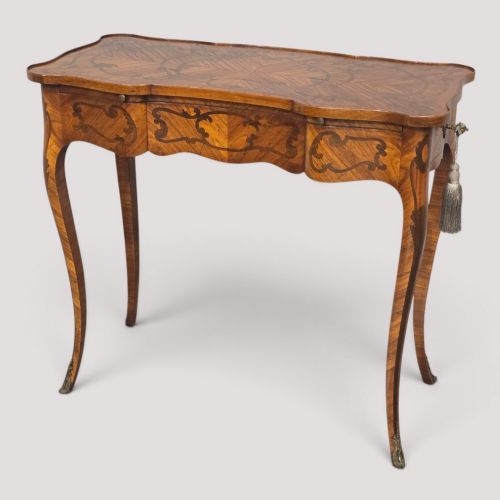
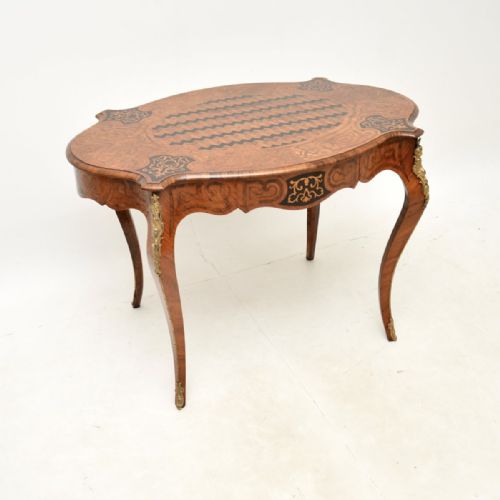
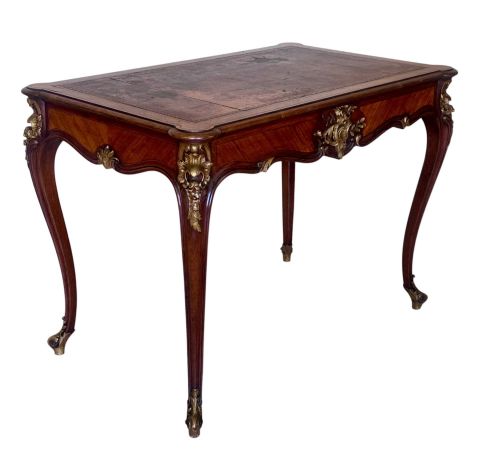
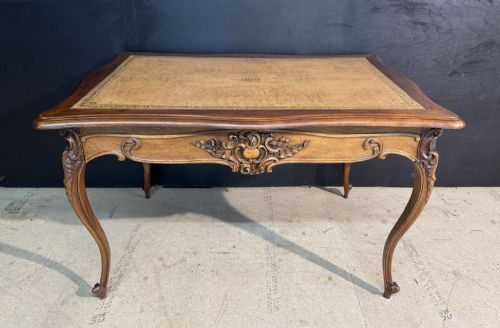
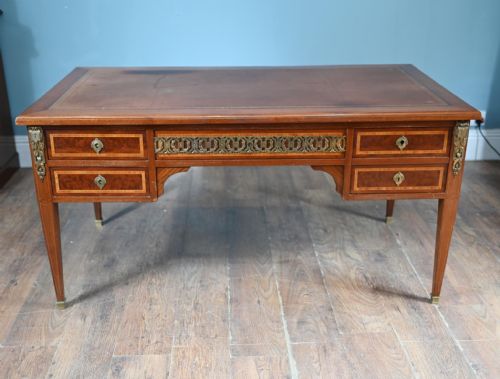
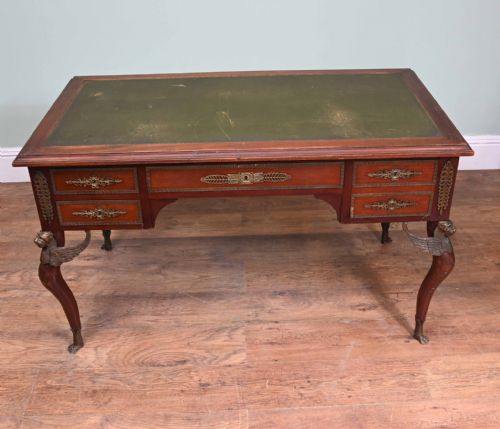
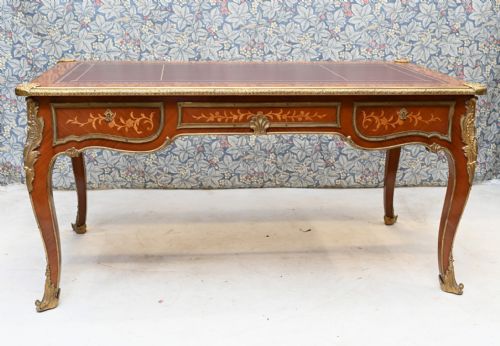
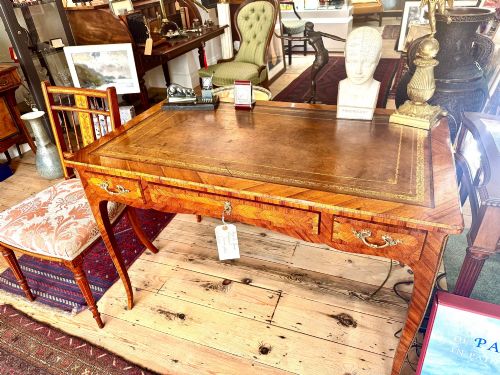
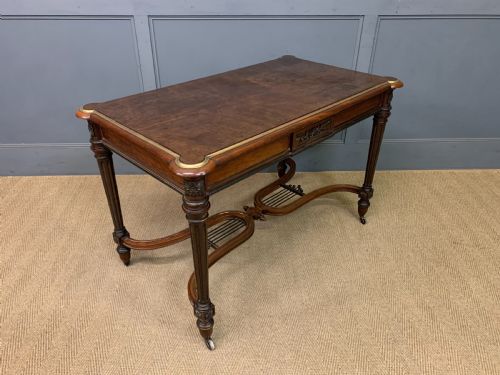
When you search for a vintage bureau plat, you are examining a freestanding writing table designed to occupy the centre of a room rather than sit against a wall. The examples on this page span the eighteenth to the twentieth centuries, drawing heavily upon French stylistic revivals. You will encounter pieces categorized as writing desks, library tables, and centre tables alongside traditional tables.
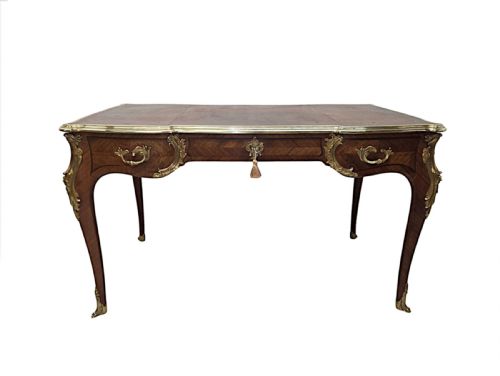
The prevailing aesthetic leans towards Louis XV, Louis XVI, and Empire styles, reflecting continental design preferences of nineteenth and early twentieth-century makers. These desks typically feature a leather-lined writing surface bordered by moulded timber and raised upon slender cabriole or tapering legs. Such proportions make them adaptable as compact writing stations or prominent display surfaces in domestic interiors.
Materials and Construction Methods
Cabinet-makers utilised a foundation of dense timbers including mahogany, walnut, kingwood, rosewood, and zebrawood, frequently enriched with intricate marquetry and parquetry patterns. Surface decoration relied upon contrasting veneer grains arranged in geometric or floral motifs across the top and drawer fronts. Leather inserts provide the traditional tactile writing plane, often finished with subtle gilt tooling around the perimeter.
Metal ornamentation played a structural and decorative role, with ormolu and gilt bronze mounts cast and chased to accentuate the curves of the apron and feet. Brass detailing additionally protects vulnerable edges and frames the inset leather panels. Joinery techniques from the nineteenth and early twentieth centuries ensure rigidity in these sprawling, freestanding forms without sacrificing delicate visual lines.
One exceptional listing presents a pair of red lacquered bureau platt desks, proving that eighteenth-century French taste occasionally wore scarlet.
Distinguishing Quality Among Examples
Quality rests upon the crispness of the gilt bronze or ormolu mounts and the precision of the timber inlay. Finer examples display hand-chased metalwork that integrates seamlessly with the underlying wood contours, whereas lesser pieces utilise stamped or simplified brass fittings. The depth and warmth of the polished veneer further separate standard commercial output from master cabinet-work.
Structural integrity in the drawer construction and leg joints dictates long-term resilience, particularly given the outward spread of cabriole designs. Originality of components, such as surviving leather writing inserts and matching hardware, elevates the historical cohesion of a desk. Subtle details like parquetry alignment reveal the artisan's investment of time during initial assembly.
CH. Jeanselme & Co
The Vintage Bureau Plat Glossary
- Bureau plat
- A flat-topped freestanding writing table, typically fitted with drawers in the frieze and originating in France. This form became a staple of elite interior decoration from the eighteenth century onwards.
- Ormolu
- Gilded bronze ornamentation applied to furniture edges and mounts. The technique involves coating copper alloy with a mercury-gold amalgam before heating.
- Marquetry
- The art of applying pieces of veneer to a structure to form decorative patterns and pictures. Artisans cut various coloured woods to fit precisely together.
- Parquetry
- Geometric mosaic woodwork used for floors and furniture surfaces. It creates repeating patterns like cubes or chevrons using contrasting timber veneers.
- Frize
- The horizontal band situated immediately beneath the top surface of the desk. Drawers are frequently integrated into this structural zone.
Vintage Bureau Plat: Frequently Asked Questions
Where should a bureau plat be placed?
Because these desks are finished on all sides, they perform best positioned in the middle of a study or drawing room rather than pushed against a wall. This allows the mountings and rear veneer work to remain visible.
Sufficient clearance around the piece ensures the drawers remain accessible and the proportions dominate the room naturally.
How do I care for the leather top?
The leather writing surface benefits from occasional cleaning with a slightly damp cloth followed by a neutral leather conditioner. Avoid placing wet items or unprotected drinks directly onto the hide.
Gentle maintenance preserves both the gilt tooling borders and the suppleness of the material over decades of daily use.
How do I identify a Louis XV revival piece?
Louis XV revival pieces are characterised by asymmetrical curves, exuberant floral marquetry, and sweeping cabriole legs terminating in sabots. These nineteenth-century interpretations emulate eighteenth-century rococo aesthetics.
Look closely at the timber choice, such as kingwood or rosewood, combined with chased ormolu mounts to confirm the revival period.