

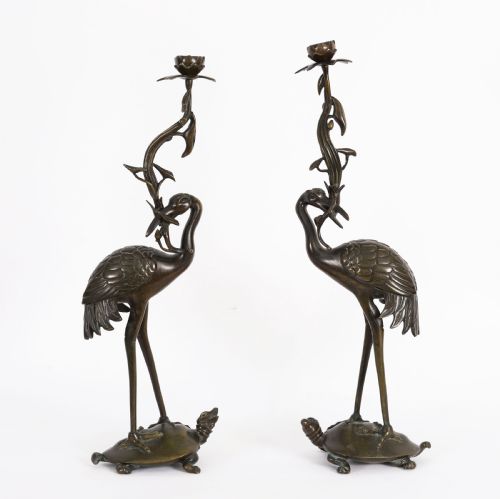
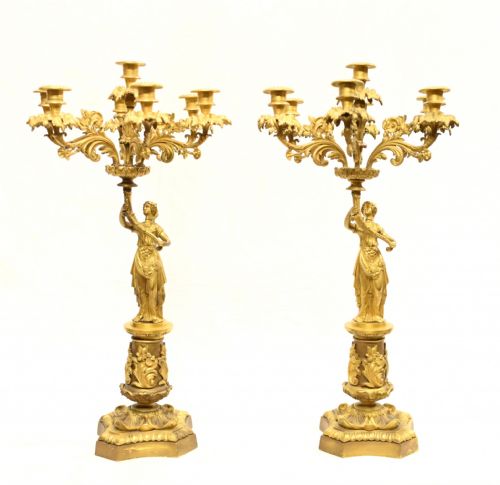
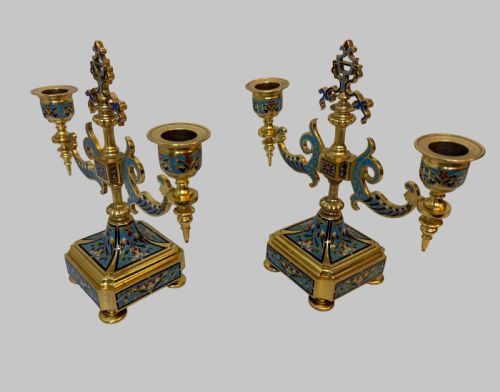


Vintage Bronze Candle Stands
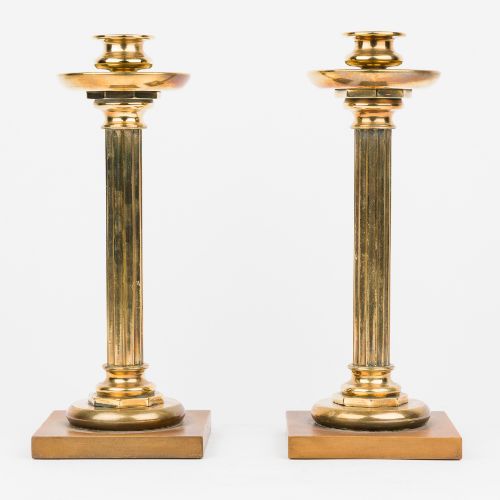
These vintage bronze candle stands bring genuine presence to a room, combining substantial weight with the warm glow of candlelight.
Vintage Bronze Candle Stands
When you search for vintage bronze candle stands, you encounter a diverse array of lighting supports ranging from single heavy sticks to grand multi-armed candelabra. The selection spans the nineteenth century through the art deco era, incorporating various revivalist aesthetics and continental workshops.
You are most likely to meet pairs of nineteenth-century candlesticks and candelabra on this page, frequently cast in France or England. These pieces often feature classical motifs or ornate detailing that reflects the taste of their respective periods.
How they were made
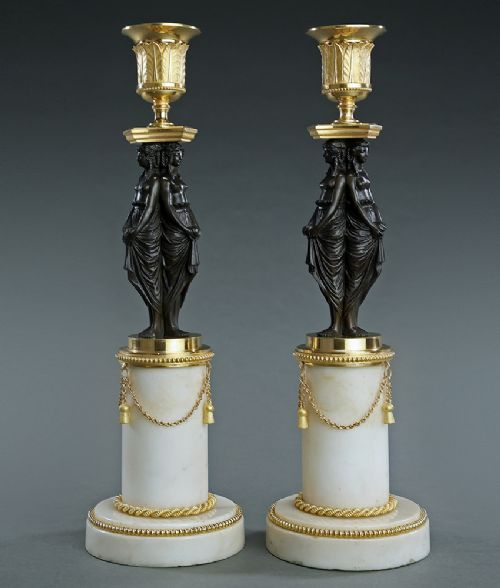
Maker's workshops typically utilised casting techniques to shape bronze and brass into intricate forms, often enhancing the metal with patination, gilding, or ormolu finishes. These metallic structures were frequently combined with contrasting natural materials such as marble, onyx, and porphyry to add stability and visual depth.
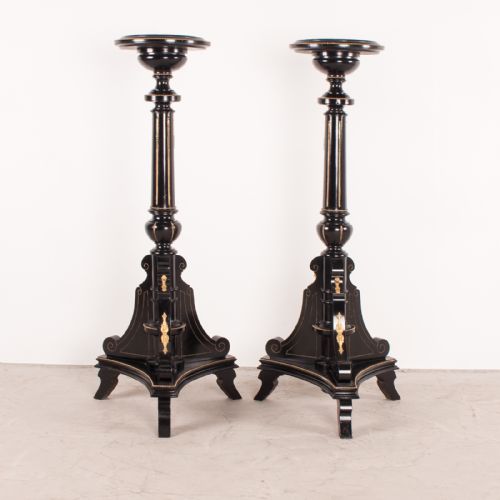
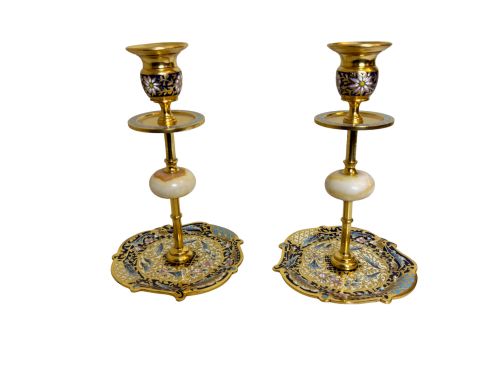
Surface decoration often involved manual chiselling and chasing after the initial cast, alongside decorative inlays like champleve enamel. Artisans employed ebonising and applied patinas to create varied tonal contrasts across the stands.
Listings incorporate nineteenth-century items alongside early twentieth-century examples, spanning materials like marble, onyx, and champleve enamel.
What varies in quality
The integration of secondary materials such as genuine marble or fine enamel significantly impacts the overall character and standing of a piece. Well-matched pairs with consistent patination and intact structural elements hold greater visual coherence than mismatched or heavily altered items.
Abel Landry·Dugourc
The Vintage Bronze Candle Stands Glossary
- Ormolu
- A technique of applying finely ground high-carat gold to an object of bronze. This gilded bronze finish provides a bright, durable surface seen on many nineteenth-century French pieces.
- Pricket
- A sharp metal spike in the drip pan of a candlestick or altar light designed to secure a candle. These are commonly found on church candlesticks and Japanese bronze examples.
- Champleve
- An enamelling technique where troughs or cells are carved into the metal surface and filled with vitreous enamel. The piece is then fired and polished flat.
- Torchere
- A tall ornamental stand intended to hold a light or candelabrum. These pieces often feature slender columns or figural shafts.
- Candelabra
- A branched candlestick holding multiple candles or lights from a single base. They frequently incorporate decorative arms and central stems.
Vintage Bronze Candle Stands: Frequently Asked Questions
How do I clean vintage bronze?
Dusting gently with a soft, dry cloth is usually sufficient for maintenance. Avoid abrasive polishes that can strip away original patination or ormolu gilding.
Water and chemical cleaners should be kept away from these surfaces, particularly where enamel or mixed media elements are present.
Are these candle stands electrified?
Most of the pieces listed retain their original configuration for holding wax candles rather than electrical fittings. You will find traditional prickets, sockets, and drip pans designed for open flames.
Any conversion to a table lamp or standard lamp is explicitly noted in the individual listing details.
What is the difference between bronze and brass?
Bronze is an alloy primarily composed of copper combined with tin, yielding a darker, richer tone that takes patination well. Brass is an alloy of copper and zinc, which tends to present a brighter golden colour.
Many listings encompass both metals, sometimes enhanced with gilt or patinated finishes.
How do I date a bronze candle stand?
Dating relies on stylistic clues such as the symmetry of Regency design, the ornate revival motifs of the Victorian period, or the geometric lines of Art Deco. Construction marks, casting seams, and the choice of secondary materials like marble also help place a piece in its era.
Comparative study of similar documented works from makers or design traditions provides further chronological context.