





Vintage Bronze Bookends
These vintage bronze bookends bring weight and character to a shelf, pairing solid metal figures with heavy stone bases.
Vintage Bronze Bookends
Vintage bronze bookends combine sculptural metal figures with substantial bases made from materials such as marble, onyx, and alabaster to hold volumes upright. These decorative desktop objects span multiple decades and design movements, ranging from animal figures to architectural motifs.
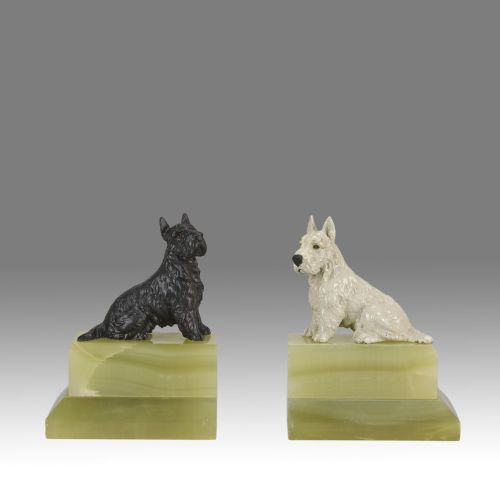
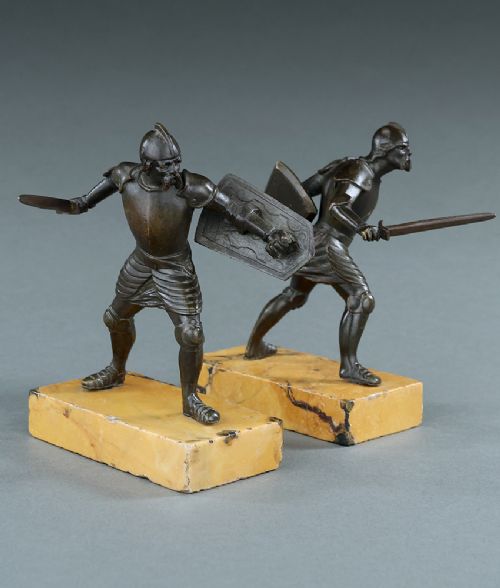
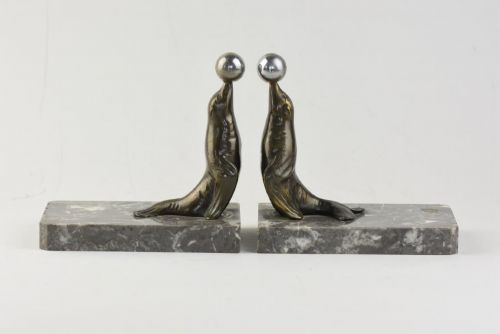
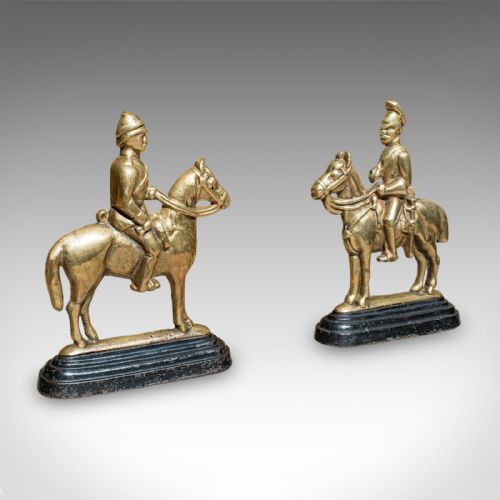
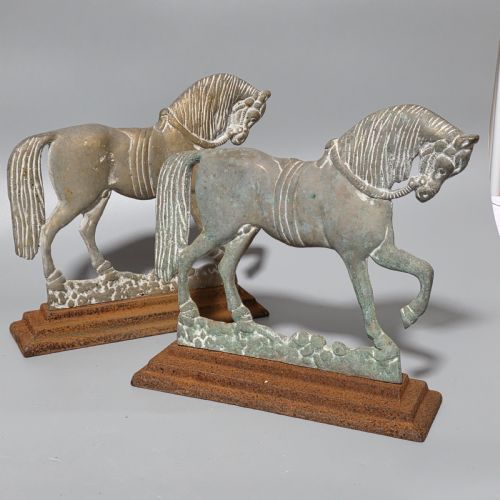
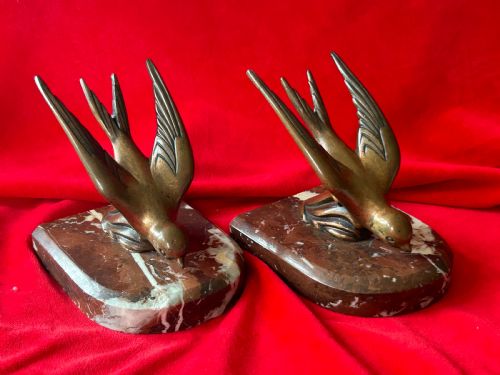
The selection here draws heavily from the Art Deco period, featuring stylised creatures like sea lions, squirrels, and greyhounds mounted on polished stone. Alongside these streamlined twentieth-century examples, earlier Victorian and Regency pieces appear with classical themes and equestrian subjects.
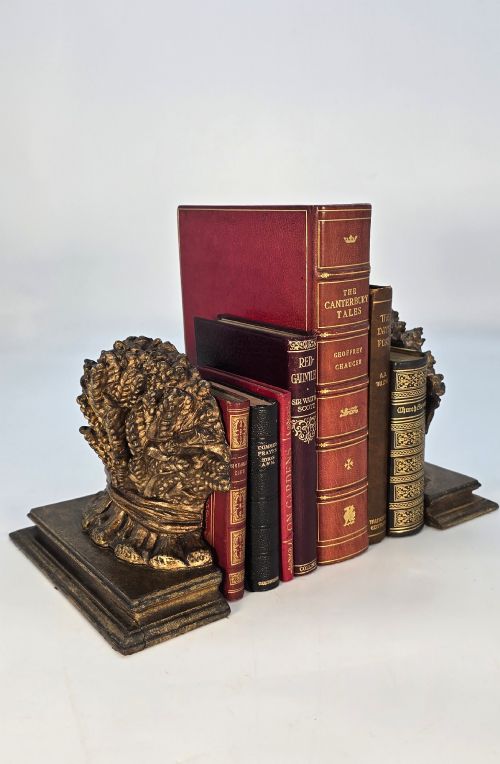
Pairs dominate the selection, often cast as mirror images to frame a row of books effectively. Alongside dedicated book rests, related heavy items like doorstops occasionally surface within the category due to their shared metal and stone construction.
How they were made
Metalwork forms the core of these pieces, utilising traditional casting techniques in bronze, spelter, brass, and cast iron. Some animals receive a cold-painted finish, applying colour by hand to the cold metal surface after casting.
Bases combine natural stone and mineral materials such as marble, onyx, and alabaster, cut and polished to provide the necessary weight to support heavy books. Metal figures are typically secured to these stone plinths using threaded bolts or screws visible from beneath.
Vintage Bronze Bookends Retail Price Guide 2026
Typical asking prices for vintage bronze bookends among the pieces listed under this phrase on Sellingantiques today, from the lower quarter to the upper quarter. They describe what is for sale here now, not the wider market.
Listings span the nineteenth and twentieth centuries, uniting Victorian cast metalwork with streamlined Art Deco marble designs.
What varies in quality
Quality rests in the crispness of the metal casting and the individuality of the surface finish, distinguishing finely detailed models from mass-produced commercial items. Hand-finished details on cold-painted animals or chased bronze surfaces show the touch of a skilled maker.
The choice and preparation of the mounting stone also divide standard examples from superior ones. Dense marbles with rich natural veining and precise corner bevelling elevate the overall presence of the object.
Franz Gruber·C Omin·Karl Hagenaur·Herzig
The Vintage Bronze Bookends Glossary
- Cold-Painted Bronze
- Bronze sculpture painted with layers of cold enamel colours after casting. This technique was widely used in Vienna workshops during the early twentieth century.
- Spelter
- A zinc alloy commonly utilised as a less expensive substitute for bronze. It frequently receives a bronze-coloured patina to mimic more costly metalwork.
- Art Deco
- A design style flourishing in the 1920s and 1930s characteristed by streamlined geometric forms and stylised animal figures. It represents a major aesthetic in this collection.
- Regency
- An English architectural and decorative style dating from the early nineteenth century. Pieces from this period often display classical revival motifs.
Vintage Bronze Bookends: Frequently Asked Questions
Are these bookends heavy enough for large books?
Most of these pieces combine cast metal figures with dense stone bases made from marble or onyx. This combination provides the necessary weight to support heavy volumes securely on a shelf.
Lighter examples cast in spelter or mounted on thinner bases suit smaller rows of books or lighter paperbacks rather than massive folios.
How do I care for marble and bronze?
Dust the metal surfaces gently with a soft dry cloth and avoid harsh chemical cleaners that can strip the patination. Marble bases benefit from occasional wiping with a damp cloth followed by thorough drying.
Keep these objects away from direct sunlight and damp environments to protect both the stone polish and the metal finish over time.
What is the difference between bronze and spelter?
Bronze is a durable alloy of copper and tin that yields sharp casting details and a rich natural patina. Spelter is a softer, zinc-based metal that was frequently utilised as an economical alternative.
Spelter items often display a bronze-coloured surface coating designed to imitate genuine bronze metalwork.
How can I tell an Art Deco pair apart from Victorian ones?
Art Deco pairs from the 1920s and 1930s typically feature sleek, streamlined animal forms, geometric marble plinths, and stylised modern motifs. Victorian examples lean towards ornate classical subjects, equestrian themes, and highly detailed Renaissance revival styles.
The choice of stone and the contour of the metal figures usually signal the era of production clearly.