

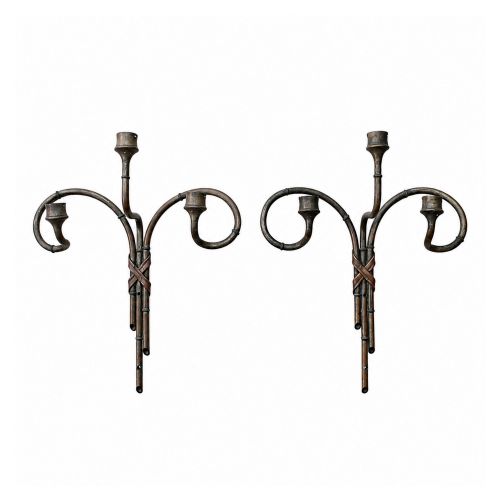

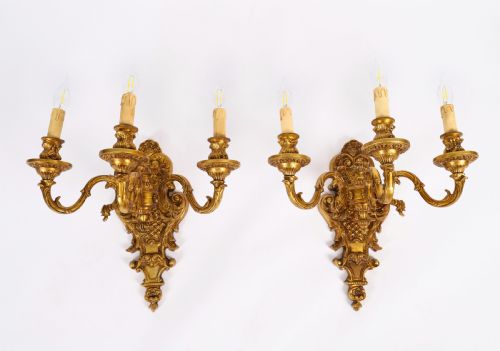
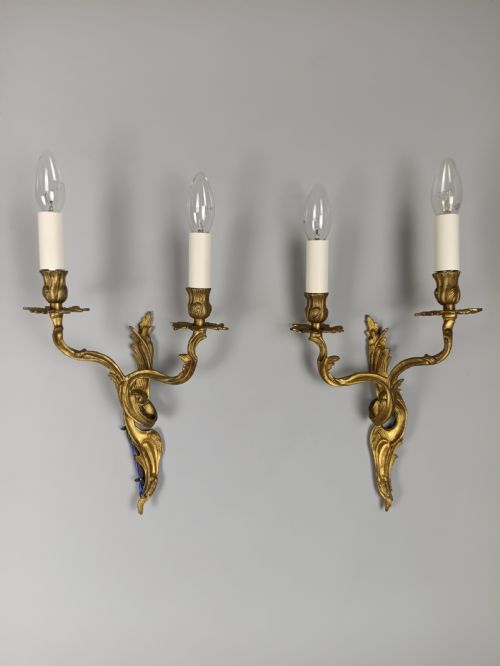
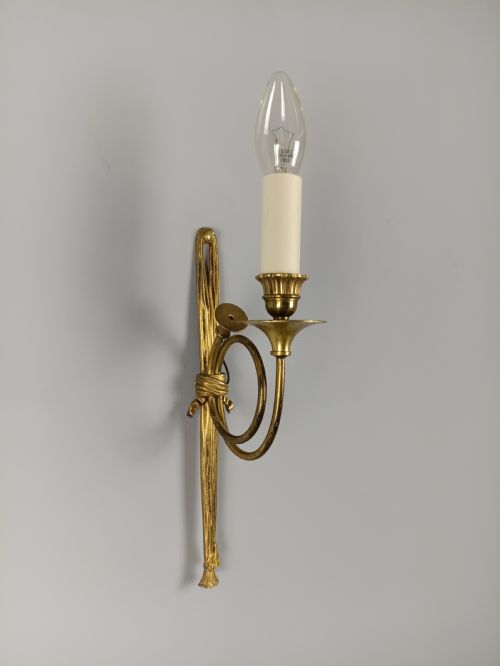
Vintage Brass Wall Brackets
These vintage brass wall brackets bring period character to interiors through cast and gilded metal lighting fixtures and shelves.
Vintage Brass Wall Brackets
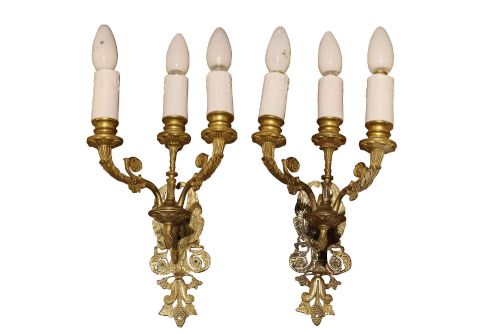
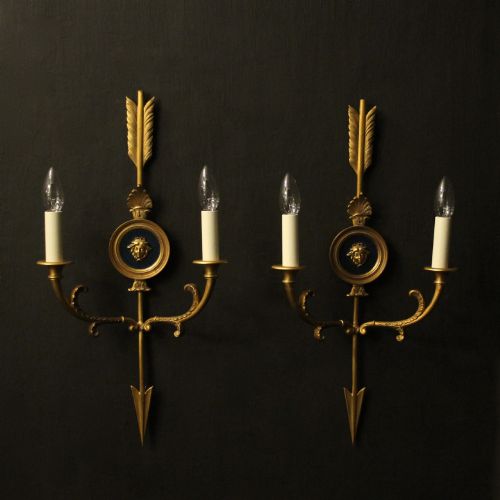
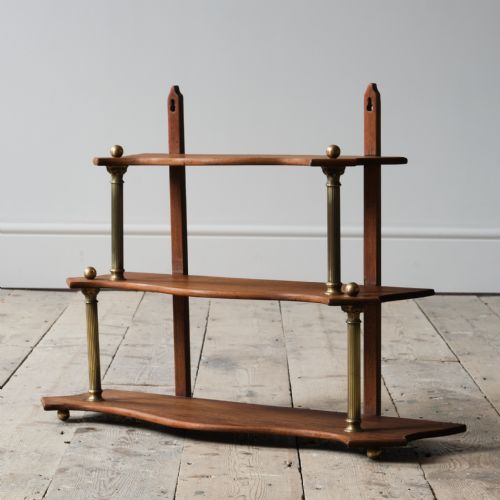
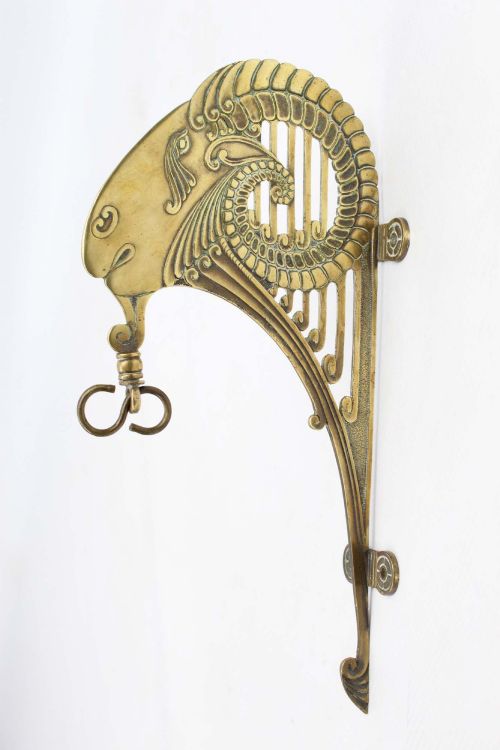
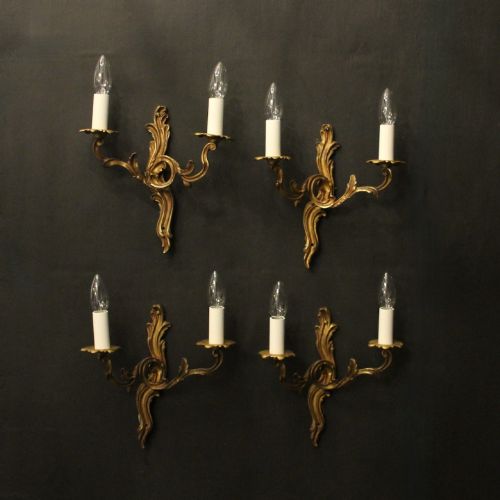
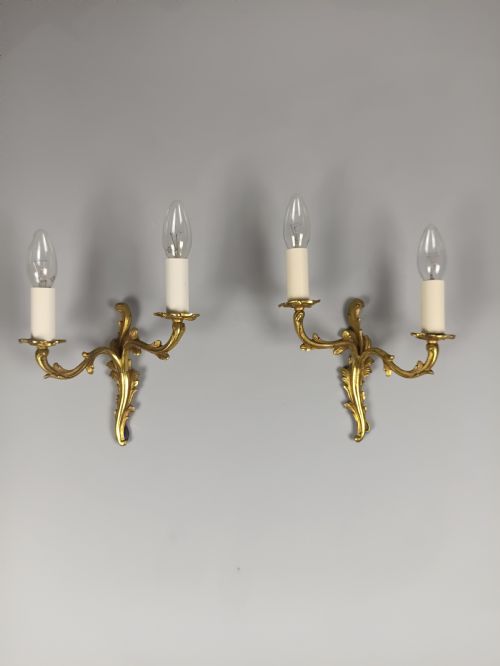
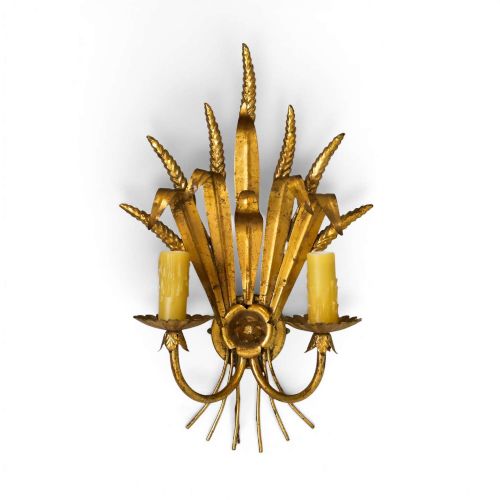
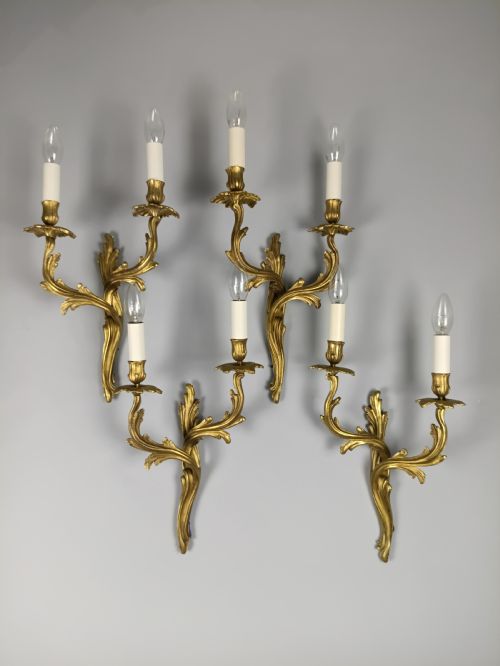
When you search for vintage brass wall brackets, you encounter metal fixtures designed to mount directly onto vertical surfaces for illumination or display. The selection on this page leans heavily towards French and English lighting, including twin and triple arm wall lights, candle sconces, and shelf brackets spanning the Victorian, Edwardian, and mid-century eras.
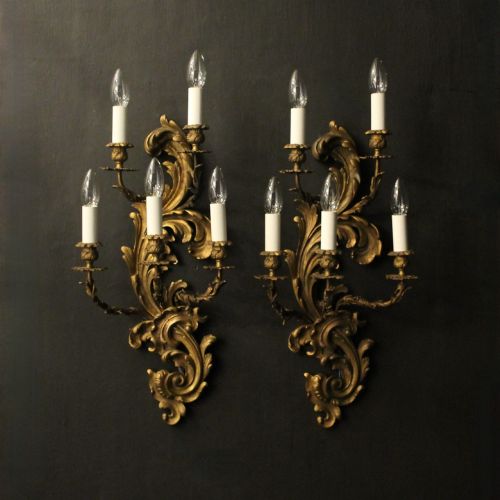
The assortment ranges from ornate Rococo and Louis XVI revival designs to simple brass candle brackets and mirror-backed sconces. Pieces hail from the nineteenth and twentieth centuries, with early twentieth-century French gilt bronze and brass examples appearing frequently alongside English iterations.
What varies in quality
Quality rests in the crispness of the casting and the depth of the chased detail across the brass and bronze surfaces. Superior examples display refined articulation in decorative motifs like foliage, scrolls, and figural elements without the softness found in later secondary casts.
The weight of the metal and the integrity of the original mercury or fire gilding also separate standard production from finer workshop pieces. Preservation of original components, such as integrated drip pans, crystal drops, and backplates, marks the better survivals.
Vintage Brass Wall Brackets Retail Price Guide 2026
Typical asking prices for vintage brass wall brackets among the pieces listed under this phrase on Sellingantiques today, from the lower quarter to the upper quarter. They describe what is for sale here now, not the wider market.
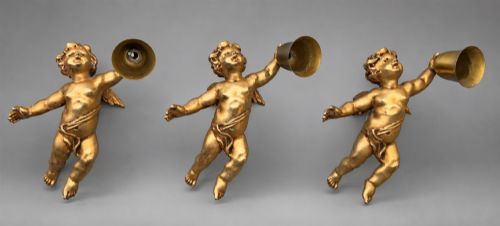
A pair of gilt brass cherub wall lights brings mischievous winged company directly to your hallway wall.
F. & C. Osler·John Spershott of Titchfield
The Vintage Brass Wall Brackets Glossary
- Ormolu
- Finely ground high-carat gold-mercury amalgam applied to a bronze or brass object. This historic technique creates a warm, durable golden surface seen on many French revival pieces.
- Sconce
- A wall-mounted lighting fixture designed to hold candles or electric bulbs. These often feature backplates that reflect light into the room.
- Rococo
- An ornate design style characterised by asymmetrical scrolls, C-curves, and naturalistic shell motifs. It heavily influences nineteenth and early twentieth-century French wall lights.
- Louis XVI
- A neoclassical style marked by symmetry, straight lines, classical urns, and foliate swaths. Pieces from this design vocabulary appear frequently in early twentieth-century bronze fixtures.
Vintage Brass Wall Brackets: Frequently Asked Questions
How do I wire vintage wall lights?
Many vintage wall lights require professional rewiring to meet modern electrical safety standards before installation. An electrician can easily adapt historical fixtures for contemporary wall circuits while preserving the original metal backplates.
Ensure the mounting depth and internal wiring channels accommodate modern lamp holders without compromising the structural integrity of the brass arm components.
Are these brackets suitable for candles?
Certain brackets are manufactured strictly for taper candles, featuring original drip pans and spike fittings. Others have been converted to electricity over time or built originally for bulbs.
Check the socket or nozzle type carefully to determine whether a piece requires wax candles or modern electrified fittings.
How do I clean antique brass?
Dust gently with a soft, dry cloth to remove surface particles without disturbing historical patina or gilding. Avoid harsh chemical polishes that strip away the aged surface character accumulated over decades.
Consult a metal conservation specialist if deep cleaning or stabilization of flaking gilt bronze is necessary.
How do I date a brass wall bracket?
Dating relies on stylistic clues, casting techniques, and fastening methods visible on the reverse of the backplate. Edwardian and Victorian pieces often show distinct manufacturing marks compared to nineteenth-century French or mid-century English items.
Compare the decorative motifs, such as Adams revival husks or Rococo asymmetry, against known period design timelines.