

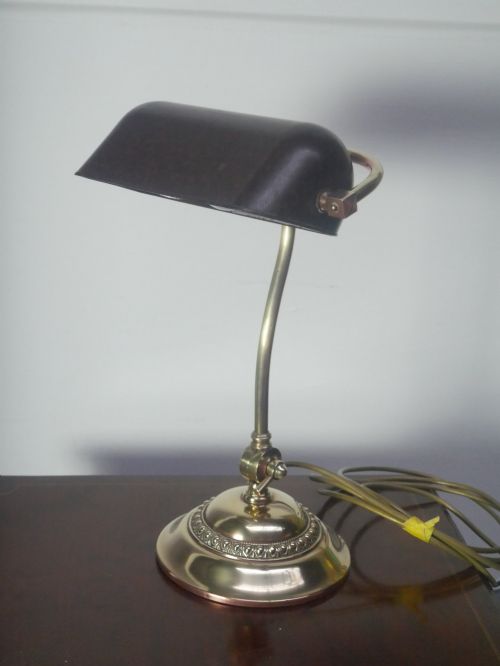


Vintage Brass Task Lamp
A vintage brass task lamp brings directional light and functional metalwork to a desk, drawing on decades of utilitarian design from the late nineteenth century onwards.
Vintage Brass Task Lamp
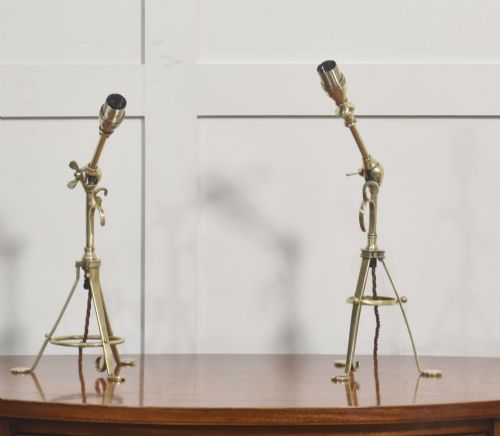
A vintage brass task lamp is primarily a directional light source designed for reading, writing, and close work at a desk or table. These pieces span periods from the nineteenth century through the Edwardian era, the nineteen-twenties, and the nineteen-thirties, reflecting diverse international design movements including Arts and Crafts, Art Nouveau, and Art Deco. Buyers look for these lamps to provide focused illumination while adding genuine period character to a workspace.
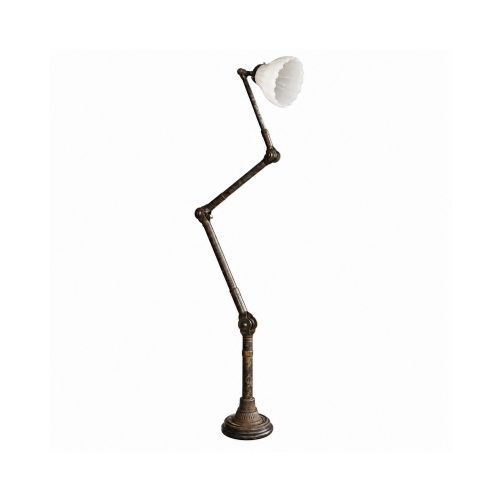
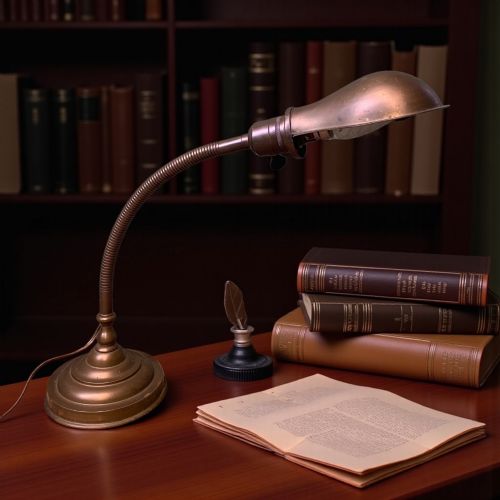
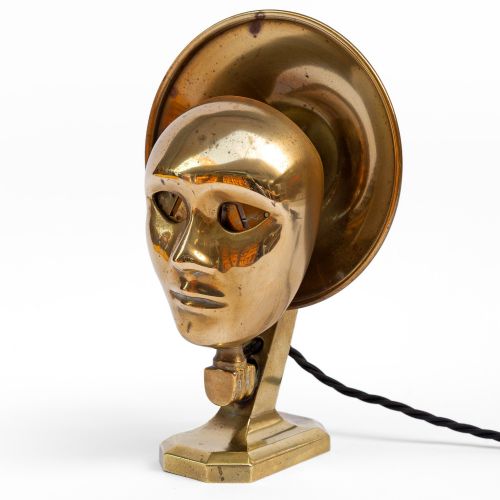
The most common examples on this page are Edwardian adjustable desk lamps and bankers desk lamps from the nineteen-twenties, often featuring flexible arms, swan necks, or pivoting shades. Alongside straightforward office lighting, the selection includes specialised forms such as Pullman carriage lamps, Bouillotte lamps, and reading lights inspired by industrial and cinematic aesthetics. Materials range from polished or patinated brass to bronze and copper, frequently paired with glass, porcelain, or fabric elements.
How they were made
Makers constructed these lamps predominantly from brass, bronze, and copper, utilising cast, spun, and sheet metal techniques to achieve both rigid structures and articulating joints. Many examples incorporate specialised hardware such as adjustable collars, weighted bases, and mechanical hinges that allow the user to direct the beam precisely where needed.
Lighting components were integrated with shades made from frosted glass, opaline glass, cranberry glass, or painted metal tôle, supported by internal brass fittings and wired using period-appropriate materials like fabric flex. Patination was achieved either through natural ageing or chemical treatment of the copper and brass surfaces.
Vintage Brass Task Lamp Retail Price Guide 2026
Typical asking prices for vintage brass task lamp among the pieces listed under this phrase on Sellingantiques today, from the lower quarter to the upper quarter. They describe what is for sale here now, not the wider market.
Some desk lamps owe their sleek lines to cinematic villains and railway carriages.
What varies in quality
Quality in these lamps rests upon the solidity of their construction, the engineering of their mechanical adjustments, and the integrity of their original materials. Superior pieces display substantial cast brass weight, smoothly functioning articulated joints that hold their position without sagging, and well-proportioned components.
Design distinction also separates standard utility pieces from exceptional works, such as those by known makers or specific regional styles like the Amsterdam School or French Art Nouveau. The refinement of surface finish, the presence of original shades in materials like cranberry or opaline glass, and the sophistication of the desk lamp mechanism define the upper tier.
W.A.S. Benson·Wilhelm Wagenfeld
The Vintage Brass Task Lamp Glossary
- Swan neck
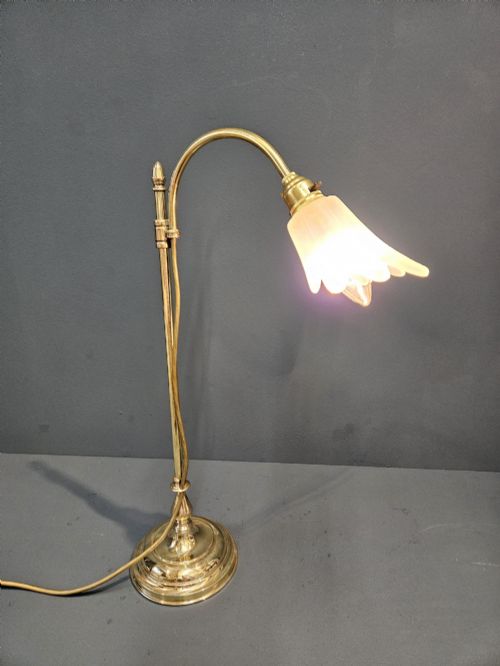
- A curved tubular brass arm resembling a swan's neck, allowing the lamp head to arch over a desk surface.
- Bouillotte lamp
- A traditional desk or table lamp featuring a central shaft, multiple candle-style arms or a single burner, and an adjustable shade.
- Pullman lamp
- A compact directional light fixture originally designed for use in railway carriages or tightly confined spaces.
- Opaline glass
- A semi-translucent white glass frequently used for lamp shades to diffuse light softly without glare.
- Fabric flex
- Flexible electrical cord wrapped in woven textile, often utilised in period lighting restorations.
- Articulated
- Constructed with joints or hinges that permit movement and angle adjustment of the lamp arm or shade.
Vintage Brass Task Lamp: Frequently Asked Questions
How do I adjust a vintage task lamp?
Most period adjustable lamps utilise swivel joints, screw keys, or counterbalanced arms to change the height and angle of the light. Users simply loosen the pivot mechanism, move the shade to the desired position, and tighten the collar to secure it.
Care should be taken with older brass threads and fabric flex wiring during adjustment to prevent undue strain on the internal components.
Were these lamps used in offices?
Many of these pieces, particularly bankers desk lamps and green-shaded reading lights, originated in professional offices, legal chambers, and banks during the Edwardian period and nineteen-twenties. Their primary function was to provide concentrated downward illumination for paperwork and ledgers.
Today, they transition easily from commercial workspaces into domestic studies and libraries, serving the same practical purpose.
How do I clean brass lamp bases?
Brass surfaces can be maintained using a soft, dry cloth to remove dust and prevent the buildup of grime. Avoid harsh abrasive cleaners that strip away the historical patination valued by collectors.
If polishing is desired, use a mild, dedicated metal polish applied sparingly with a soft cloth, taking care to avoid electrical components and fabric flex.
What is a bankers desk lamp?
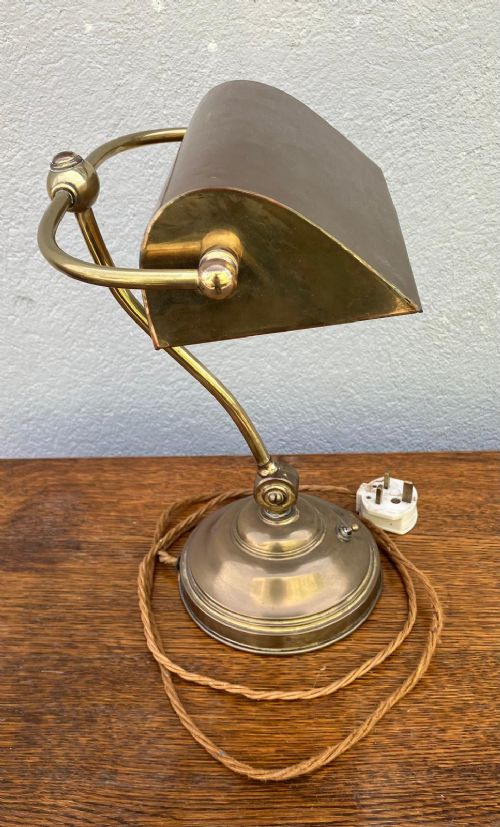
A bankers desk lamp is a traditional form characterised by a heavy brass base, a cylindrical upright stem, and a wide trough-shaped shade, frequently made of green glass. It was designed to cast a wide, even beam across wide ledgers while shielding the user's eyes from glare.
Art Deco and Edwardian iterations often refine this basic silhouette with geometric bases and articulated stems.
Can these antique lamps be rewired?
Rewiring is common practice for vintage lighting to ensure safety and compatibility with modern electrical standards. Many pieces arrive already updated with contemporary wiring and fabric flex while retaining their original brass lamp holders and switches.
Consulting a qualified electrician ensures the internal wiring matches the structural requirements of the specific brass frame.