

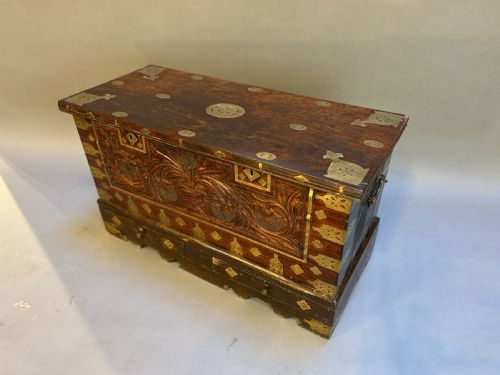


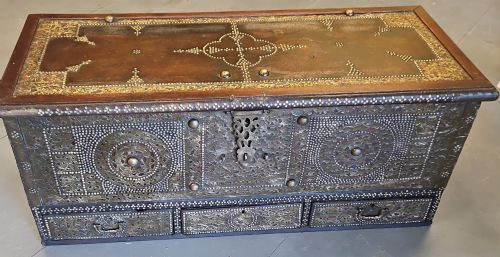


Vintage Brass Studded Trunk
A vintage brass studded trunk delivers robust utility and rich global character to a room, combining durable hardwood or leather with decorative metalwork.
Vintage Brass Studded Trunk
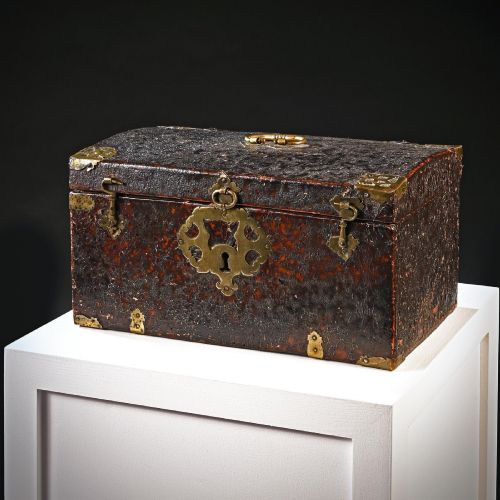
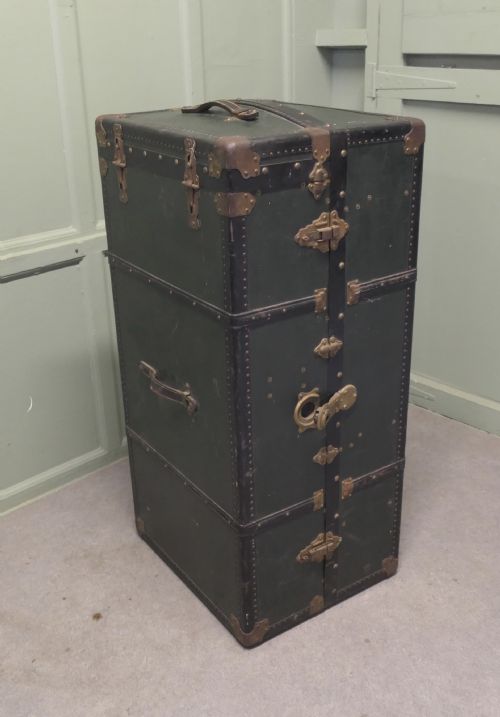
A vintage brass studded trunk serves as both a practical storage chest and a statement piece of heritage luggage. These items emerge from various periods including the 17th, 19th, and early 20th centuries, spanning Victorian, Regency, and Anglo-Indian traditions.
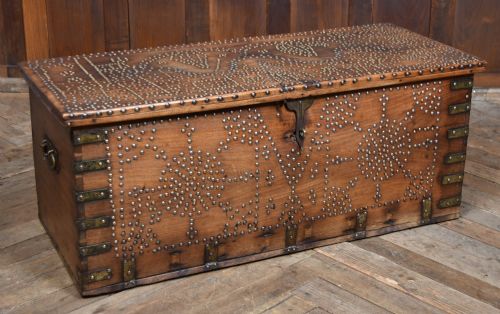
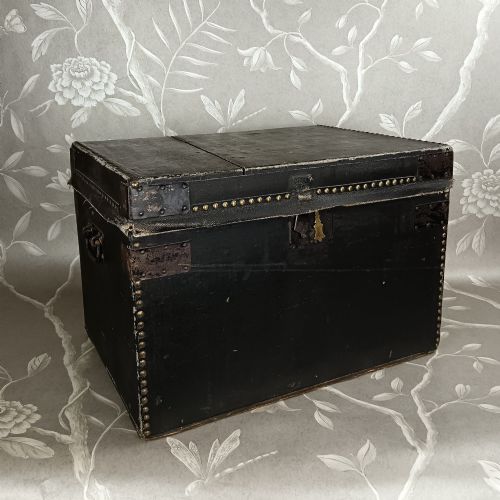
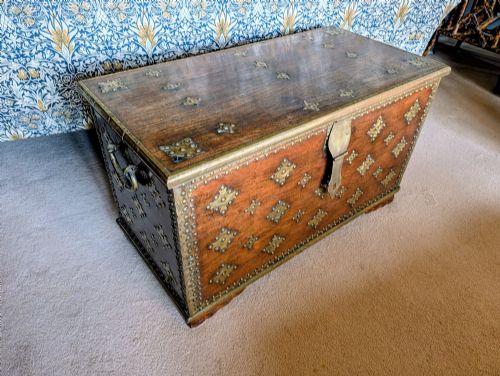
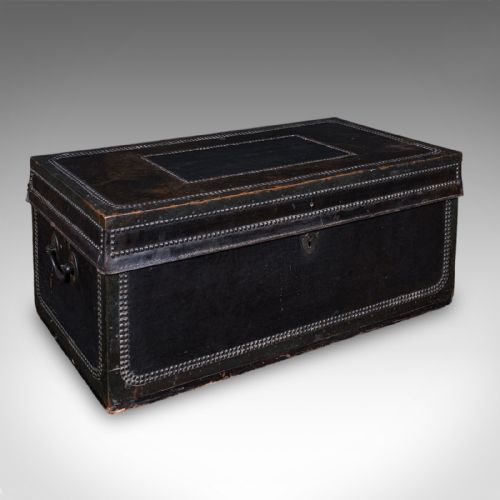
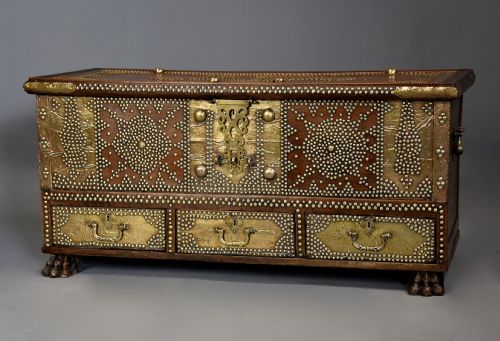
The most common examples on this page are Zanzibar chests and leather coaching trunks adorned with intricate brass studwork. Makers utilised padouk, teak, camphorwood, and hardwood alongside bound leather to build receptacles intended for long journeys or colonial trade.
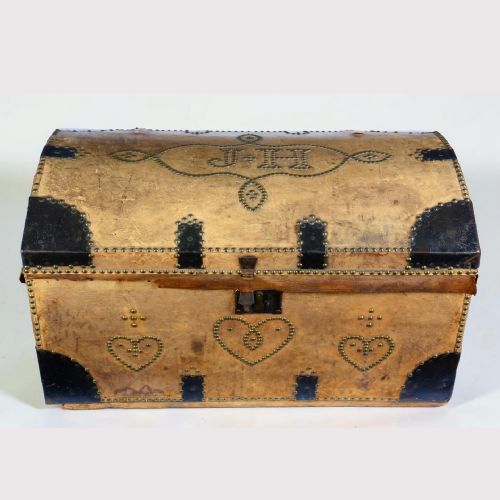
Buyers encounter forms ranging from domed coffers and blanket boxes to flat-topped travel trunks and large ottomans. Each variant reflects the specific domestic or travelling requirements of its original era.
Materials and Construction
Craftsmen built these pieces using sturdy timbers like teak, padouk, camphorwood, and mahogany, often pairing them with structural iron frameworks. These dense woods provided essential protection against pests and humidity during extended voyages.
External surfaces frequently feature hand-stitched hide or leather cladding secured by thousands of individual brass studs and nails. Metal bands and corner brackets reinforced the edges against the heavy handling of coaching and shipping.
Listings feature camphorwood, teak, and padouk alongside traditional European hardwoods like mahogany and oak.
Evaluating Craftsmanship
The distinction between standard utility luggage and finer pieces lies in the complexity of the brass studwork and the selection of timber. Dense exotic hardwoods and dense, symmetrical patterns of decorative nailhead work denote higher workshop standards.
Original hardware, including working locks, substantial handles, and integrated interior compartments, elevates the standing of a trunk. Superior examples maintain intact leather linings and structural integrity despite decades of travel use.
Samuel Pratt·Wm Insall·Arthur Wannop
The Vintage Brass Studded Trunk Glossary
- Zanzibar chest
- A distinct type of heavy hardwood storage chest originating from East trade routes, typically decorated with elaborate brass studding and strapwork. These boxes often feature secret drawers and multiple exterior compartments.
- Coaching trunk
- A sturdy travel chest designed to be strapped to the roof of a stagecoach or carriage during transit. They usually incorporate flat tops, iron bound edges, and strong carrying handles.
- Camphorwood
- An aromatic timber frequently utilised for the interior lining of trunks to deter insects and preserve stored textiles. Its distinct scent remains detectable long after manufacture.
- Portmanteau
- A large leather travelling case that opens into two distinct packing compartments. These items were essential accessories for wealthy travellers in the Victorian and Edwardian periods.
- Padouk
- A heavy, durable tropical hardwood prized for its rich reddish hue and resistance to decay. It formed the primary structure for many colonial trade chests.
Vintage Brass Studded Trunk: Frequently Asked Questions
What is a vintage brass studded trunk?
A vintage brass studded trunk is a historic storage chest or travel container built from timber or leather and embellished with decorative brass nailhead patterns. These items functioned as secure luggage for long-distance transit or domestic storage.
Today, they serve as decorative coffee tables, blanket boxes, or statement furniture pieces in homes. Their construction combines functional metal reinforcement with ornate craftsmanship.
How were these trunks used originally?
Original owners packed these chests with clothing, documents, and personal valuables for carriage journeys, sea voyages, or colonial relocation. They needed to withstand rough handling while protecting contents from moisture and dust.
Many styles, such as Zanzibar chests, also functioned as secure furniture within merchant households. Their robust lids allowed them to double as seating or tables during transit.
How can I tell a Zanzibar chest apart?
Zanzibar chests are identified by their heavy hardwood construction, usually teak or padouk, and dense patterns of brass stud work. They often feature shaped corner brackets, central pendant motifs, and multi-compartment interiors.
These chests reflect East African trade routes and Anglo-Indian design influences. Their substantial weight distinguishes them from lighter domestic European luggage.
Can I use a travel trunk as a table?
Flat-topped coaching trunks and sturdy blanket chests make practical living room tables due to their solid construction. They offer hidden storage for household items while anchoring a room's seating arrangement.
Domed trunks require careful placement if used for drinks or books, though they provide strong visual character. Their historic surfaces add texture and warmth to contemporary interiors.