
Vintage Brass Sconce Arms
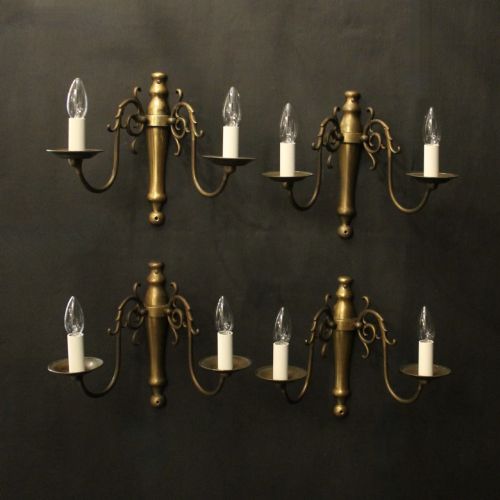
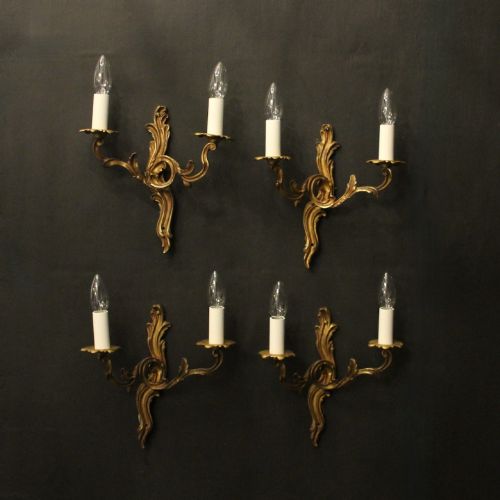
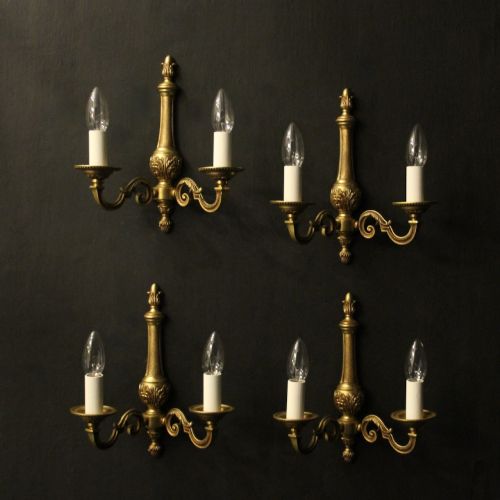
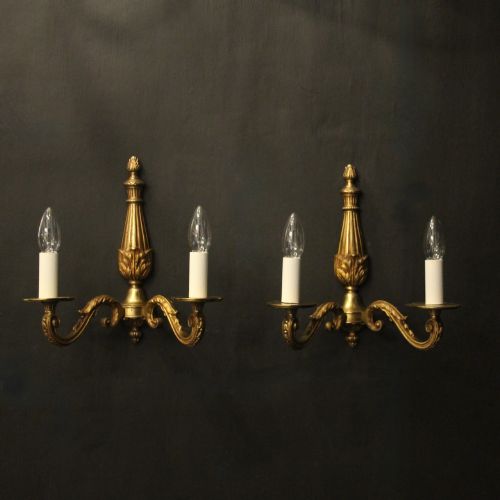
These vintage brass sconce arms offer decorative wall illumination, bringing period character and warm metallic reflection to interior spaces.
Vintage Brass Sconce Arms
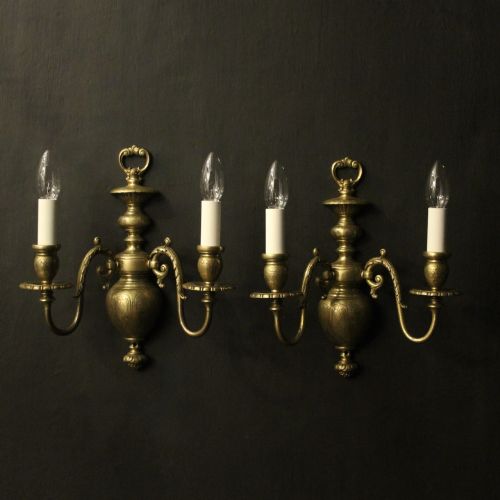
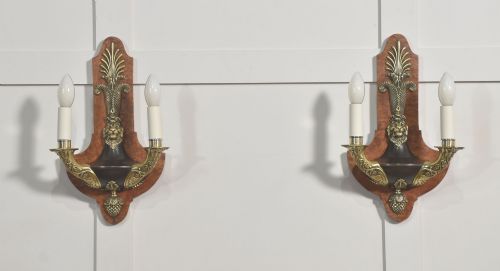
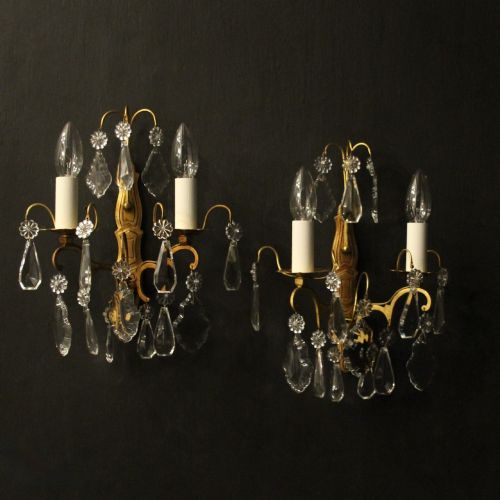
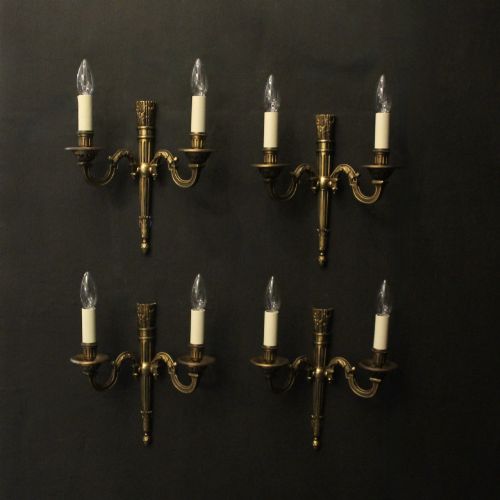
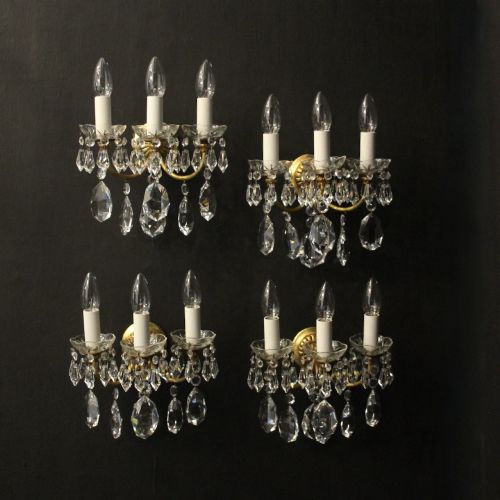
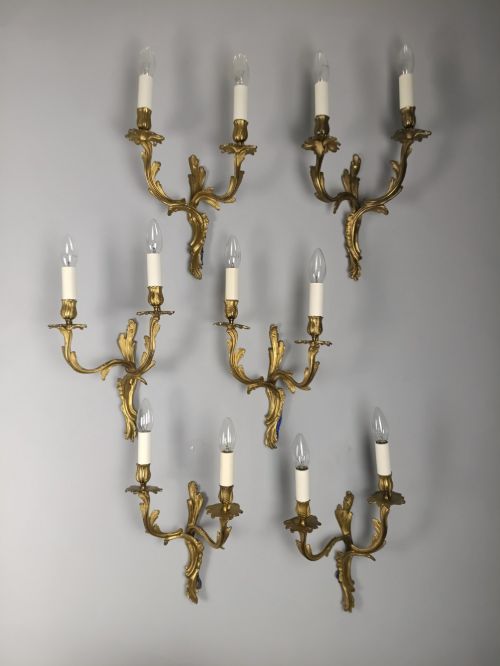
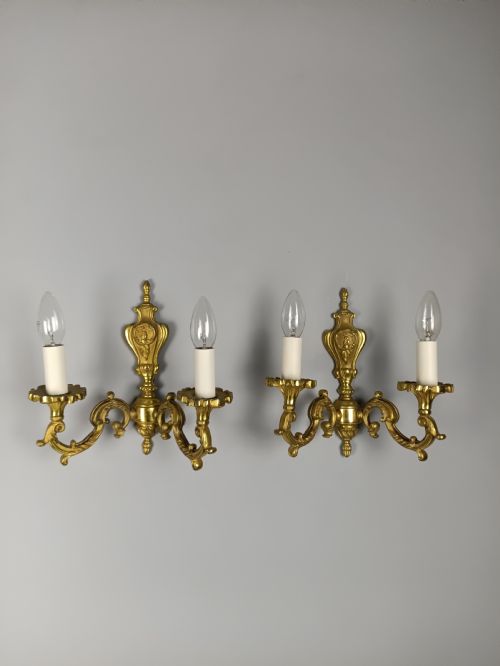
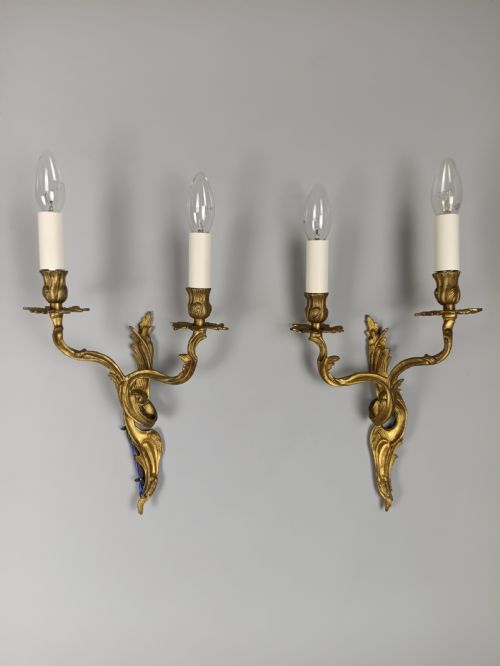
Vintage brass sconce arms comprise wall-mounted lighting fixtures designed to hold candles or electric bulbs, frequently encountered as matching pairs or larger sets from the early twentieth century. Buyers searching this phrase typically encounter French and English pieces configured with single, twin, or triple branches projecting from a decorative backplate.
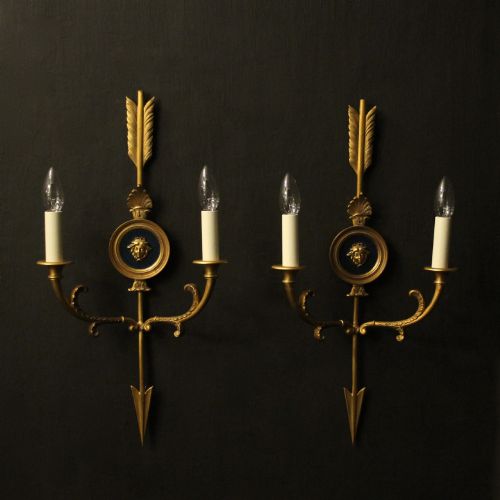
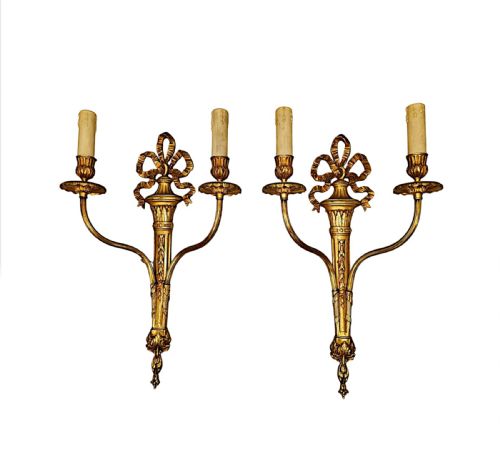
The material vocabulary spans plain brass, gilded brass, gilt bronze, and ormolu, often paired with crystal drop ornaments. Design influences range from restrained English traditional forms to elaborate French Rococo, Louis XVI, and Empire styles featuring ribbons, urns, and foliate scrolls.
Most surviving examples originate from the 1920s and 1930s, alongside nineteenth-century and Victorian productions. These fixtures serve primarily as decorative architectural accents in hallways, drawing rooms, and dining spaces.
Materials and construction
Makers shaped these fixtures using cast brass and bronze, frequently applying a layer of surface gilding, silver plating, or ormolu to enhance the metallic lustre. Components like backplates, drip pans, and branching arms were cast in separate sections before being joined mechanically or pinned.
Decorative details such as ribbon bows, acanthus leaves, and rococo scrolls emerged through precision metal casting and manual chasing. Crystal elements, where present, were cut and drilled to suspend from the arms, catching the illumination cast by candles or early electric bulbs.
Several pairs feature delicate ribbon motifs frozen in cast brass, forever tying up their own illumination.
Evaluating craftsmanship and design
Quality separates through the crispness of the casting and the depth of the metal finishing. Superior examples display sharply defined ornamentation on the backplates and arms, whereas simpler pieces rely on softer, more generalised contours.
The handling of the gilt or ormolu surface determines the visual depth of the fixture, with finer applications retaining subtle tonal variations across the relief. The integration of structural joints and the weight of the cast metal likewise distinguish standard production from exceptional workshop output.
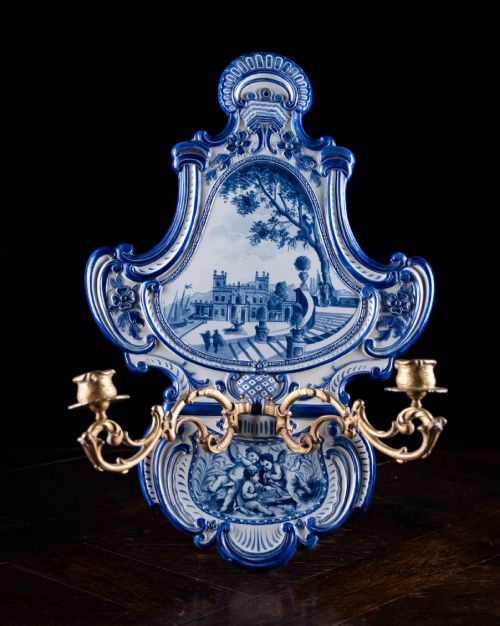
Casier·Villeroy and Boch
The Vintage Brass Sconce Arms Glossary
- Ormolu
- Finely ground high-carat gold applied to a bronze base metal. This technique creates a rich, durable surface finish typical of high-status French lighting.
- Backplate
- The flat or shaped metal section mounted directly to the wall. It supports the projecting arms and conceals the electrical or structural fixing points.
- Applique
- A French term for a wall-mounted light fixture or sconce. These items project from vertical surfaces to provide targeted illumination.
- Gilt Bronze
- Bronze metal coated with a thin layer of gold leaf or gold paint. The method combines the structural strength of bronze with the appearance of solid gold.
- Rococo
- An ornate design style characterised by asymmetrical scrolls, C-curves, and naturalistic plant motifs. It appears frequently on French wall lights from the nineteenth and early twentieth centuries.
Vintage Brass Sconce Arms: Frequently Asked Questions
Are these fixtures wired for electricity?
Many surviving pieces have been converted from candle use to electricity over their lifespan. Listings frequently specify whether the internal wiring is modern and ready for installation.
Original candle sconces lack internal channels and require careful handling if converted, whereas later twentieth-century models often incorporate internal conduits.
How do I clean gilded brass?
Clean gilded surfaces gently using a dry or slightly damp microfibre cloth to remove accumulated dust. Avoid harsh chemical polishes that can strip away delicate gilt or ormolu layers.
Preserving the original surface patina maintains the historical character and visual depth of the metal.
How do I date these wall lights?
Dating relies on stylistic markers, casting techniques, and material composition compared against known production periods. Pieces from the 1920s and 1930s often reflect neoclassical revivals or streamlined rococo interpretations.
Victorian and nineteenth-century examples display heavier casting methods and distinct assembly techniques visible on the reverse of the backplates.