



Vintage Brass Pricket
These vintage brass pricket pieces bring spike-topped altar lighting into domestic rooms, offering solid metal construction and heavy period character.
Vintage Brass Pricket
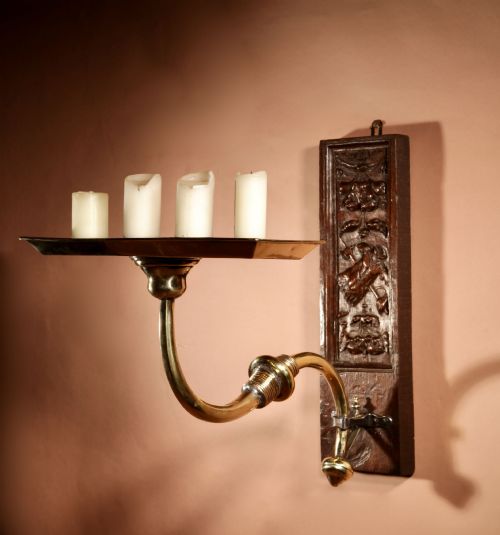
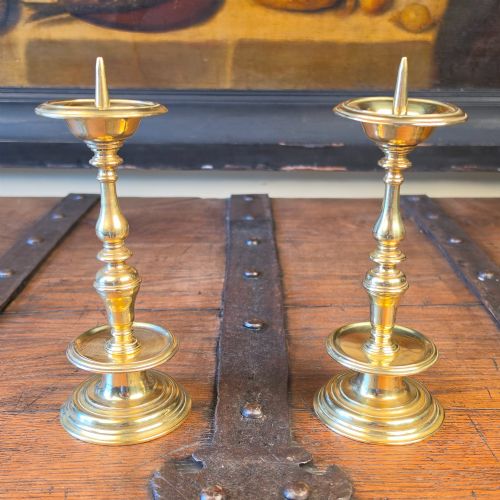
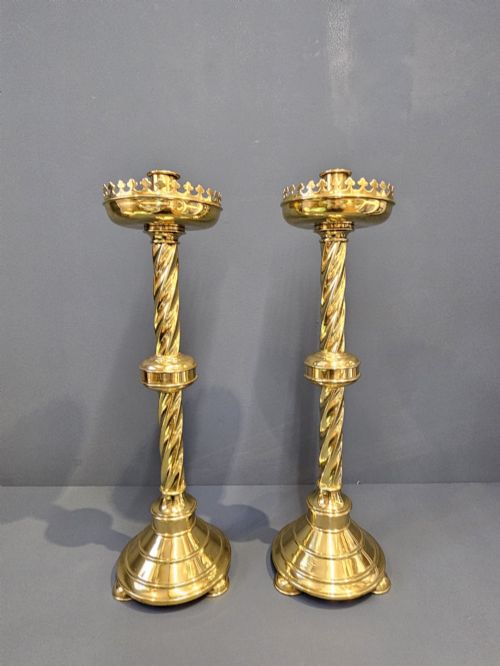
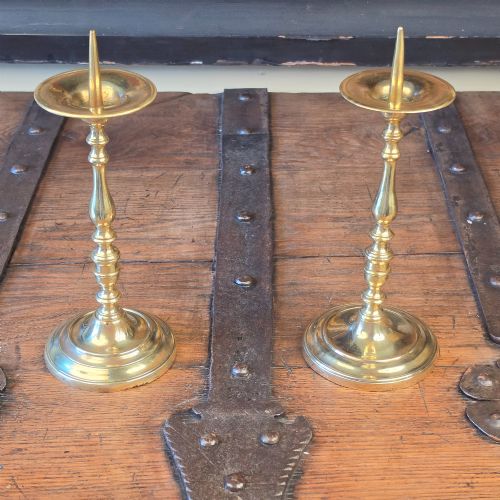
When someone searches for vintage brass pricket lamps and candlesticks, they find heavy altar-style lighting designed with a central spike rather than a socket to hold a candle. The versions most commonly met here include tall church candlesticks, matched pairs, and floor-standing or wall-hanging pieces.
The objects span periods from the mid-nineteenth century through the nineteen-forties, drawing heavily on Gothic Revival, Baroque, and Amsterdam School design. Makers adapted ecclesiastical forms into table lamps, wall sconces, and tall candle holders using brass, bronze, and iron.
Many items show regional influences from France, Italy, and Japan alongside domestic British styles. Buyers encounter both single statement candle holders and heavy matched pairs suited for heavy metal display.
How vintage brass pricket pieces were made
The construction relies heavily on cast brass, bronze, and patinated metal, often combined with oak or wrought iron elements. Workshops utilised casting and turning techniques to create heavy stems and wide drip pans.
Makers integrated structural spikes directly into the top drip pan to secure thick candles firmly in place. Surface patination was developed through natural ageing or applied finishes to give raw metal a darker, historic depth.
Vintage Brass Pricket Retail Price Guide 2026
Typical asking prices for vintage brass pricket among the pieces listed under this phrase on Sellingantiques today, from the lower quarter to the upper quarter. They describe what is for sale here now, not the wider market.
Listings feature items spanning the nineteenth century up to the nineteen-forties, incorporating brass, bronze, wrought iron, and oak.
What varies in quality
The distinction between ordinary and exceptional pieces lies in the crispness of the cast ornamentation and the weight of the metal. Heavier gauge brass and solid bronze castings hold finer architectural detail in the drip pans and bases.
Proportion and stylistic consistency dictate the visual strength of a pair. Amsterdam School and Gothic Revival examples achieve distinction through sculptural integrity rather than surface embellishment alone.
The Vintage Brass Pricket Glossary
- Pricket
- A sharp metal spike on a candlestick designed to impale the base of a candle to hold it steady. This form originates from traditional church altar lighting before socket holders became standard.
- Amsterdam School
- An early twentieth-century architectural and design movement characterised by expressive forms, traditional craftsmanship, and tactile metalwork. Pieces from this style often combine brass with iron.
- Drip pan
- A wide metal tray or saucer positioned beneath the candle spike to catch melting wax. In church candlesticks, this feature is often broad and deeply dished.
- Gothic Revival
- A nineteenth-century style that imitates medieval architecture and decorative arts, featuring pointed arches, tracery, and heavy ecclesiastical motifs. It heavily influences Victorian church candlesticks.
- Patinated metal
- Metal surfaces that have developed a rich, oxidised outer layer through age or chemical treatment. This darkening adds depth and historic character to brass and bronze.
Vintage Brass Pricket: Frequently Asked Questions
What is a pricket candlestick?
A pricket candlestick uses an upward-pointing metal spike to impale the base of a candle rather than enclosing it in a socket. This traditional ecclesiastical design ensures thick candles remain upright during long services.
Today, these pieces function as decorative accents or converted table lamps in domestic interiors. Their heavy metal construction provides a strong visual anchor on sideboards and tables.
How do I date these metal candle holders?
Dating relies on examining the casting techniques, design style, and material combinations present in the piece. Nineteenth-century examples often lean into Gothic Revival or Baroque styles, while early twentieth-century pieces incorporate Amsterdam School or Art Deco lines.
Heavier cast components and patination patterns also offer clues regarding the age of the metalwork. Comparing the form to documented church metalware helps narrow down the production era.
Can I convert a pricket lamp safely?
Many antique pricket pieces are adapted to function as table lamps while retaining their original spike or central column. Professional wiring ensures the electrical components integrate securely without damaging the historic metal structure.
When living with these lamps, pair them with simple shades that balance the heavy brass or bronze base. Position them on sturdy surfaces to support their considerable weight.
Where should I place a church candlestick?
Tall church candlesticks and floor-standing holders work best in spaces with high ceilings or as freestanding floor elements. Their monumental scale demands room to breathe rather than crowding among smaller objects.
Shorter table versions suit heavy timber sideboards, entrance halls, or mantelpieces. The reflective qualities of aged brass and bronze catch natural light effectively throughout the day.