
Vintage Brass Holders
These vintage brass holders bring solid metalwork and period utility to a room, ranging from hearthside coal bins to hallway umbrella stands.
Vintage Brass Holders
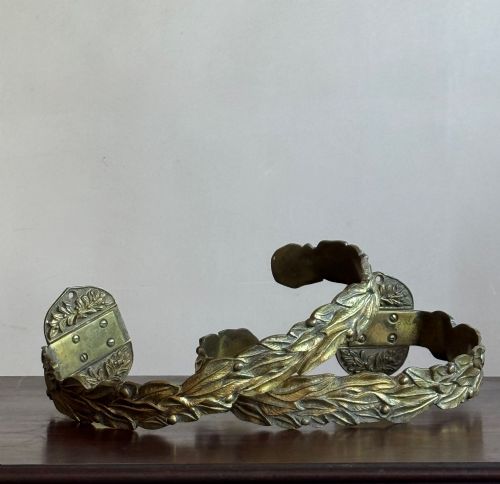
When you search for vintage brass holders, you encounter a practical mix of domestic metalwork designed for holding items like umbrellas, walking sticks, logs, coal, and candles. The examples spanning this page hail from the nineteenth century through the Edwardian period, incorporating Georgian influences and later twentieth-century styles.
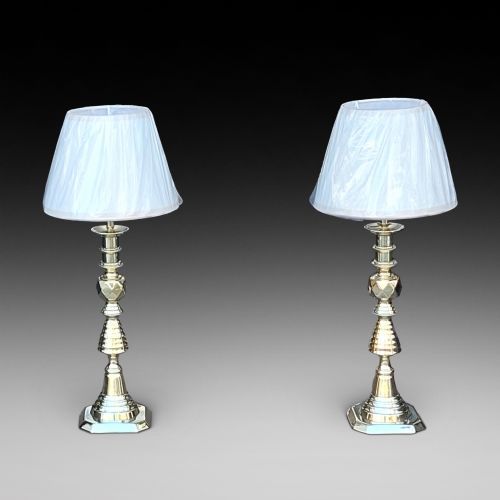
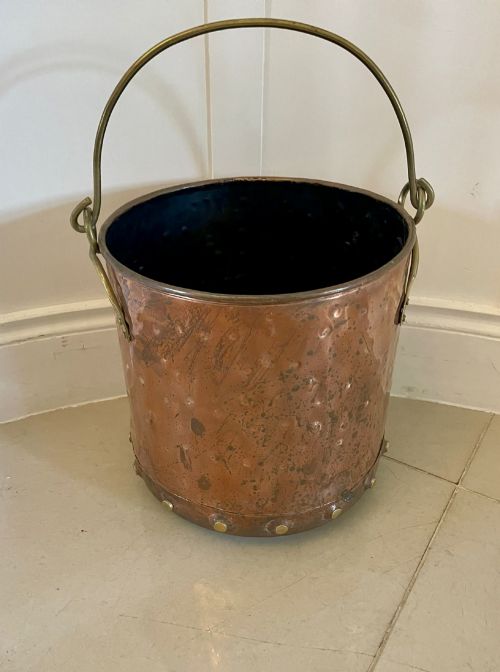
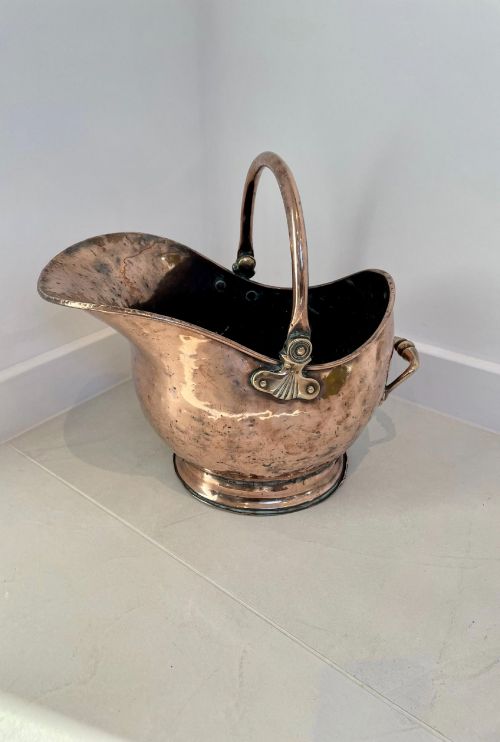
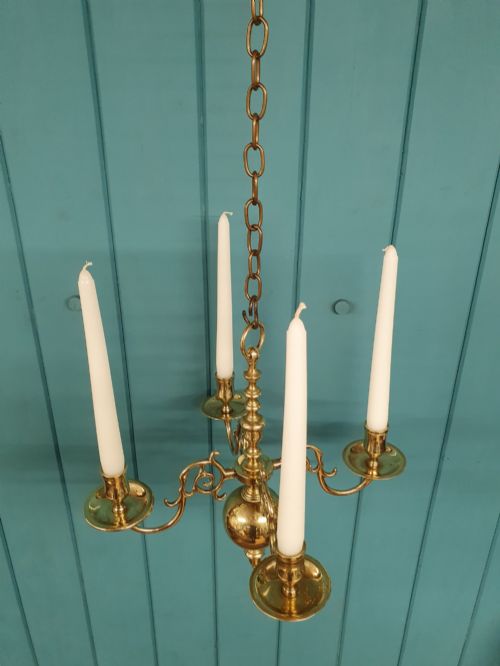
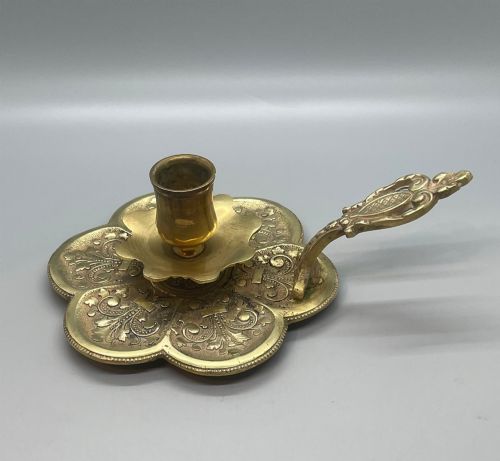
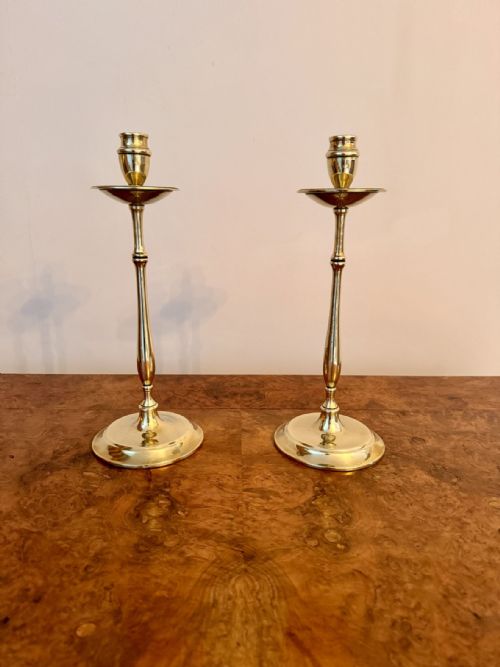
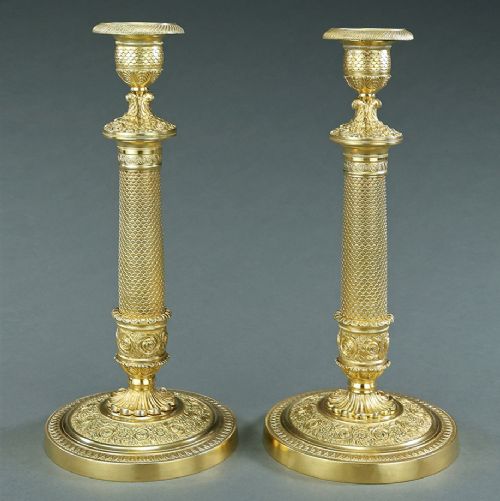
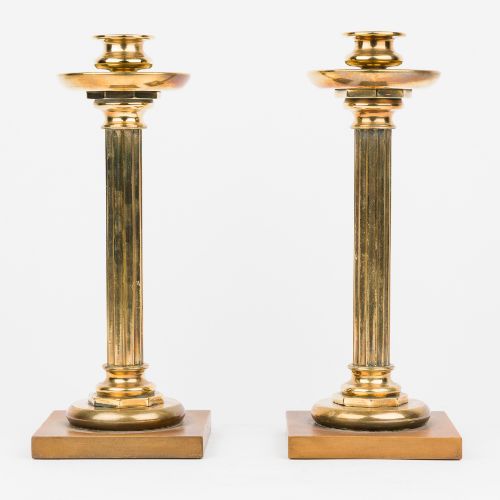
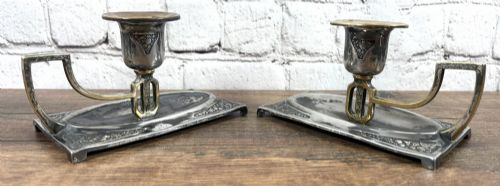
The selection leans heavily toward hall storage and fireside vessels, including heavy stick stands, half-moon umbrella racks, and copper-banded log bins. Alongside these large utility pieces, you find tabletop lighting such as candlesticks and candelabra alongside smaller desk accessories.
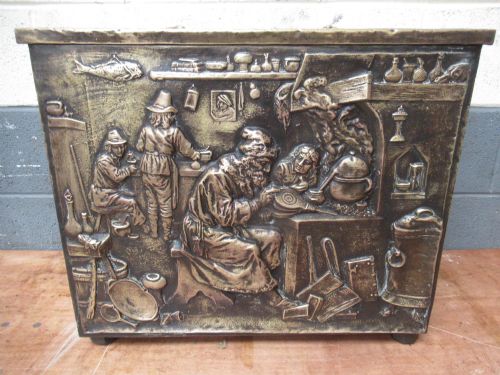
Makers and designers drew on diverse aesthetic traditions, producing Anglo-Indian campaign buckets, French rococo details, and Arts and Crafts copper mounts. These items served functional roles in period homes, combining structural iron or oak with polished brass plates and fittings.
How they were made
Craftsmen built these vessels using a combination of heavy casting, sheet metal fabrication, and coopered woodwork. Brass plates were embossed, fretworked, or riveted to structural frames made of cast iron, oak, and mahogany.
Many items incorporate mixed media, pairing polished brass with copper bands, cut glass inserts, or cast iron bases to provide stability for heavy walking sticks and logs. Surface decoration relies on hand-finishing, chasing, and the application of decorative ball finials or cast figural motifs.
Listings feature items spanning the eighteenth century through the 1930s, using brass, copper, cast iron, oak, and glass.
What varies in quality
Quality rests on the weight of the metal and the integrity of the construction, distinguishing solid cast brass and heavy gauge copper from thinner pressed sheeting. Superior examples employ sturdy secondary timbers like oak and mahogany with secure dovetail or coopered joints.
The level of hand-finishing defines the better pieces, seen in crisp embossing, detailed fretwork designs, and well-executed decorative mounts rather than mass-produced stampings. Original fittings, such as cast iron drip pans in stick stands and matching hardware, elevate the standard of a piece.
Coalbrookdale
The Vintage Brass Holders Glossary
- Jardiniere
- An ornamental pot or stand for holding plants or flowers. These vessels often appear in brass or copper with embossed detailing.
- Log bin
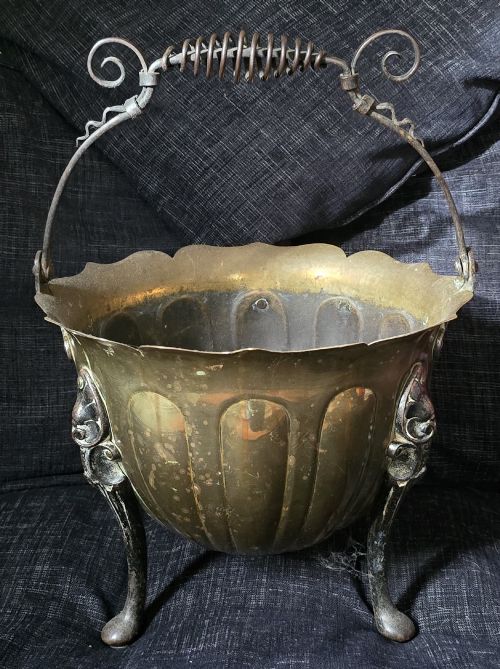
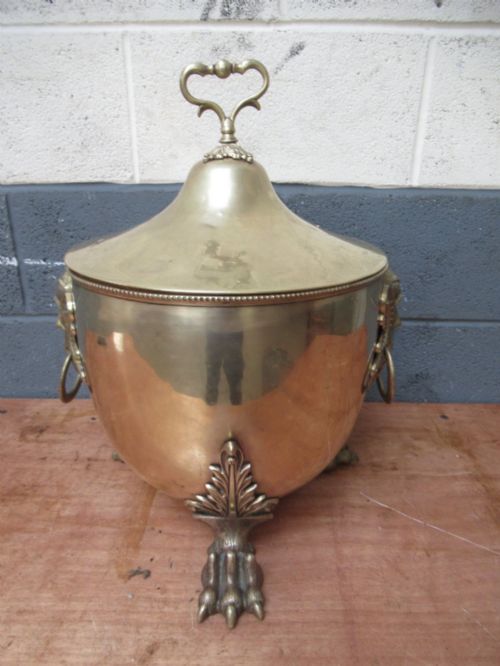
- A deep container designed for storing firewood by the hearth. They frequently feature riveted copper bodies with brass bands and claw feet.
- Stick stand
- A hall furnishing used for organising umbrellas and walking sticks. Examples in the record combine cast iron frames with brass rails and drip trays.
- Ormolu
- Gilding technique using a mercury and gold amalgam applied to bronze. It appears on decorative candelabra and picture frames from the nineteenth century.
- Pricket candlestick
- A candleholder featuring a central spike rather than a socket to secure the candle. Several nineteenth-century examples reflect seventeenth-century revival styles.
Vintage Brass Holders: Frequently Asked Questions
How do I clean a brass stick stand?
Remove surface dust with a dry cloth and gentle brush to protect any aged patina.
Avoid harsh chemical dips that strip the historic character from nineteenth-century metalwork.
Were umbrella stands made from other materials?
Many brass holders incorporate structural elements of cast iron, oak, mahogany, and riveted copper.
These mixed materials provided the necessary weight to support heavy walking sticks and wet umbrellas.
What is the difference between a jardiniere and a log bin?
Jardinieres generally served as decorative plant holders for indoor tabletops or pedestals.
Log bins and coal buckets were built on a larger scale to hold solid fuel by the fireplace.
How can I tell a Victorian stand from an Edwardian one?
Victorian pieces tend to feature heavy embossing, ornate cast iron frames, and French rococo influences.
Edwardian designs often introduce cleaner fretwork patterns and simpler Arts and Crafts lines.