

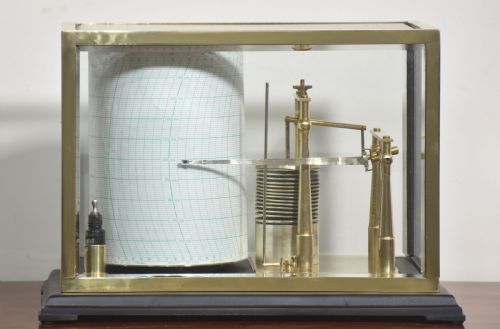


Vintage Brass Glass Instrument
These vintage brass glass instrument pieces combine practical nineteenth-century engineering with polished timber and heavy bevelled panes.
Vintage Brass Glass Instrument
A vintage brass glass instrument encompasses scientific and optical devices, barometers, and barographs housed in timber cases. Buyers seeking these objects find practical weather-recording apparatus alongside pocket optics and desktop magnifiers.
The pieces appearing most frequently on this page date from the Victorian and Edwardian eras, constructed primarily as desk barographs, mercurial stick barometers, and brass-bound telescopes. These domestic scientific tools bridge the gap between utilitarian laboratory equipment and parlour decoration.
Materials and construction
Makers utilised drawn brass for optical tubes, bezels, and instrument frames, pairing the metal with dense secondary timbers like mahogany, rosewood, oak, and walnut. Glass appears in heavy bevelled panels for barograph cases, convex lenses for magnifiers, and delicate gauge tubes.
Woodwork ranges from plain dovetailed oak boxes to intricate Black Forest carvings and inlaid rosewood veneers. Structural joints rely on traditional cabinet-making methods to protect sensitive internal mechanics from atmospheric shifts.
The documented woods across these scientific items include mahogany, oak, rosewood, walnut, and fruitwood.
Assessing construction standards
Superior examples display crisp calibration engraving on metal dials, thick bevelled glass panes that fit flush within their rebates, and substantial hardwood cases featuring secondary woods of high density. Lesser pieces show lighter gauge brass stampings, thin flat glass, and simpler softwood framing.
The distinction often lies in the precision of the mechanical movement and the quality of the optical glass, where clear magnification without distortion separates standard utility equipment from superior workshop output.
Casartelli Manchester·Russell Norwich·Gaupp And Co·Short And Mason·John Millikin·Thomas Rubergall·Negretti And Zambra·Blunt·Ganthony·Ross London·Iris Paris·Prada Of High Wycombe·Fagioli Of Clerkenwell London·Bate Of London·Harrods Of London
The Vintage Brass Glass Instrument Glossary
- Barograph
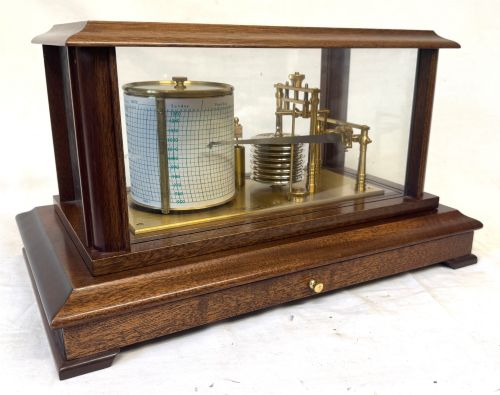
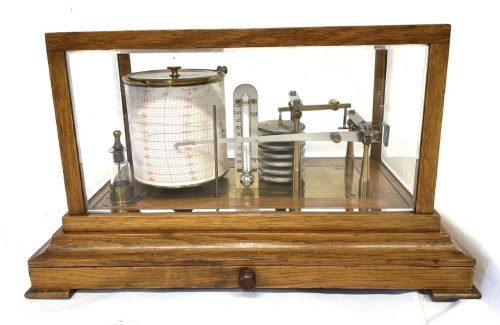
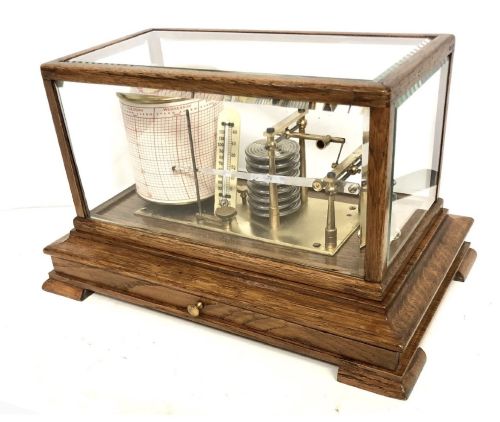
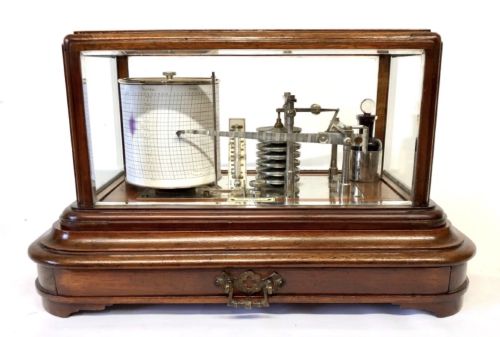
- A self-recording aneroid barometer that traces atmospheric pressure onto a rotating paper chart driven by a clockwork mechanism. These units sit inside multi-pane glazed wooden cases.
- Stick Barometer
- A tall wall-mounted barometer containing a vertical mercurial tube housed within a wooden trunk. These long instruments often feature visible vernier scales.
- Aneroid Barometer
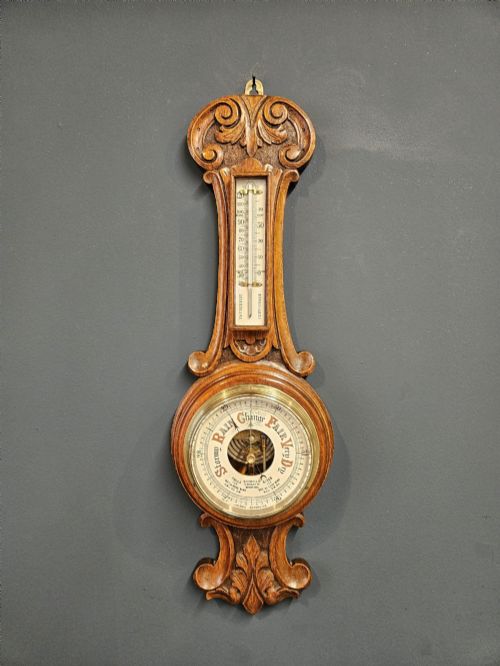
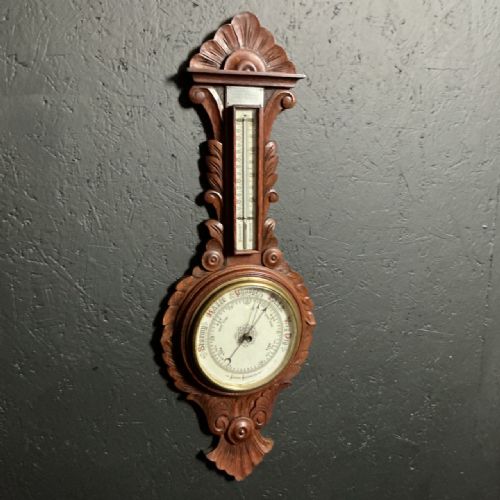
- A barometer that measures pressure through the expansion and contraction of a sealed corrugated metal box without liquid mercury. The movement connects directly to an indicator dial.
- Loupe
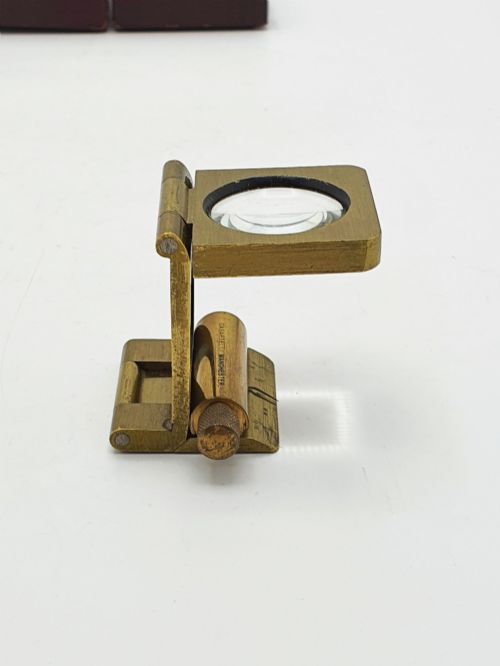
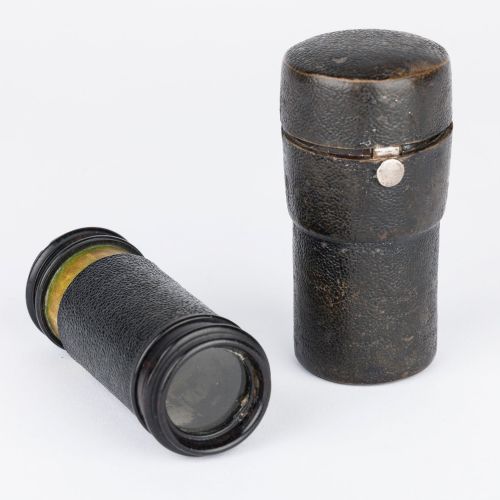
- A small magnifying glass used primarily by jewellers and opticians for close inspection of fine details. These often fold into protective metal or horn mounts.
- Bevelled Glass
- Plate glass with an angled edge ground and polished to a specific slope. This technique adds depth and catches light at the margins of instrument cases.
Vintage Brass Glass Instrument: Frequently Asked Questions
What is a barograph?
A barograph is a recording barometer that uses an aneroid mechanism connected to an inked arm, drawing continuous weather patterns onto a revolving paper drum.
Enclosed in a glazed wooden case, these mechanical units operated independently for a week before requiring a fresh chart.
How do stick barometers work?
Stick barometers balance atmospheric pressure against a column of liquid mercury contained within a sealed glass tube mounted to a wooden backing board.
Changes in air pressure cause the mercury level to rise or fall against a graduated paper or ivory scale.
Where were these instruments used?
These scientific items served practical functions in domestic hallways, maritime navigation stations, merchant offices, and professional opticians' consulting rooms.
Their presence indicated both a household's scientific literacy and a necessity for tracking local weather or optical health.
How do I care for wooden instrument cases?
Maintain the timber finish by keeping cases away from direct heat sources and sudden humidity changes that cause wood to split or warp.
Apply a microcrystalline wax sparingly to protect the polished surfaces without attracting dust to the brass fittings.