





Vintage Brass Fireplace Rail
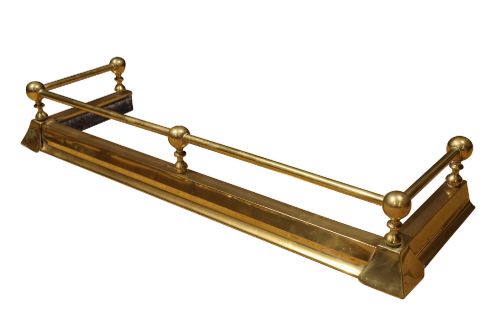
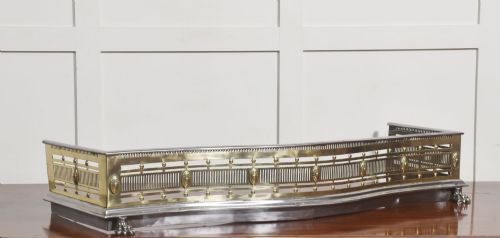
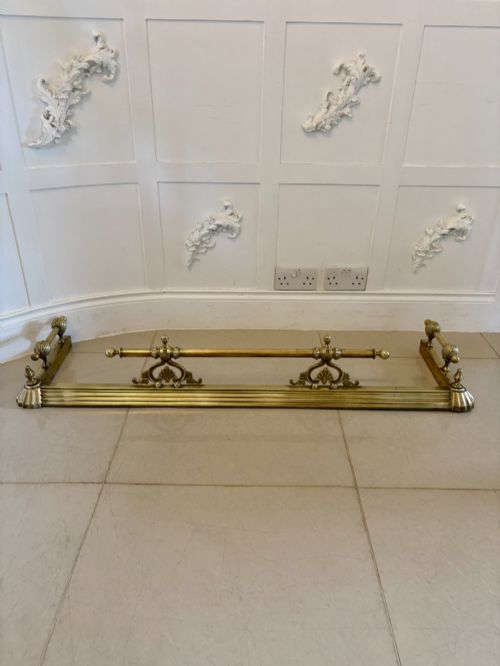
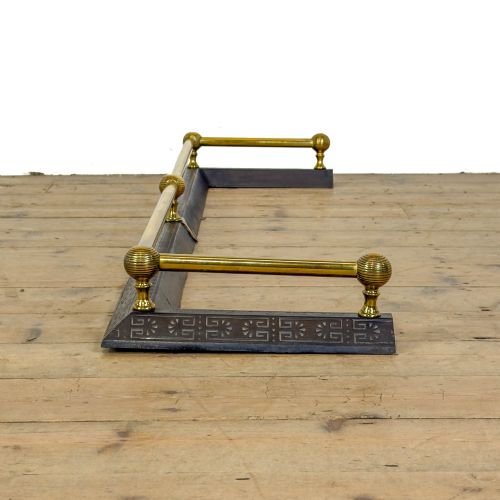
These vintage brass fireplace rail examples bring period character to a hearth, offering protective boundaries and structured styling for traditional rooms.
Vintage Brass Fireplace Rail
A vintage brass fireplace rail typically forms part of a fender, curb, or guard that frames an open hearth. When searching for this phrase, buyers encounter various configurations spanning the Georgian, Victorian, and Edwardian eras.
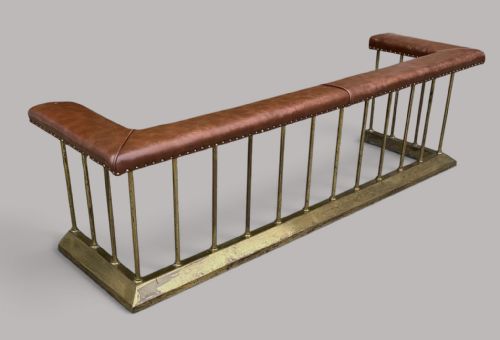
The selections on this page feature examples ranging from simple curb rails to more complex nursery guards and club fenders fitted with leather seating. These items serve both a protective function and a decorative role in period interiors.
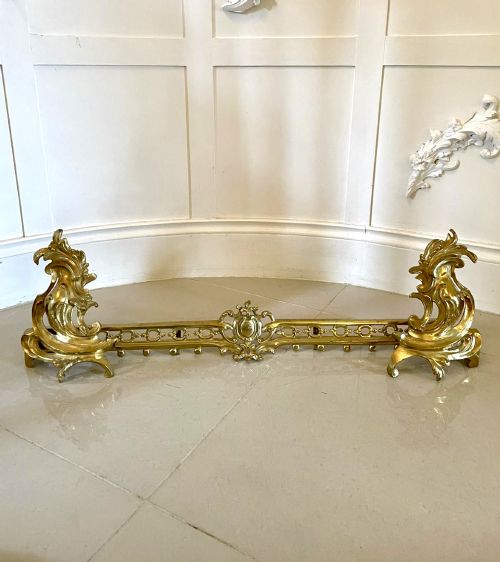
Most pieces date from the nineteenth and early twentieth centuries, displaying styles that stretch from restrained Regency lines to elaborate French Rococo and Art Nouveau ornamentation.
Materials and construction
Makers utilised brass as the primary metal, often combining cast brass components with tubular rails and structural iron or steel frames. Some select pieces incorporate gilded brass surfaces or wire mesh for enhanced safety.
Certain club fenders integrate mature tan leather upholstery onto their low seats, combining metalwork with traditional saddlery techniques. Adjustability is achieved through sliding frame mechanisms found in specific extending designs.
Vintage Brass Fireplace Rail Retail Price Guide 2026
Typical asking prices for vintage brass fireplace rail among the pieces listed under this phrase on Sellingantiques today, from the lower quarter to the upper quarter. They describe what is for sale here now, not the wider market.
The listings span the 1860s, Victorian, Edwardian, and Regency periods, incorporating brass, iron, steel, and wire mesh.
Assessing quality and finish
Quality rests in the weight of the cast components and the crispness of the scrolled or neoclassical ornamentation. Substantial gauge brass and robust steel frames indicate superior manufacture compared to lighter, purely decorative alternatives.
The refinement of the joinery and the condition of integrated elements, such as leather upholstery or wire mesh panels, distinguish higher-grade examples within the range.
The Vintage Brass Fireplace Rail Glossary
- Curb fender
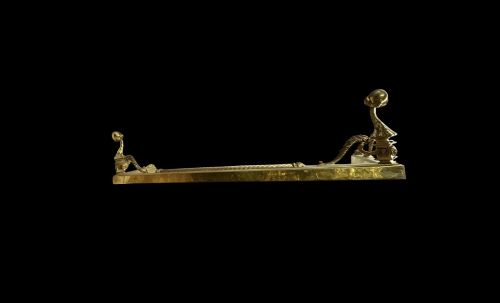
- A low metal barrier placed on the hearth around the base of a fireplace to contain sparks and ash. It defines the perimeter of the fire space.
- Club fender
- A low-seated hearth surround featuring upholstered top rails originally designed for sitting close to the fire. These often incorporate mature tan leather.
- Nursery guard
- A tall protective wire mesh or rail guard designed to keep children and stray embers safely separated from an open flame. Early versions frequently included integrated clothes rails.
- Gilded brass
- Metal treated with a fine layer of gold leaf or gilt finish to enhance decorative brilliance. This treatment appears on more ornate French-influenced examples.
Vintage Brass Fireplace Rail: Frequently Asked Questions
How do I clean antique brass?
Maintenance requires gentle dusting and occasional cleaning with a non-abrasive metal polish to preserve the underlying finish and natural patina accumulated over decades.
Avoid harsh chemical agents that strip away historical character and leave the brass unnaturally bright.
Can these rails be adjusted for size?
Certain designs incorporate sliding mechanisms or extending frames specifically intended to fit variable hearth dimensions. Checking the mechanical joints determines whether a particular piece offers this flexibility.
Fixed-width models require precise measurements of the fireplace hearth prior to acquisition.
What is a club fender?
A club fender is a hearth surround built with padded top rails that function as low seats. Originating in country houses, they allowed occupants to sit directly beside the fire.
Examples often feature leather upholstery supported by robust brass frameworks.
How do I date a brass fender?
Dating relies on examining the manufacturing techniques, fastener types, and stylistic motifs present in the metalwork. Georgian and Regency pieces show restrained neoclassical geometry, while Victorian and Edwardian items often display heavier castings or Art Nouveau curves.
Material combinations, such as iron frames paired with brass rails, also provide chronological clues.