
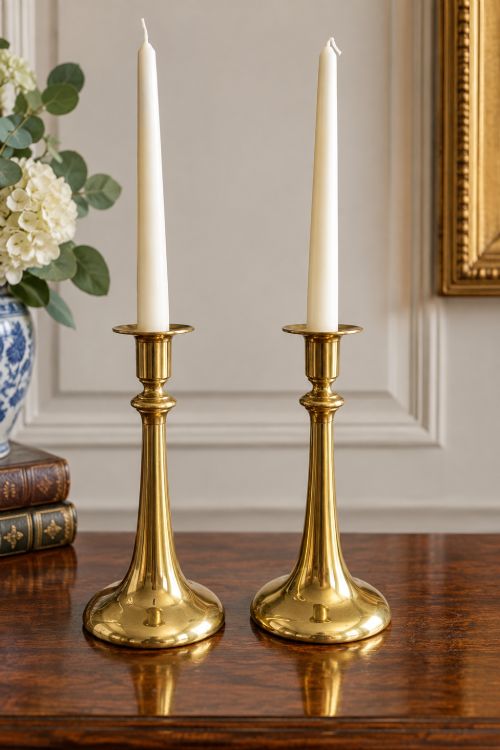
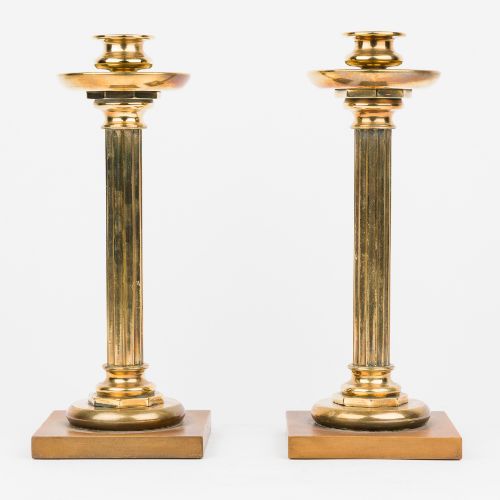
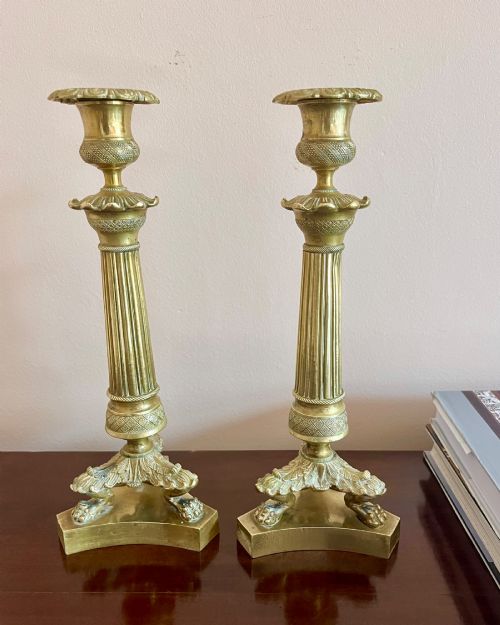
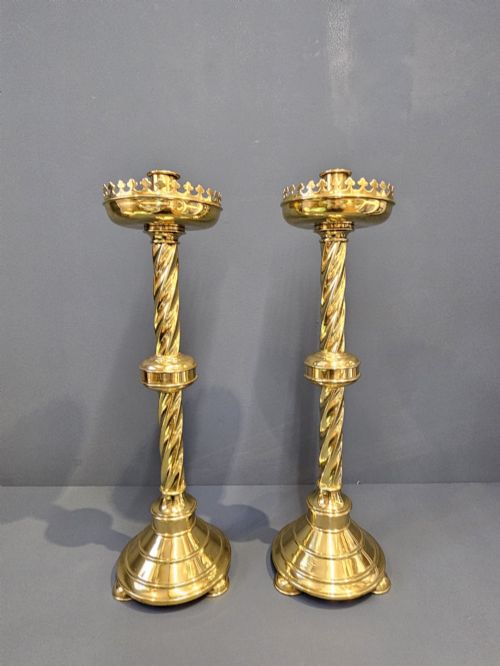
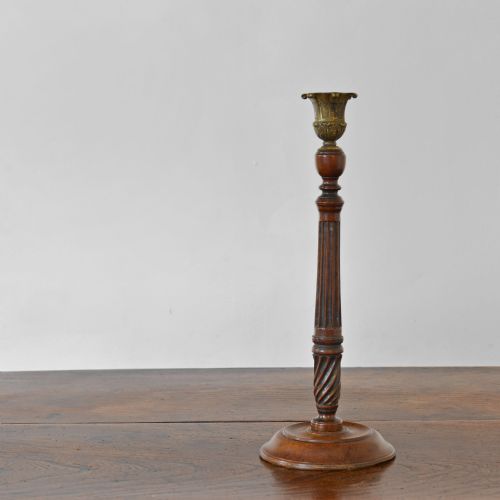
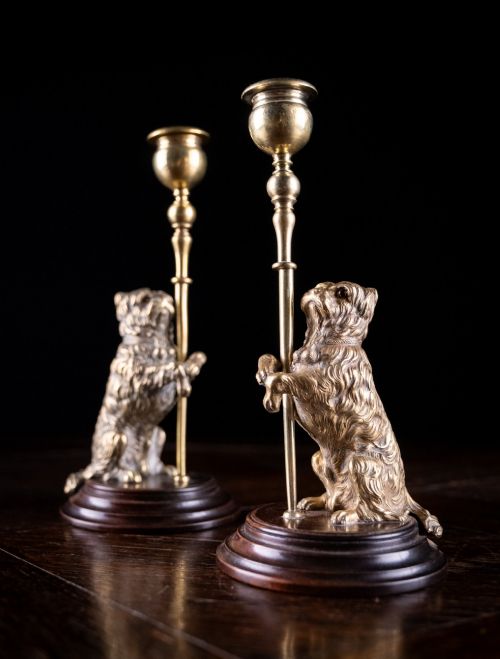
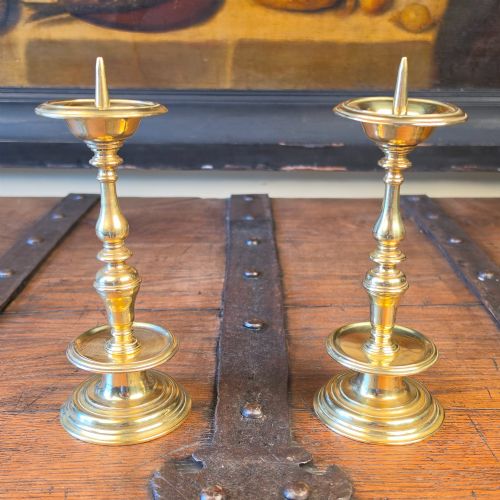
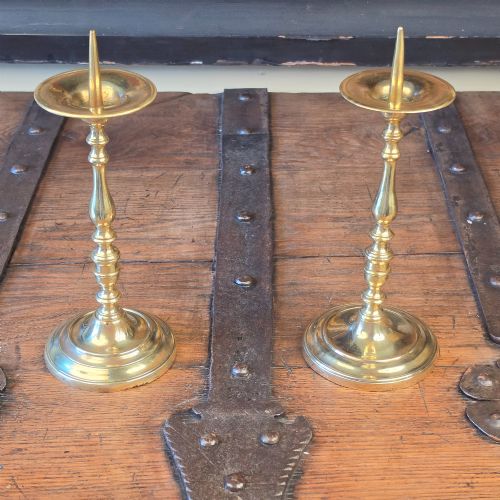

Vintage Brass Candlestick Holders
These vintage brass candlestick holders span centuries of domestic lighting, offering solid metal forms designed to secure tallow and wax candles safely.
Vintage Brass Candlestick Holders
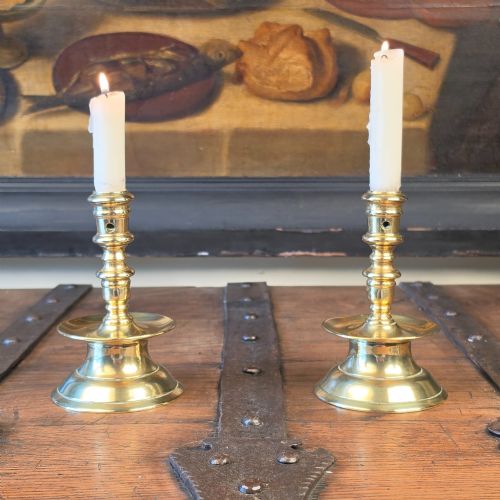
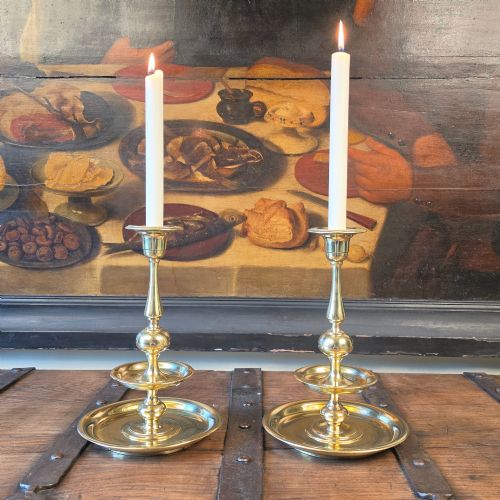
When you search for vintage brass candlestick holders, you encounter items designed for interior illumination ranging from simple domestic pieces to elaborate church and table items. The selection includes standard pairs alongside chambersticks, desk variations, and tall church lights.
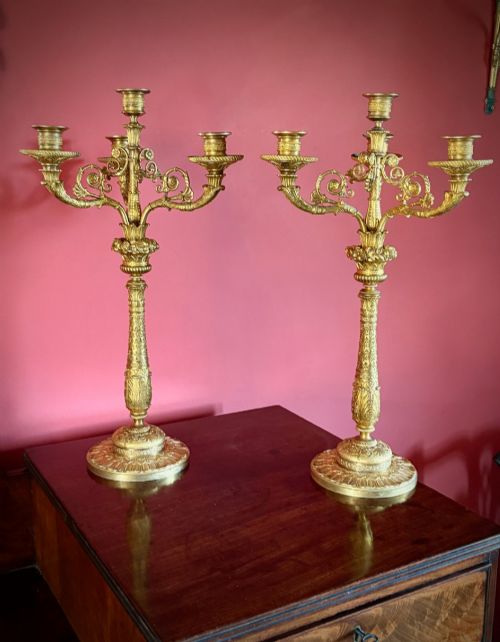
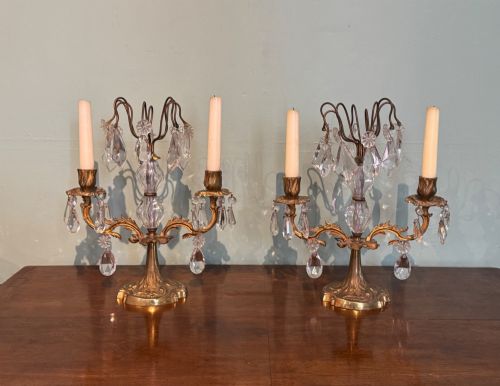
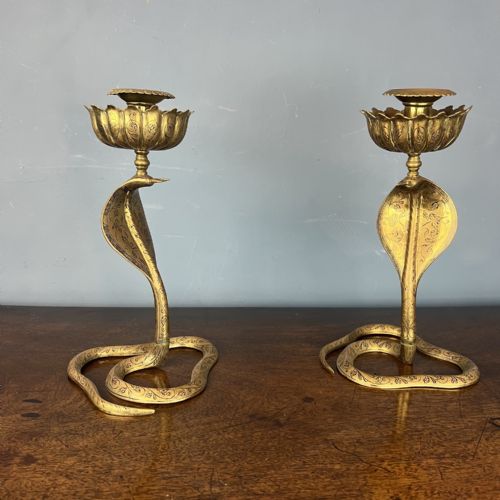
The pieces on this page originate from diverse periods such as the Georgian era, the Victorian period, and the early twentieth century, showing styles like Gothic Revival, French Rococo Revival, and Art Deco. Most examples appear as matched pairs, though single items also emerge from earlier centuries.
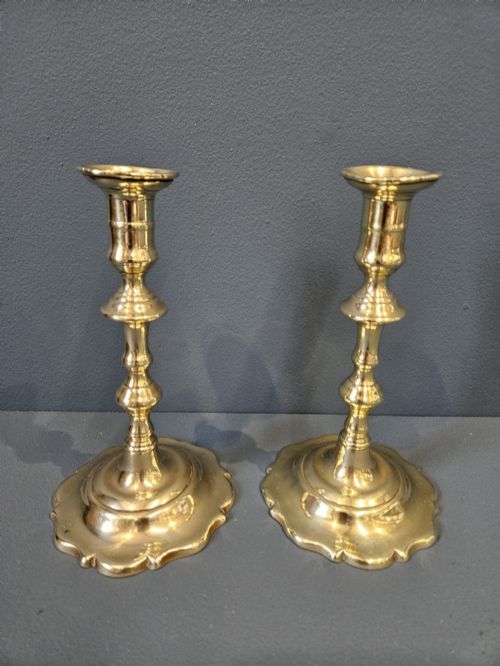
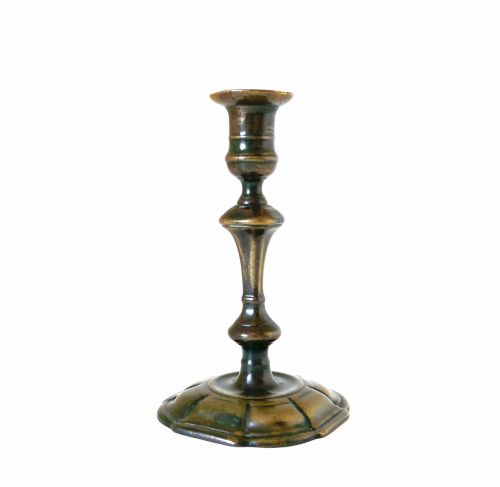
Forms vary from stepped and petal bases to articulated designs and ejector mechanisms intended to push out spent wax stubs. Materials span cast and seamed brass, alongside combinations involving bronze, copper, wood, glass, and champleve enamel.
Construction and materials
Makers utilised casting and seaming techniques to shape brass, bronze, and copper into sturdy stems and bases. Seamed examples show the folded and soldered joints typical of eighteenth-century production methods before mass casting predominated.
Ornate items incorporate gilt bronze, ormolu, and champleve enamel panels, sometimes mounted with onyx or cut glass elements. Surface treatments include patination, silver plating, and polishing to highlight the metallic texture of the base materials.
Assessing craftsmanship and finish
Quality rests in the crispness of casting details, the weight of the metal, and the integrity of joints in seamed or articulated components. Superior pieces exhibit well-proportioned turning and careful finishing on concealed surfaces rather than rushed casting work.
The presence of integrated mechanisms, such as working ejectors or adjustable arms, distinguishes more complex examples from basic domestic turnings. Harmony in matched pairs and the preservation of original patination further separate standard items from finer survivals.
J.T. & Co
The Vintage Brass Candlestick Holders Glossary
- Ejector candlestick
- A domestic candlestick containing an internal sliding mechanism designed to push out spent wax remnants. This invention simplified the cleaning process after use.
- Chamberstick
- A low candlestick fitted with a wide drip pan and a loop handle for carrying about a house. They provided portable light before fixed domestic wiring.
- Pricket candlestick
- A candlestick featuring an upright metal spike upon which the base of a candle is impaled. These are frequently found on larger church or altar pieces.
- Ormolu
- Finely ground high-carat gold cast and applied to a bronze base. The technique creates a bright metallic lustre on decorative fixtures.
- Champleve enamel
- A technique where troughs are gouged into a metal surface and filled with vitreous enamel powder before firing. This produces colourful patterned designs across the body.
Vintage Brass Candlestick Holders: Frequently Asked Questions
How do chambersticks differ from standard candlesticks?
Chambersticks are short, portable candle holders featuring a wide saucer base and a loop handle. They were carried through dark corridors at night before the advent of electricity.
Standard candlesticks are taller and intended to remain stationary on tables, mantelpieces, or sideboards to illuminate a specific room.
How can I tell a Georgian candlestick from a Victorian one?
Georgian candlesticks often display restrained classical proportions, petal-shaped bases, or simple seamed brass construction dating through the eighteenth and early nineteenth centuries. They favour functional elegance over excessive ornamentation.
Victorian examples tend to be heavier, more ornate, and frequently incorporate eclectic revivals such as Gothic or Rococo motifs alongside cast brass and mixed materials.
Did people use materials other than solid brass?
While brass remains the predominant metal, listings record items made from bronze, gilt bronze, copper, gun metal, and silver plating. Some incorporate decorative additions like glass, wood, onyx, and champleve enamel.
Arts and Crafts pieces often combine brass and copper elements, while church items utilise heavy cast brass and bronze to achieve stability.