



Vintage Boxed Cutlery Set
A vintage boxed cutlery set brings together matched silver or plated implements and fitted presentation cases spanning from the Victorian era to Art Deco design.
Vintage Boxed Cutlery Set
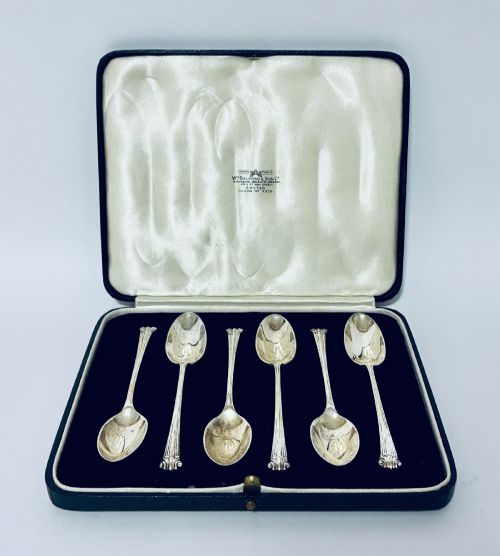
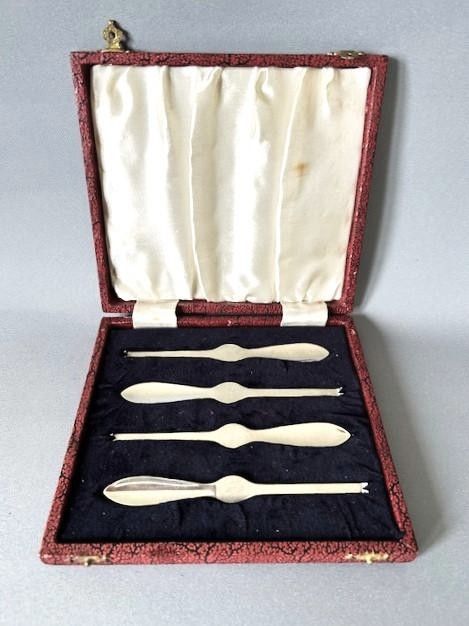
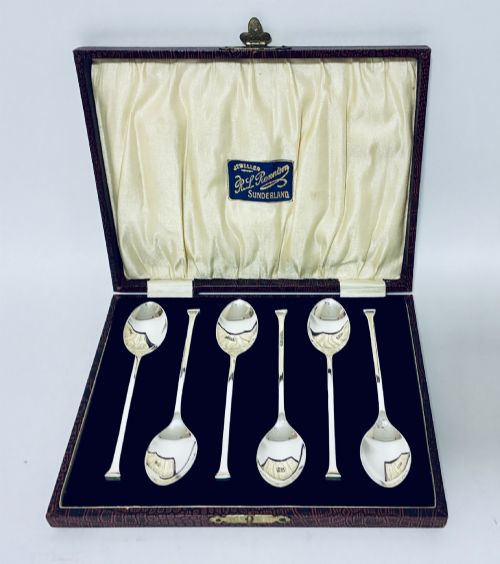
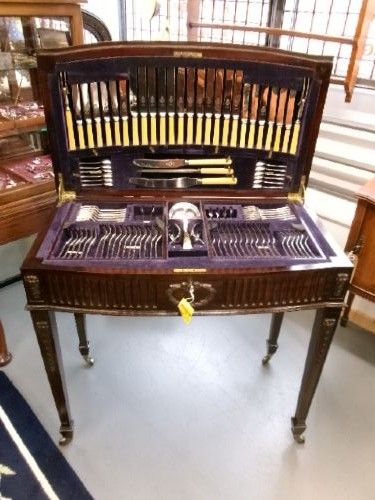
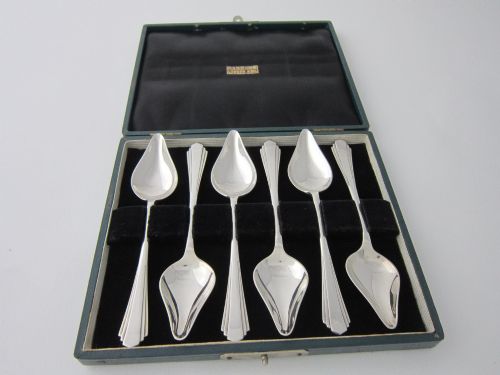
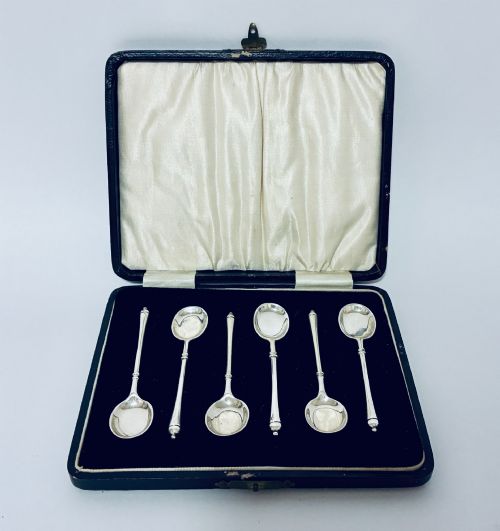
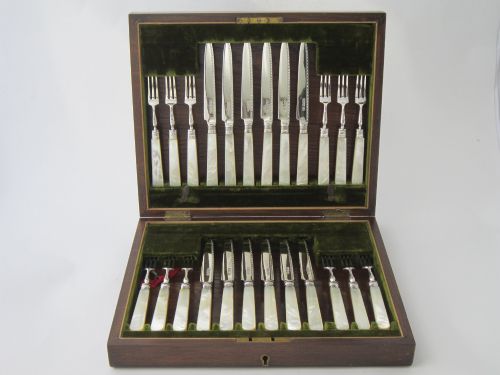
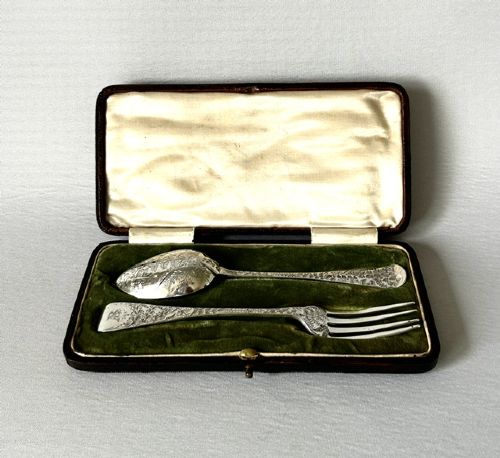
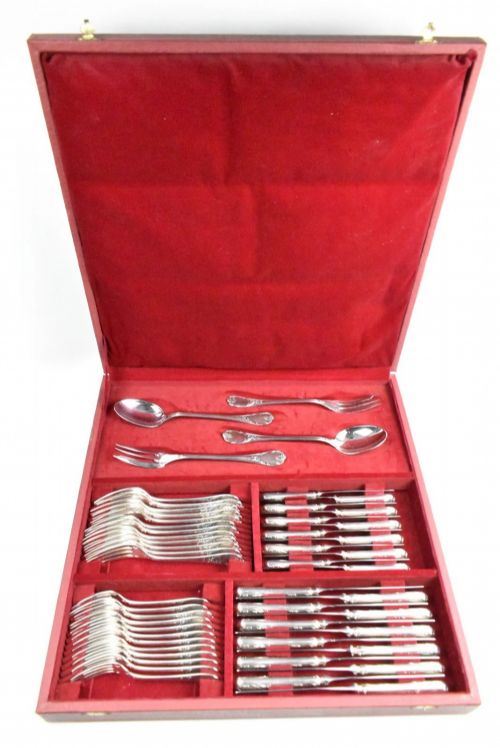
A vintage boxed cutlery set encompasses everything from large multi-piece canteens housing dozens of items down to small specialty groups like grapefruit spoons, butter knives, and lobster picks. These groupings often arrive in fitted wooden cases or specialised presentation boxes lined to protect the metal.
The selections span distinct historical periods including Victorian, Edwardian, and Art Deco designs. Buyers frequently encounter smaller sets intended for specific dining rituals, such as tea spoons, cake forks, or fruit sets complete with nutcrackers.
Many of these matched groups reflect the changing social dining habits of the late nineteenth and early twentieth centuries. Specialised tools like fish servers, knife rests, and Christening sets appear regularly within these fitted presentations.
Materials and construction
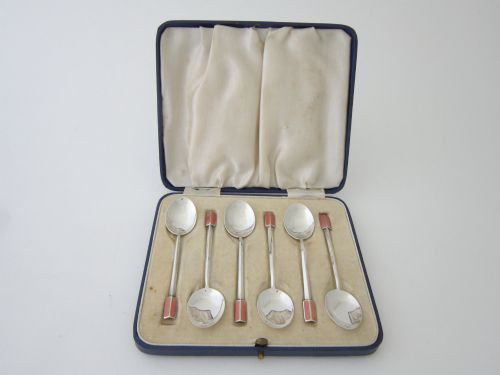
Manufacturers utilised sterling silver and silver plate alongside steel blades, shaping handles from natural materials like mother-of-pearl, oak, and occasionally early plastics such as bakelite. Enamel work frequently adds colour to spoon bowls and handles, particularly on pieces originating from the Art Deco period.
Vintage Boxed Cutlery Set Retail Price Guide 2026
Typical asking prices for vintage boxed cutlery set among the pieces listed under this phrase on Sellingantiques today, from the lower quarter to the upper quarter. They describe what is for sale here now, not the wider market.
Listings feature items spanning the Victorian era through the 1960s, incorporating sterling silver, silver plate, velvet, silk, and oak presentation cases.
Evaluating craftsmanship
Quality rests heavily on the integrity of the fitted case and the preservation of the internal fabric linings. Sets that retain their original velvet, satin, or silk without excessive wear or fading command greater attention.
The execution of decorative elements, such as intricate enamel work, crisp hallmarks on sterling silver, and the secure attachment of mother-of-pearl handles, distinguishes standard production from superior examples. Complete sets retaining every matching implement without replacement pieces indicate higher original status.
Christofle Marly·Harrods·David Andersen·Hukin & Heath·Walker and Hall·Liberty & Co·Robert Stebbings·Waring & Gillows
The Vintage Boxed Cutlery Set Glossary
- Sterling silver
- A precious alloy containing a high proportion of pure silver, usually stamped with official assay marks indicating the maker and year.
- Silver plate
- A base metal substrate coated with a thin layer of silver, offering the visual appeal of solid silver at a different production tier.
- Mother-of-pearl
- The iridescent inner layer of certain mollusc shells, shaped and polished to form decorative knife and fork handles.
- Canteen
- A fitted wooden box or chest designed to hold a complete and organised service of flatware and cutlery.
- Enamel
- A glassy substance melted onto the surface of metal items to provide decorative colour and pattern detail.
Vintage Boxed Cutlery Set: Frequently Asked Questions
How do I store a vintage boxed cutlery set?
Keep the set inside its original fitted case in a stable environment away from direct sunlight and excessive humidity. Consistent temperature helps preserve the delicate velvet, satin, or silk linings.
Avoid wrapping silver items in ordinary plastic or rubber bands, which can cause tarnishing and chemical damage. Proper airflow within the closed wooden box protects both the metal and the internal fabric.
Were these sets used daily or saved for guests?
Many larger canteens and specialised dining sets served for formal household entertaining and Sunday dining rather than routine daily meals. Smaller sets of teaspoons or fruit knives often belonged to personal tea services or specific seasonal dining traditions.
Specific presentation boxes and specialised tools indicate items intended for gifting or high-status dining occasions. This explains why numerous surviving examples retain remarkably pristine internal linings.
How do I identify the period of a set?
Examine the style of the metalwork, noting characteristic geometric lines on Art Deco pieces or ornate floral motifs on Victorian and Edwardian examples. Hallmarks stamped onto silver components provide direct evidence of the assay office and year of manufacture.
Additionally, the materials used for handles and cases, such as bakelite or specific wood grains, offer strong clues regarding the decade of production. Comparing the object types to documented design eras confirms the timeframe.