




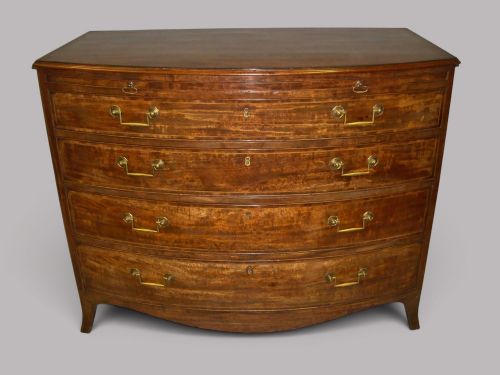
Vintage Bowfront Bureau
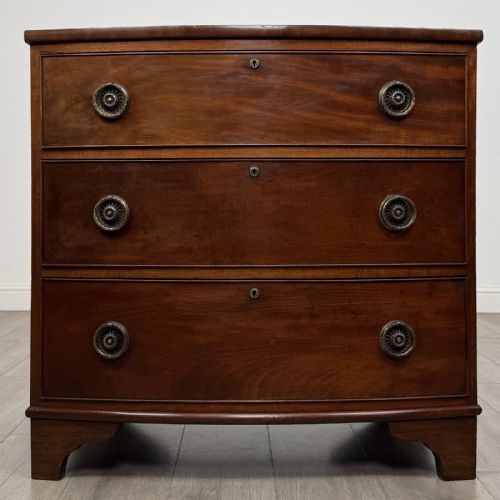
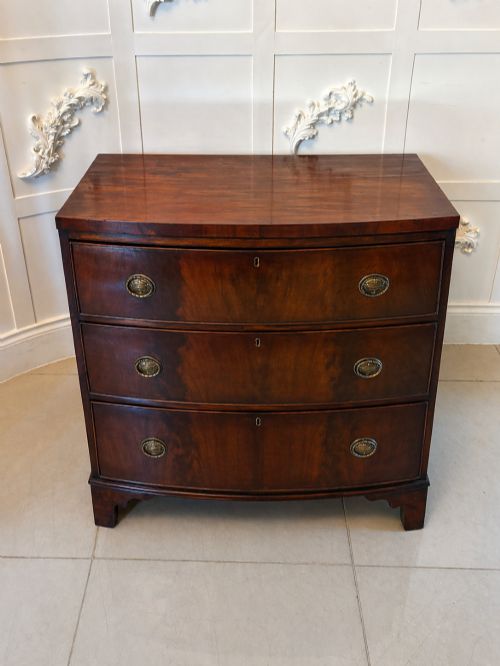
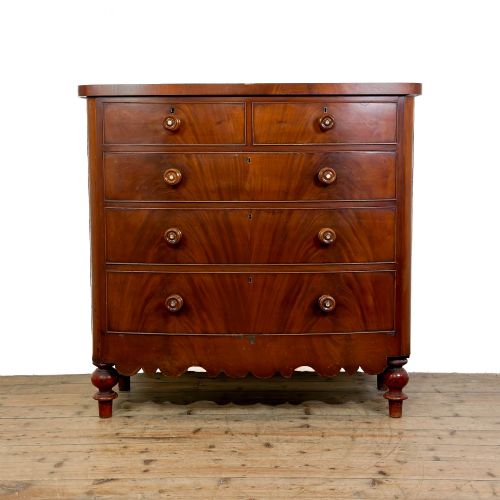
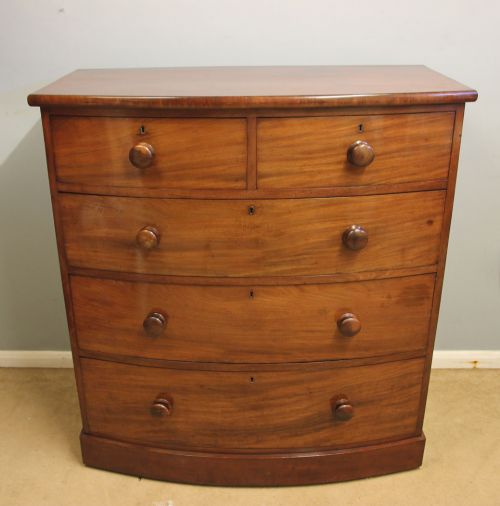
These vintage bowfront bureau and chest of drawers pieces bring curving mahogany lines and fitted writing surfaces directly into your room.
Vintage Bowfront Bureau
A vintage bowfront bureau or chest of drawers brings sweeping curves and practical storage to a room. When you search for a vintage bowfront bureau, you encounter Georgian, Regency, Victorian, and early nineteenth-century pieces designed with distinctive convex fronts.
The selection ranges from compact early examples to large proportioned chests. Many pieces incorporate writing slides or fitted writing compartments alongside standard drawer configurations.
Mahogany and flame mahogany veneer dominate the forms, occasionally supplemented by walnut, burr oak, brass, bone, and mother of pearl details. Originating primarily from English and American traditions, these items reflect the cabinet-making skills of the eighteenth and nineteenth centuries.
How They Were Made
Cabinet makers utilised solid mahogany and applied flame mahogany veneer over secondary timbers such as pine to achieve the characteristic curved drawer fronts. Grain matching across the convex facade required precise cutting and placement of timber.
Decorative elements included brass handles, bone escutcheons, and mother of pearl inlay. Internal components like writing slides and small drawers utilised traditional joinery methods suited to frequent daily use.
Vintage Bowfront Bureau Retail Price Guide 2026
Typical asking prices for vintage bowfront bureau among the pieces listed under this phrase on Sellingantiques today, from the lower quarter to the upper quarter. They describe what is for sale here now, not the wider market.
Materials noted in the evidence include brass, bone, pine, and mother of pearl alongside traditional mahogany.
What Varies in Quality
The selection of timber grain sets superior examples apart, particularly the symmetry and depth of flame mahogany veneer across the curved drawers. Highly figured surfaces demonstrate greater care in material selection by the maker.
Proportion and scale dictate the visual balance of the piece, with smaller Georgian items and large Regency proportions representing different domestic demands. Refinement in secondary details such as brass hardware and sliding writing surfaces marks the distinction between standard production and exceptional work.
The Vintage Bowfront Bureau Glossary
- Bowfront
- A convex curving front facade typical of certain chests of drawers and bureaus. This shape softens the corners of case furniture and maximises internal storage capacity.
- Flame mahogany
- A veneer cut from timber where the branch meets the trunk, producing a rippling, flame-like pattern. It is highly prized for decorative drawer fronts.
- Writing slide
- A pull-out shelf positioned above the top drawer to provide an impromptu writing surface. It pushes flush into the cabinet frame when not in use.
- Escutcheon
- A protective plate surrounding a keyhole, frequently made from brass or bone. It prevents the timber around the lock from sustaining wear.
Vintage Bowfront Bureau: Frequently Asked Questions
How do I use a writing slide?
The writing slide pulls straight out from just beneath the top surface or upper drawer of the chest. It provides a dedicated spot for writing letters without needing a full desk.
Pushing the slide back inside keeps the front of the cabinet flush and orderly when the writing surface is no longer needed.
What woods were used?
Mahogany and flame mahogany veneer are the primary timbers found across these pieces. Cabinet makers also worked with walnut, burr oak, and pine.
Decorative accents often incorporate contrasting materials like brass, bone, and mother of pearl to highlight key areas such as keyholes and handles.
How can I tell the period?
Dating relies on observing construction methods, timber choices, and stylistic markers associated with specific eras like Regency or Victorian. Georgian pieces often display different proportions compared to later nineteenth-century work.
Details like the cut of the veneer and the style of the brass hardware help distinguish between an eighteenth-century origin and a later reproduction.