



Vintage Boudoir Armchairs
Vintage boudoir armchairs are intimate, low-slung seats designed for private dressing rooms, combining period charm with compact comfort.
Vintage Boudoir Armchairs
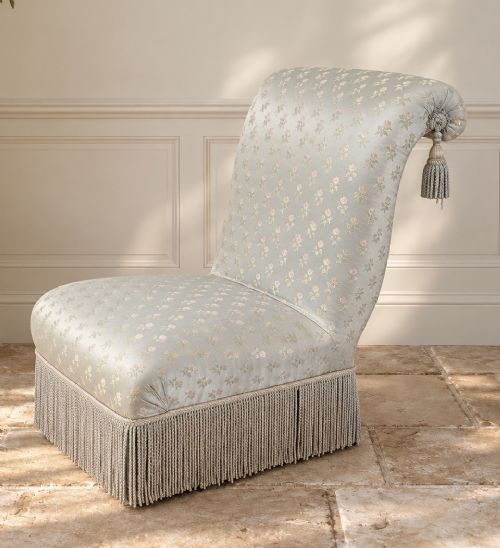
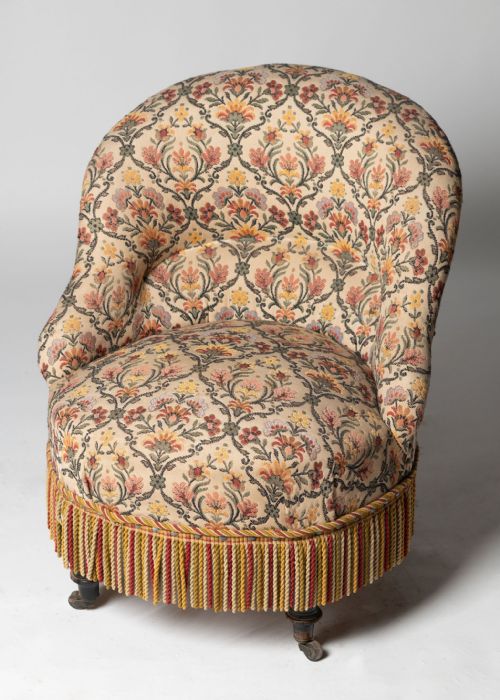
Vintage boudoir armchairs encompass low, inviting seats designed for private spaces like bedrooms and dressing rooms. When you search for vintage boudoir armchairs, you encounter diverse iterations ranging from 19th-century French designs to Edwardian and Victorian examples.
The selections span distinct historical periods, including Victorian, Edwardian, and the 1930s, alongside specific 19th-century French styles such as Napoleon III, Rococo Revival, and French Empire. Forms vary from square back armchairs and tub chairs to revolving upholstered easy chairs and accent pieces.
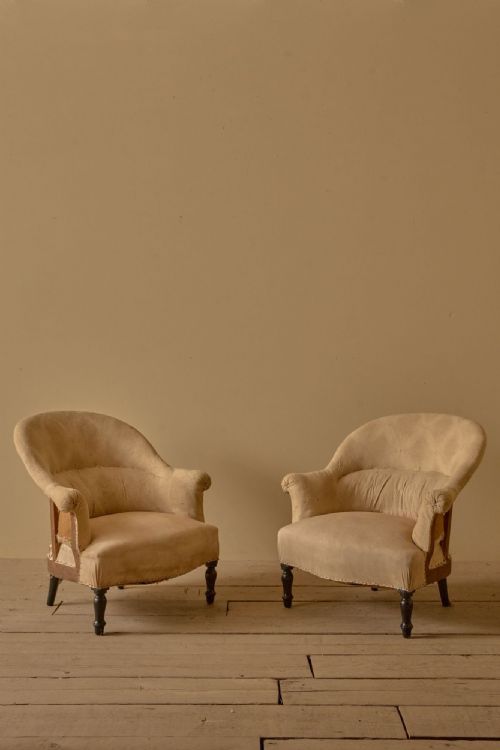
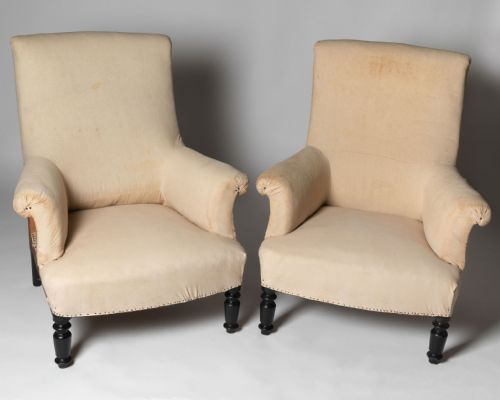
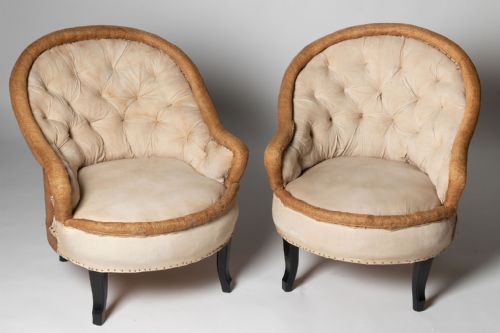
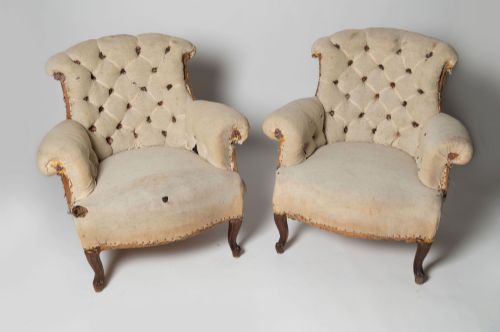
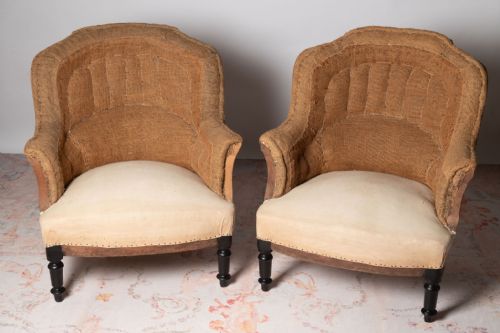
Many of these pieces arrive in foundational states like calico or hessian, whilst others present fully realised velvet upholstery. Pairs appear frequently alongside single chairs, offering matching symmetry for domestic interiors.
How they were made
Construction relies upon traditional timber frames fashioned from beech or ebonised wood, providing robust structural foundations for upholstered seating. Artisans shaped these wooden frameworks to suit specific regional aesthetics, notably ornate French chateau styles and simpler Edwardian forms.
Textiles define the surface finish, utilising durable underlying layers of hessian and calico beneath top coverings of cotton, linen, and plush velvet. Certain pieces remain un-upholstered or stripped back for fresh covering, revealing the foundational padding and webbing techniques of the period.
Vintage Boudoir Armchairs Retail Price Guide 2026
Typical asking prices for vintage boudoir armchairs among the pieces listed under this phrase on Sellingantiques today, from the lower quarter to the upper quarter. They describe what is for sale here now, not the wider market.
Several chairs wait patiently in bare hessian, clearly longing for someone to choose their final velvet outfit.
What varies in quality
Quality differentiates itself through the original integrity of the wooden frame, where dense timbers like beech and ebonised wood demonstrate superior durability compared to softer alternatives. The sophistication of the period carving and the stylistic execution, such as refined French Empire or Rococo Revival details, set superior examples apart.
The standard of foundational upholstery materials, from robust hessian to tactile velvet and linen textiles, dictates the textural richness of each chair. Furthermore, whether a piece survives as an intact matching pair or as a single chair alters its architectural utility within a room.
The Vintage Boudoir Armchairs Glossary
- Boudoir chair
- A small, low-slung armchair traditionally kept in a private dressing room or bedroom. These seats prioritise comfort and intimate scale over formal proportions.
- Tub chair
- An armchair featuring a rounded back that curves continuously into the arms, forming a protective enclosure. This style gained particular favour during the 19th century.
- Hessian
- A coarse woven fabric typically utilised as a sturdy base layer for traditional upholstery underneath top textiles like velvet or cotton. It provides essential structural support for the springs and stuffing.
- Ebonised wood
- Timber treated with a dark finish to imitate expensive ebony wood. This technique was popular for creating striking, high-contrast period furniture frames.
- French Empire
- A neoclassical design style spanning the 19th century, characterised by classical motifs and balanced proportions. Pieces from this tradition display distinct architectural dignity.
Vintage Boudoir Armchairs: Frequently Asked Questions
Where were vintage boudoir armchairs originally used?
These intimate chairs belonged in private spaces such as bedrooms, dressing rooms, and boudoirs where owners relaxed away from public reception rooms.
Their compact dimensions allowed them to fit comfortably into smaller private quarters without dominating the floor plan.
How do I identify a Napoleon III armchair?
Napoleon III pieces typically date from the 19th century and often exhibit influences from earlier French decorative traditions. They frequently appear as square back armchairs or tub chairs ready for upholstery.
Look for the characteristic proportions and foundational materials such as hessian and beech that define French seating of this era.
What is the difference between a boudoir chair and a hall porter chair?
Boudoir chairs are smaller, low seats designed for private rooms, whereas hall porter chairs are larger, high-backed seats originally placed in draughty entrance halls.
Both types utilise upholstered finishes like velvet, but their intended domestic functions and scale differ significantly.
Can I use a vintage boudoir chair in a modern living room?
Their compact scale makes these chairs versatile accents for contemporary sitting rooms, bedrooms, or reading corners. They provide character and comfortable low seating without overwhelming modern spaces.
Many examples upholstered in velvet, cotton, or calico integrate smoothly into diverse interior colour schemes.