



Vintage Botanical China
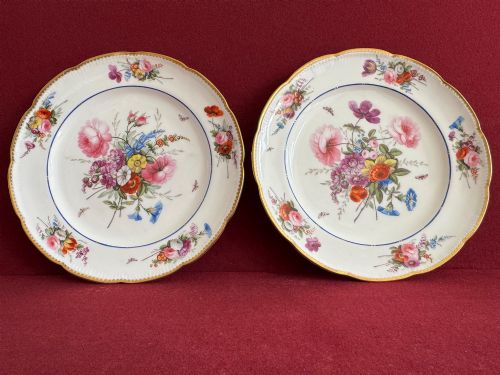
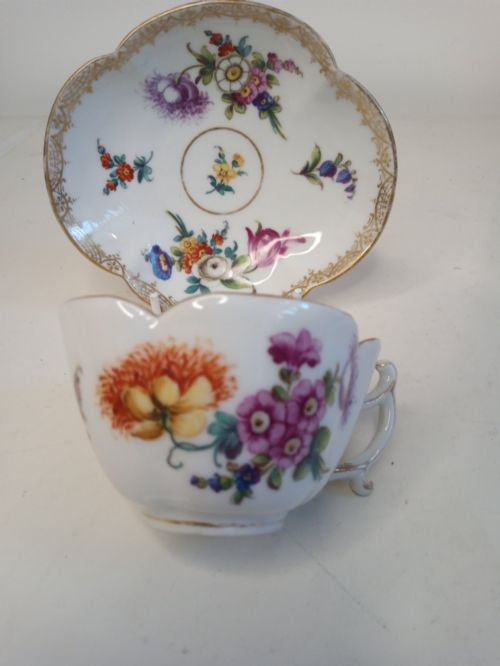
Vintage botanical china brings floral illustration directly to the table through hand painted plates, cups, saucers and jugs from the eighteenth to early twentieth centuries.
Vintage Botanical China
Vintage botanical china encompasses functional and decorative ceramics painted with floral and natural history subjects, spanning periods from the eighteenth century to the early twentieth century. Buyers seeking vintage botanical china encounter forms such as cabinet plates, soup dishes, dessert plates, teacups and saucers, and jugs.
The pieces on this page draw from British, French and German traditions, including Regency and Victorian eras. Makers represented range from Nantgarw and Sevres to Royal Worcester, Livesley Powell and Co, Meissen, Elkin and Newbon, and Royal Crown Derby.
Floral designs dominate the selection, often pairing natural subjects like lilies or goldfinches and roses with blue and white palettes or polychrome decoration. Many items date from the nineteenth century, alongside eighteenth century French porcelain and early twentieth century examples.
Materials and Techniques
Makers utilised hard-paste porcelain, earthenware, and ironstone ceramic as bodies for these botanical pieces. Surfaces received glazes, metallic lustre, enamel, and gold leaf or gilding to highlight the hand painted botanical subjects.
Decoration relied on skilled hand painting to render floral and avian details accurately across plates, jugs, and cups. Craftspeople applied underglaze blue and polychrome enamels before final firing.
Vintage Botanical China Retail Price Guide 2026
Typical asking prices for vintage botanical china among the pieces listed under this phrase on Sellingantiques today, from the lower quarter to the upper quarter. They describe what is for sale here now, not the wider market.
A tiny goldfinch painted beside a single rose reminds us that nineteenth century table settings loved a feathered guest at tea.
Markers of Quality
Quality rests upon the precision and delicacy of the hand painting, particularly in the rendering of botanical subjects, foliage, and birds. Superior examples display finer brushwork and more detailed compositions on the ceramic surface.
The refinement of the ceramic body, whether hard-paste porcelain or ironstone, alongside the application of gold leaf, gilding, or metallic glaze, distinguishes exceptional pieces from standard wares.
Nantgarw·Sevres·Royal Worcester·Livesley Powell and Co·Meissen·Elkin and Newbon·Royal Crown Derby
The Vintage Botanical China Glossary
- Hard-paste porcelain
- A dense, vitrified ceramic made from petuntse and kaolin, fired at high temperatures. It forms a durable white body favoured by eighteenth and nineteenth century European factories.
- Ironstone ceramic
- A heavy, durable earthenware developed in the nineteenth century as a robust alternative to porcelain. It takes glazes and blue and white transfers particularly well.
- Enamel
- Opaque glass fused to ceramic surfaces at high temperatures to provide bright colours in floral painting. It sits slightly raised above the glazed body.
- Gilding
- The application of gold leaf or powdered gold to ceramic rims and details. It adds decorative contrast to painted floral motifs.
- Cabinet plate
- A decorative ceramic plate intended for display in a cabinet rather than for dining use. These pieces often feature elaborate hand painted botanical scenes.
Vintage Botanical China: Frequently Asked Questions
How do I care for botanical china?
Wash these ceramic and porcelain pieces gently by hand using mild soap and warm water. Avoid soaking items with gold leaf, gilding, or delicate enamel decoration to preserve the painted surfaces.
Store plates in dedicated racks and use felt dividers between stacked pieces to prevent scratching the glaze or damaging the hand painted floral details.
Are these plates meant for dining?
While many nineteenth century pieces like dessert plates and soup dishes served functional dining roles originally, older or more decorative items function primarily as cabinet plates today.
Assess the condition of the glaze and any metallic lustre before serving food, as historical wear may make certain pieces better suited for display.
What periods do these pieces span?
The selection covers ceramics produced from the eighteenth century through the Regency, Victorian, and Edwardian eras up to the early twentieth century. Styles shift from neoclassical French porcelain to robust nineteenth century British ironstone.
Each period brings distinct manufacturing techniques, from early hard-paste porcelain formulas to later nineteenth century earthenware bodies.
How are botanical designs applied?
Decorations on these wares were executed primarily through hand painting, capturing flowers, lilies, and birds like goldfinches with careful brushwork. Artisans used polychrome enamels and blue and white pigments.
Some items incorporate additional highlights in gold leaf or metallic glaze, applied over the fired white ceramic body to frame the botanical artwork.