






Vintage Book Decor
Vintage book decor brings together period volumes and carved supports that anchor shelves with genuine history.
Vintage Book Decor
When you search for vintage book decor, you encounter a mix of functional bookends and multi-volume sets that bring character to a shelf. The selections on this page span from the eighteenth century through the art deco era, incorporating both individual texts and coordinated sets.
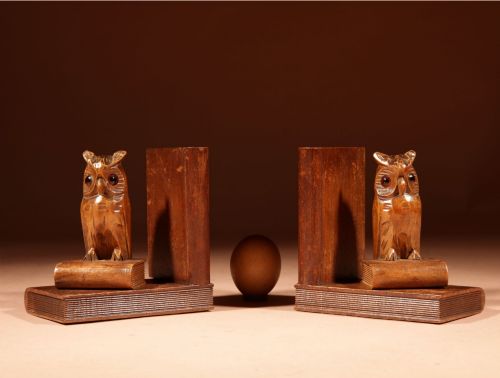
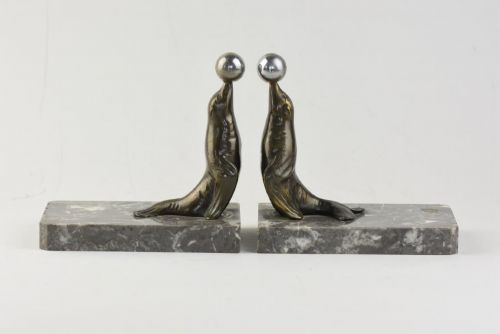
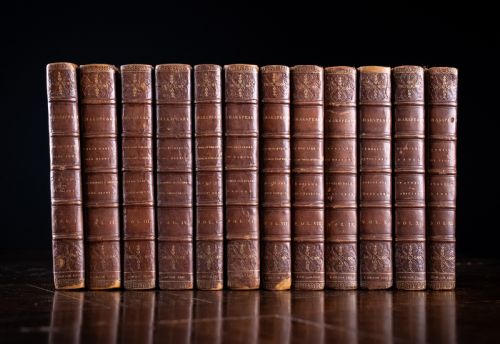
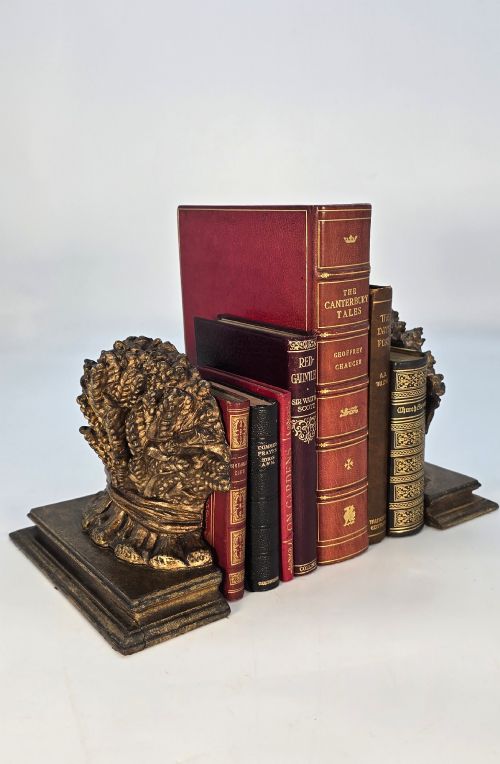
Bookends form a large part of what you find here, fashioned in styles ranging from Black Forest animal carvings to regency wheat sheaves and art deco metals. Alongside these supports sit cloth and leather-bound library sets, ranging from Shakespearean plays to nineteenth-century novels.
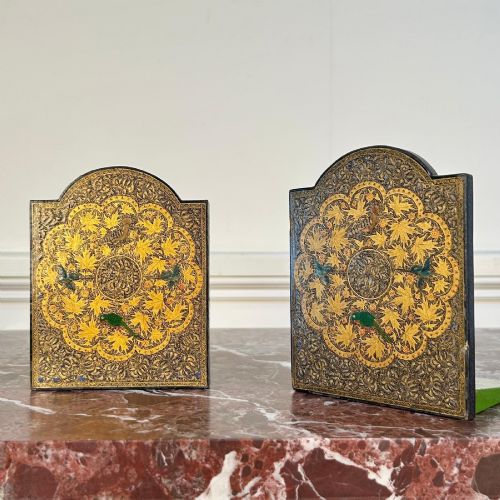
Origins vary widely, taking in English workshops, continental European carving centres, and Indian brass works. These pieces serve both to organise volumes and to add sculptural presence to an interior.
Materials and construction
The objects combine traditional cabinet timbers such as maple, yew, and linden wood with durable metals including brass, spelter, and alabaster. Carved wooden items often utilise hand-shaped details, particularly seen in animal figures from bears and owls to fish and dogs.
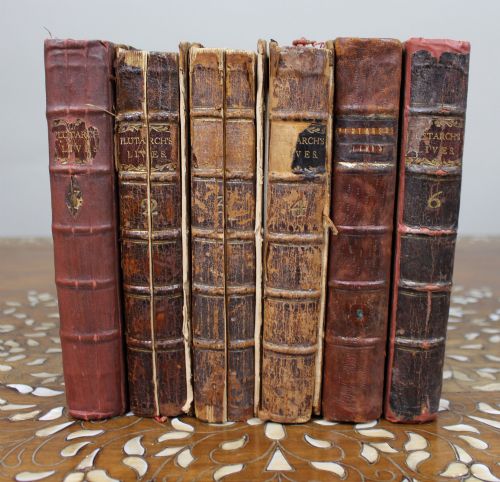
Bound volumes rely on traditional papermaking, cloth binding, and leather finishing, frequently enhanced with gold leaf lettering and tooling. Heavier supports incorporate marble, ceramic, or glass bases to ensure they hold the weight of heavy volumes securely.
Evaluating quality and execution
Quality rests on the depth of hand-carving and the integrity of the materials, whether dealing with solid yew wood, cast bronze or brass, or finely tooled leather. Stronger examples display crisp detail in animal expressions and architectural motifs rather than soft, mass-produced moulding.
For bound books and multi-volume sets, condition depends on the uniformity of the bindings and the preservation of the original spines and gold leaf lettering. The most successful decorative sets retain matching wrappers or bindings that present an unbroken visual rhythm along a shelf.
J. & R. Tonson·Thornton Smith Co.
The Vintage Book Decor Glossary
- Black Forest
- A style of wood carving originating from the German and Swiss mountain regions, famous for realistic depictions of bears, owls, and woodland animals. These carvings often double as functional desk or shelf supports.
- Book slide
- An extending wooden or metal rack designed to hold a varying number of upright books between two sliding or stationary ends. Maple and other hardwoods are frequently utilised for these expanding frames.
- Spelter
- An alloy of zinc and lead cast into decorative figures and patinated to resemble bronze or brass. It appears frequently in twentieth-century bookends.
- Antiquarian
- Pertaining to books, documents, and artefacts of significant age and historical interest. These volumes are collected for their age, content, or binding quality.
- Tooling
- The process of impressing designs, titles, or decorative patterns into book leather using heated brass tools and gold leaf. Uniform tooling signifies a well-executed library binding.
Vintage Book Decor: Frequently Asked Questions
How do I style vintage book decor?
Pair heavy bookends with matching sets of leather-bound novels to anchor open shelving or mantelpieces. The varied heights and textures create immediate visual weight.
Mix different periods carefully, letting nineteenth-century sets sit alongside art deco metal supports to build a layered, collected appearance.
Are these old books readable?
Many multi-volume sets and antiquarian books contain complete original texts from the eighteenth and nineteenth centuries. They offer a direct window into historical printing and literature.
Handle older volumes with care to preserve fragile paper and spine bindings during reading.
What materials are common in bookends?
Carved wood dominates early pieces, particularly linden wood from the Black Forest and solid yew from the Georgian period. Metals such as brass, spelter, and alabaster become more common by the twentieth century.
Base weights often include marble or ceramic to provide the necessary stability for holding heavy volumes upright.
How do I date antique book sets?
Check the title pages and publisher imprints for explicit printing dates, which remain standard in many antiquarian volumes. Bindings, typography, and paper quality also offer strong clues to a book's era.
Long runs of novels often display uniform publisher bindings that reflect the Victorian or Edwardian decade of their release.