




Vintage Blue Sideboard
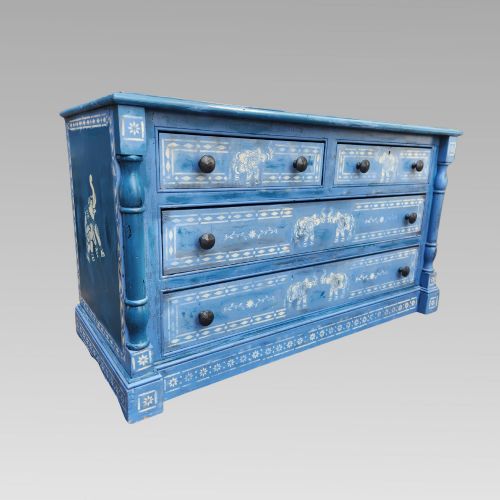
A vintage blue sideboard brings character and honest utility to a room through painted pine and time-worn regional craftsmanship.
Vintage Blue Sideboard
When you search for a vintage blue sideboard, you encounter practical painted furniture spanning the eighteenth, nineteenth, and early twentieth centuries. These pieces encompass regional dressers, cupboards, and commodes rather than standardised modern units.
The dominant style on this page is country vernacular, represented by English, French, Scandinavian, and West Country pieces. These items served functional roles in kitchens, shops, and country houses before finding a place in contemporary interiors.
Forms vary from sturdy dresser bases and linen cupboards to shop counters and commodes. Each piece shows the straightforward construction methods of its period, adapted for domestic storage and display.
Materials and construction
Pine forms the structural core of these pieces, providing a reliable surface for layers of traditional paint. Iron and brass hardware, including handles and hinges, fasten and accent the timber construction.
Surfaces carry historic paint finishes, sometimes featuring ragwork techniques or simple hand-applied coats over older timber. These finishes have weathered through generations of use, leaving natural patination across the pine boards.
Vintage Blue Sideboard Retail Price Guide 2026
Typical asking prices for vintage blue sideboard among the pieces listed under this phrase on Sellingantiques today, from the lower quarter to the upper quarter. They describe what is for sale here now, not the wider market.
Regional styles span Scandinavian country, English country, folk art, and West Country vernacular cabinetmaking traditions.
Assessing quality and character
Quality in these painted pieces rests upon the integrity of the original timber and the depth of the historic surface finish. A strong piece displays honest proportion and sturdy joinery that has survived decades of daily domestic service.
The character of the paint layer dictates much of the visual appeal. Surfaces with undisturbed wear and genuine age command attention, showing how the piece has lived rather than attempting to mimic past eras.
The Vintage Blue Sideboard Glossary
- Dresser base
- A low cabinet or sideboard featuring drawers and cupboards, historically used for food preparation and storage in country kitchens.
- Commode
- A low cabinet or chest with doors or drawers, originating as a bedroom or living space storage piece.
- Ragwork paint
- A decorative paint finish applied by manipulating colour with a cloth or rag to create textured patterns on the timber.
- Vernacular furniture
- Everyday objects made by local craftspeople using regional traditions rather than following high-style academic designs.
- Patina
- The surface sheen and softening of colour developed by wood and paint over many years of handling and exposure.
Vintage Blue Sideboard: Frequently Asked Questions
How do I clean a painted pine sideboard?
Dust the surface regularly with a soft, dry cloth to prevent dirt accumulation. Avoid harsh chemical cleaners that can strip or soften historic paint layers.
For stubborn marks, use a slightly damp cloth with mild soap, drying the timber immediately afterwards to protect the old pine.
Can I use a country cupboard as a sideboard?
Many cupboards and dresser bases from the eighteenth and nineteenth centuries serve well as modern sideboards. Their proportions and storage compartments suit dining rooms and hallways.
Measure the height and depth of your space carefully, as regional country pieces often feature idiosyncratic dimensions compared to modern furniture.
How can I tell the age of a painted finish?
Historic painted surfaces show natural craquelure, subtle fading, and wear around handles and edges where hands touched the wood over centuries.
Examine the underlying timber and nail types inside drawers or at the back to confirm the period matches the painted exterior.
Are these pieces suitable for daily kitchen use?
Pine sideboards and dresser bases were originally built for heavy domestic labour in kitchens and pantries. They remain robust enough for contemporary storage and serving tasks.
Protect vulnerable painted surfaces from excessive moisture and heat by using mats and coasters during everyday use.