



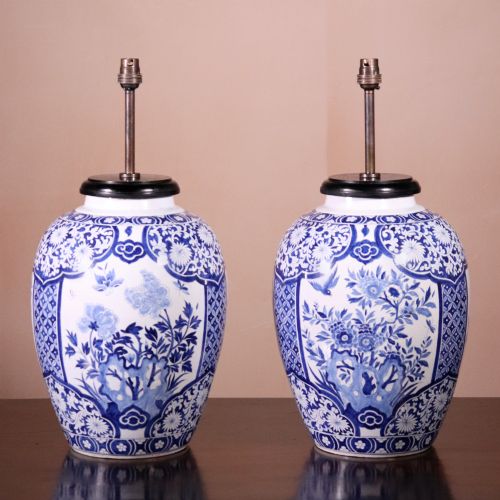


Vintage Blue Ceramic Lamp
These vintage blue ceramic lamps turn earlier vessels and jars into domestic lighting across several centuries.
Vintage Blue Ceramic Lamp
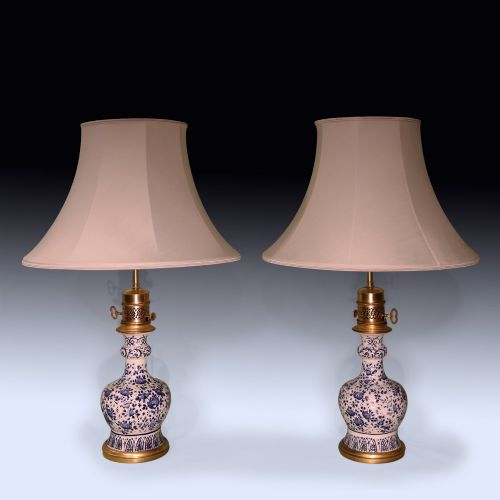
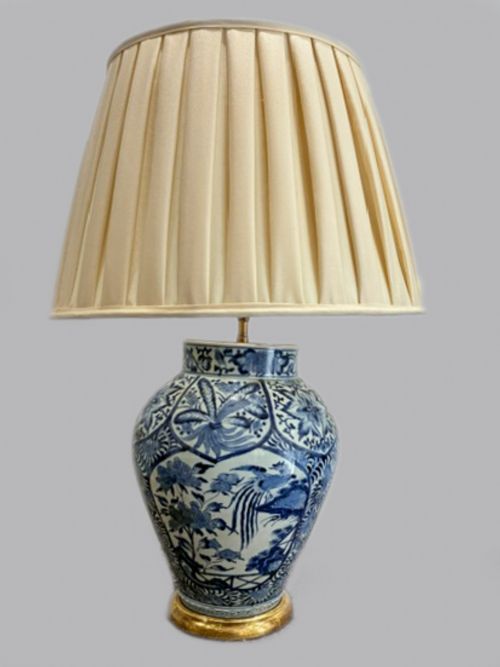
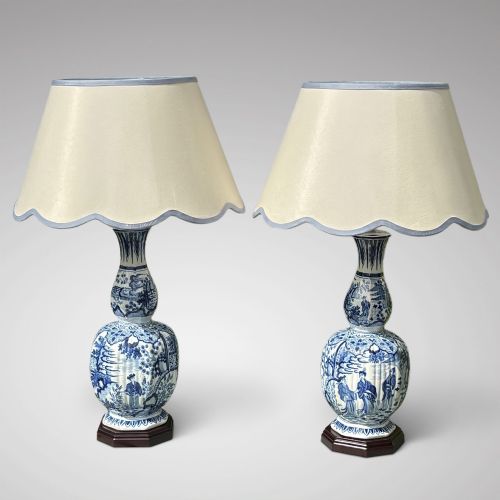
Buyers seeking a vintage blue ceramic lamp encounter vessels originating from seventeenth-century Japanese kilns, eighteenth-century Dutch potteries, and nineteenth-century French workshops. These pieces span table lamps, oil lamps, and floor lamps.
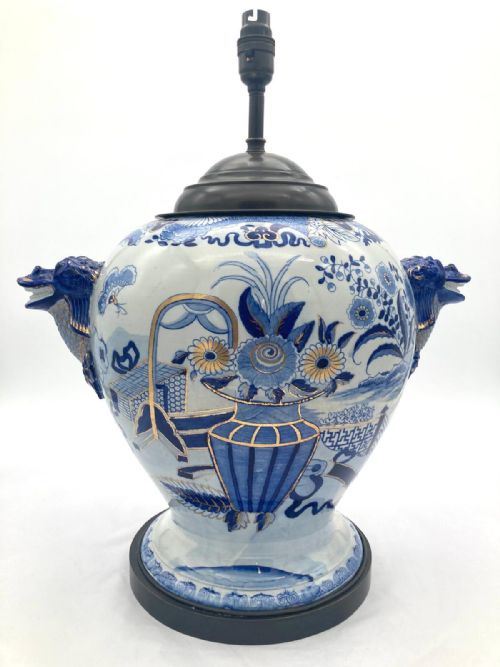
Many examples utilise earlier ceramic vases, ginger jars, and apothecary jars that have been converted into lamps. Chinese blue and white porcelain and Japanese Imari wares feature prominently alongside European delftware and faience.
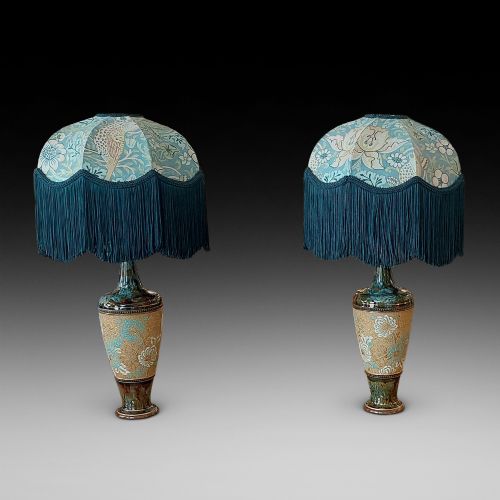
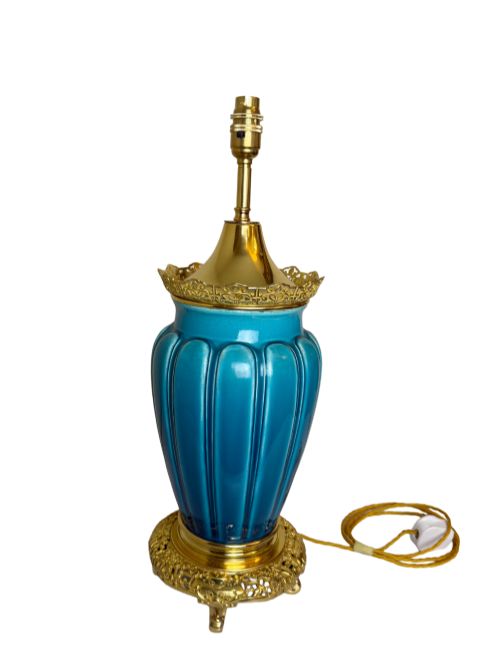
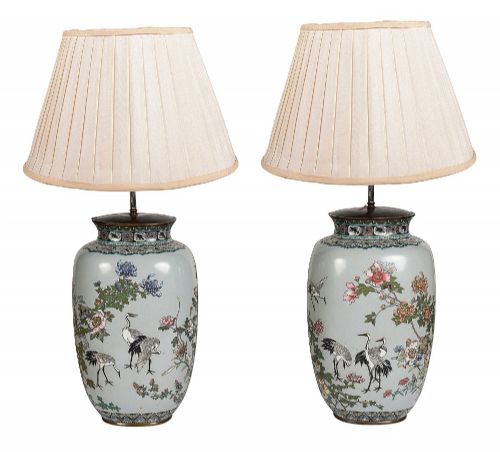
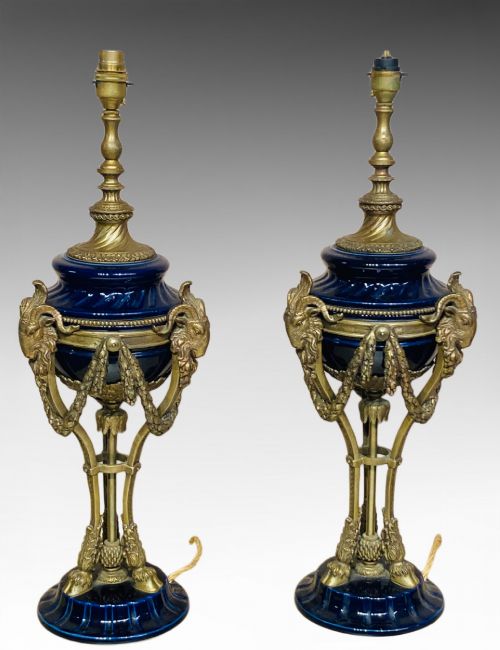
Forms range from slender single vases to substantial pairs with matching mounts. The blue glaze varies from deep cobalt and turquoise to softer delft shades upon ceramic, porcelain, and earthenware bodies.
Materials and conversion techniques
Potters shaped ceramic, porcelain, and earthenware bodies before applying blue glazes, sometimes incorporating crackleware finishes or detailed hand-painted prunus blossom and figurative motifs.
Metal mounts in brass, ormolu, and gilt bronze provide structural support and decorative collars for the converted vessels, paired occasionally with fabric and silk shades.
Vintage Blue Ceramic Lamp Retail Price Guide 2026
Typical asking prices for vintage blue ceramic lamp among the pieces listed under this phrase on Sellingantiques today, from the lower quarter to the upper quarter. They describe what is for sale here now, not the wider market.
Materials span ceramic, porcelain, earthenware, brass, gilt bronze, wood, and silk across periods ranging from the 17th century to the 1920s.
Distinctions in quality and execution
Quality rests upon the crispness of the ceramic body, the depth and consistency of the blue glaze, and the precision of the hand-painted detail. Finer pieces display clear potting and controlled firing without distortion.
The integration of metal mounts separates standard conversions from superior examples. Ormolu and gilt bronze mounts fitted precisely to the ceramic contours elevate the piece.
The Vintage Blue Ceramic Lamp Glossary
- Delftware
- Tin-glazed earthenware produced in Dutch and English potteries, known for white surfaces painted in blue. This tin glaze creates an opaque background for detailed motifs.
- Imari
- Japanese porcelain decorated in underglaze blue, iron red, and gilt, originating from Arita kilns. These wares were widely exported to Europe.
- Ormolu
- Gilt bronze mounts applied to furniture and ceramics during the eighteenth and nineteenth centuries. The technique involves applying a gold-mercury amalgam to bronze.
- Cloisonne
- Enamel work where wires form compartments on a metal base to hold coloured pastes before firing. Japanese examples from the Meiji period utilise this method.
- Ginger jar
- A wide-mouthed storage jar of Chinese origin, frequently converted into a lamp base. These jars often display blue and white prunus blossom decoration.
Vintage Blue Ceramic Lamp: Frequently Asked Questions
What periods do these lamps come from?
The selection includes items spanning from the late seventeenth century through to the art deco era of the 1920s.
Many pieces incorporate ceramic bodies made centuries before their conversion into lighting.
Are these converted from old vases?
A large proportion of these lamps started life as seventeenth, eighteenth, or nineteenth-century vases, jars, and apothecary containers.
Craftsmen later adapted these ceramic vessels to accept electrical fittings and lamp hardware.
How do I identify Japanese Imari?
Japanese Imari porcelain typically combines underglaze blue with iron red and gilt highlights upon a white body.
These patterns often feature floral and panel designs produced in Arita.
What styles of decoration appear most often?
Blue and white chinoiserie designs, Japanese Imari, and Dutch delftware dominate the decorative styles on these ceramic bodies.
Art deco and Victorian examples also introduce geometric patterns and figural elements.