






Vintage Black Server
A vintage black server brings dark painted depth and practical surface space to a room, drawing on centuries of country and formal cabinet-making traditions.
Vintage Black Server
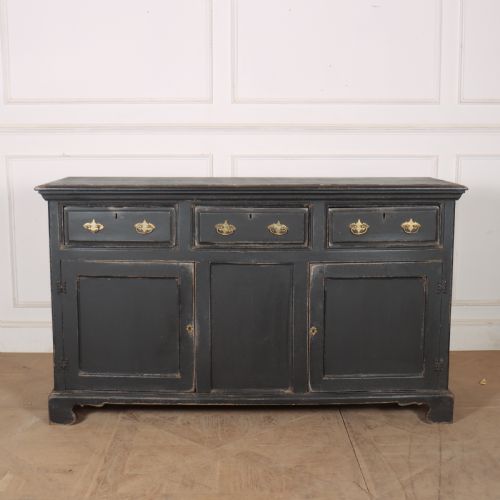
A vintage black server encompasses dark-painted furniture forms such as dresser bases, console tables, sideboards, and chiffonier cabinets drawn from the eighteenth, nineteenth, and early twentieth centuries. These pieces serve as functional storage and display surfaces, often finished in black paint, ebonised wood, or traditional folk art motifs.
The selections available here lean heavily toward nineteenth-century painted pine, Victorian dresser bases, and French console tables or cabinets from periods like the Napoleon III era. Buyers encounter everything from rustic English country pieces to refined French Directoire and Renaissance Revival designs.
Form follows function across these items, ranging from low buffet cabinets to tall breakfront dresser bases and demi lune console tables. Each object provides a distinct footprint for dining rooms, hallways, or living spaces requiring substantial surface area and enclosed storage.
How they were made
Construction relies on traditional timbers such as oak, pine, and mahogany, shaped into robust carcases for dressers, sideboards, and cabinets. Structural integrity depends on solid joinery suited to heavy daily use in domestic settings.
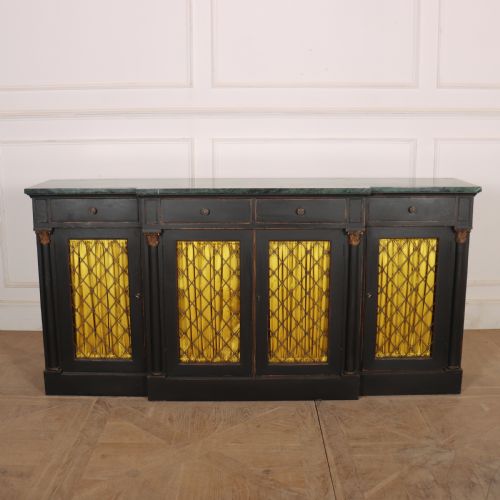
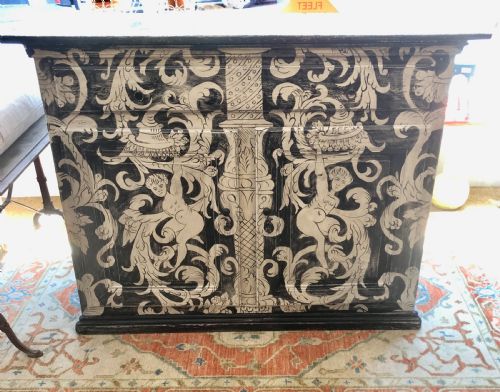
Surfaces receive decorative treatments including hand-applied black paint, ebonisation, and intricate brushwork as seen in Hungarian folk art or specific artist-led commissions. Fitted details such as marble tops and brass hardware introduce contrasting textures to the dark wood and painted finishes.
Grotesque painted details bring mythical sixteenth-century decorative motifs right onto nineteenth-century French buffet doors.
What varies in quality
The standard of execution in decorative finish dictates much of the distinction between pieces, ranging from simple rustic painted pine to sophisticated ebonisation and detailed hand-painted ornament. The integration of premium materials like fitted marble slabs and cast brass mounts elevates the overall presence of a console or cabinet.
Construction methods and timber selection also divide utilitarian workshop output from ambitious cabinet-making, visible in the handling of breakfront profiles, bowfronts, and multi-door configurations. Originality of surface and the harmony of period hardware contribute significantly to the character of each item.
Melissa White
The Vintage Black Server Glossary
- Ebonised
- Wood finished to resemble ebony through staining or dark painting. This technique was popular in nineteenth-century French furniture to create a sleek, formal appearance.
- Dresser Base
- The lower section of a traditional dresser featuring cupboards and drawers without the upper shelving unit. It provides sturdy surface space and enclosed storage.
- Breakfront
- A piece of furniture where the central section projects forward from the flanking outer sections. This architectural feature creates depth and shadow on sideboards and cabinets.
- Demi Lune
- Half-moon or semicircular in shape, typically applied to console tables and small cabinets. This form allows the furniture to sit flush against a wall.
- Chiffonier
- A compact sideboard or tall cabinet developed in the nineteenth century, usually featuring enclosed shelving and drawers. It offers versatile storage for dining or living rooms.
Vintage Black Server: Frequently Asked Questions
What defines a vintage black server?
A vintage black server covers dark-finished and painted furniture used for serving and storage, spanning centuries of British and European design. Pieces include dresser bases, console tables, and cabinets with black paint or ebonised surfaces.
Buyers select these items to anchor a room with dark tones while gaining practical surface space and cupboard storage. The category bridges rustic country pieces and formal French revival styles.
Where should I place a console table?
Console tables fit well in narrow hallways, living rooms, or dining spaces where depth is limited. Their narrow profile provides a display surface without blocking walkways.
Pisces with marble tops or ebonised finishes work effectively against plain walls, offering a surface for lamps or decorative objects. They bring architectural structure to transitional spaces in the home.
What is a dresser base used for?
A dresser base provides a heavy, flat top surface alongside drawers and lower cupboards for household storage. Historically stationed in kitchens or dining rooms, it held tableware and provisions.
In modern interiors, these pieces function as sideboards or server units in dining areas and living spaces. Their deep proportions offer substantial internal storage capacity.
Are French and English styles different?
French styles like Napoleon III and Directoire tend to emphasise refined lines, ebonised finishes, and decorative brass or marble additions. English country and Georgian pieces lean toward utilitarian oak and painted pine construction.
Both traditions produced robust server forms, but French items often carry more ornate detailing. English country versions prioritise straightforward utility and visible grain or simple painted surfaces.