



Vintage Biscuit Caddy
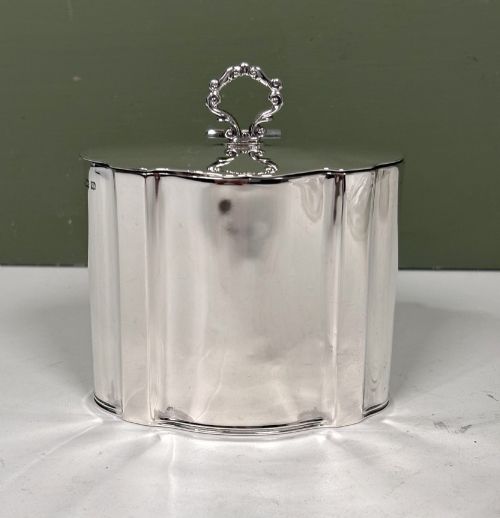
These vintage biscuit caddy pieces are sturdy table vessels designed to keep dry baked goods fresh, offering charm and utility for any dining room.
Vintage Biscuit Caddy
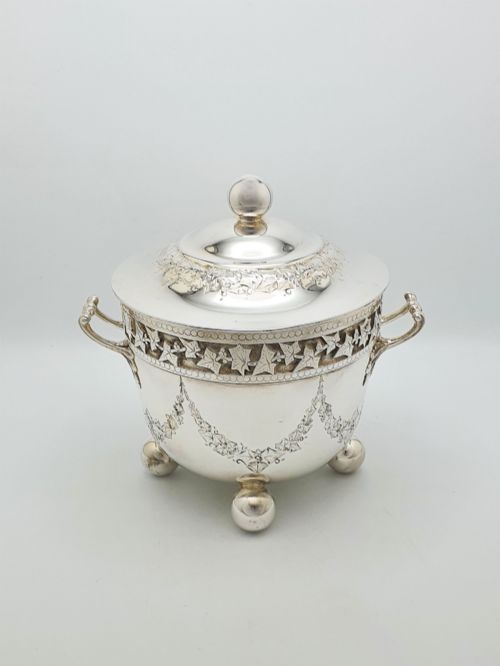
When you search for a vintage biscuit caddy, you encounter lidded containers built to house biscuits on the parlour or dining table. The examples listed span periods from the late Victorian era through the Edwardian years and into the early twentieth century.
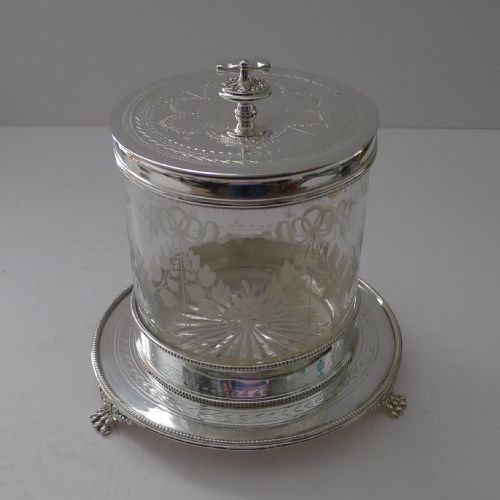
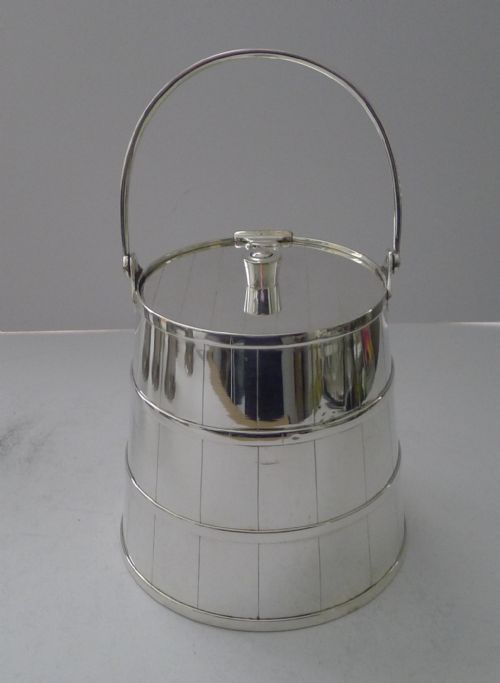
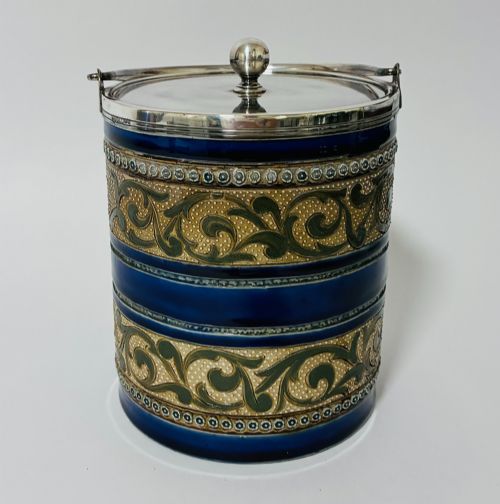
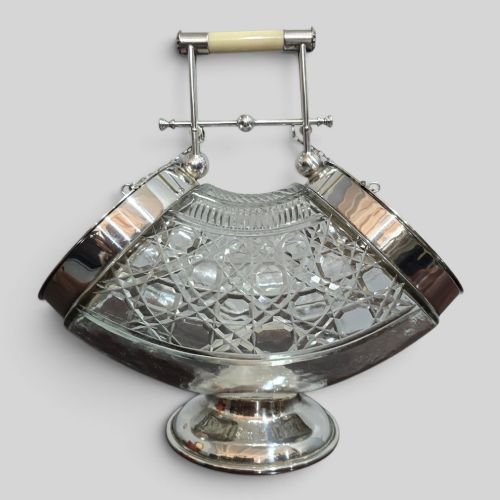
You are most likely to meet silver plated and cut glass barrels or oak and silver plate drum forms on this page. Other variants include ceramic bodies from Doulton Lambeth, Carlton Ware, and Wedgwood, alongside novelty tins shaped like books, weights, and hat boxes.
Makers such as Mappin & Webb and John Grinsell & Sons produced these tabletop accessories in styles ranging from Victorian Arts and Crafts to Neoclassical. Anglo-Indian influences and novelty animal or object shapes also appear among the selections.
How they were made
Makers combined metalworking and ceramics, mounting earthenware and stoneware bodies into silver plated or solid silver mounts with swing handles and hinged lids. Glass examples utilised heavy cut, etched, or hobnail glass to catch the light on the dining table.
Woodworking played a significant role, particularly quarter-sawn oak fashioned into sturdy staved drum forms reinforced with silver plated bands. Novelty pieces employed lithographed metal for decorative tins and carved hardwood effects for specific novelty shapes.
Vintage Biscuit Caddy Retail Price Guide 2026
Typical asking prices for vintage biscuit caddy among the pieces listed under this phrase on Sellingantiques today, from the lower quarter to the upper quarter. They describe what is for sale here now, not the wider market.
Listings feature oak, stoneware, earthenware, and cut glass combined with silver plate across Victorian and Edwardian periods.
What varies in quality
The weight and thickness of the glass or ceramic body set the baseline for a piece, alongside the depth of the hobnail or cut glass patterns. Thicker silver plating ensures the underlying base metal remains hidden after decades of polishing.
The complexity of the mechanism distinguishes standard barrels from novelty items shaped like books, weights, or hat boxes. Fine detailing in ceramic transfers, such as flow blue patterns, and robust oak stave construction separate ordinary vessels from superior examples.
Mappin & Webb·Doulton Lambeth·Carlton Ware·Huntley & Palmers·Wedgwood·John Grinsell & Sons
The Vintage Biscuit Caddy Glossary
- Biscuit barrel
- A cylindrical container with a hinged lid designed specifically for holding biscuits at the dining table. They frequently feature swing handles for easy transport.
- Silver plate
- A layer of silver fused to a base metal such as copper or nickel brass. This technique provided the lustrous appearance of solid silver at a lower cost.
- Flow blue
- A cobalt blue transfer printing style used on earthenware where the colour blurred slightly during firing. This effect created a soft, misty outline around the decorative motifs.
- Jasper ware
- A fine stoneware developed by Wedgwood, characterised by a matte unglazed surface and contrasting white relief figures applied against a coloured ground.
- Hobnail cut
- A sharp, faceted geometric pattern cut into glassware resembling the hobnails used on heavy boots. It added both tactile grip and brilliant light refraction.
Vintage Biscuit Caddy: Frequently Asked Questions
What is a vintage biscuit caddy?
A vintage biscuit caddy is a covered tabletop container made to keep dry biscuits crisp and accessible during tea service.
These pieces typically date from the Victorian and Edwardian periods, combining materials like glass, silver plate, and oak.
How were these caddies used?
Hosts placed them on the dining or drawing room table during afternoon tea or after dinner to serve biscuits to guests.
The hinged lids kept the contents protected from moisture and air until it was time to serve.
How do I clean silver plated metal?
Use a soft cloth and a gentle, non-abrasive silver polish formulated specifically for plated items to maintain the shine.
Avoid harsh scrubbing that might wear away the thin silver layer over the base metal.
Can I use these for food today?
Most ceramic and glass caddies function well for holding dry goods if the interior is clean and free of residue.
Check that any metal mounts or hinges operate smoothly before storing edible items inside.