




Vintage Biscuit Barrel
A vintage biscuit barrel is a lidded container designed to keep biscuits crisp, combining practical storage with decorative table presence.
Vintage Biscuit Barrel
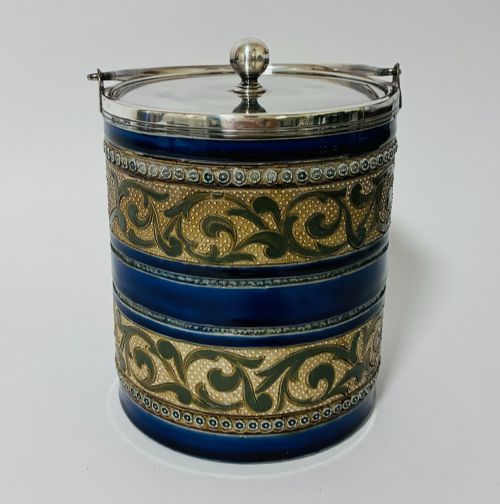
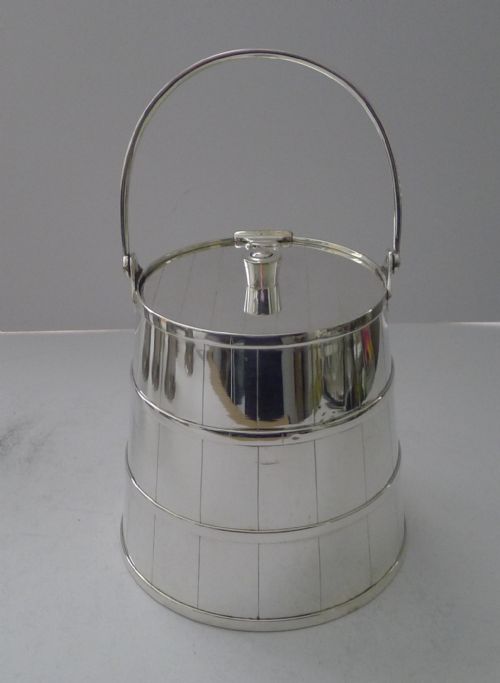
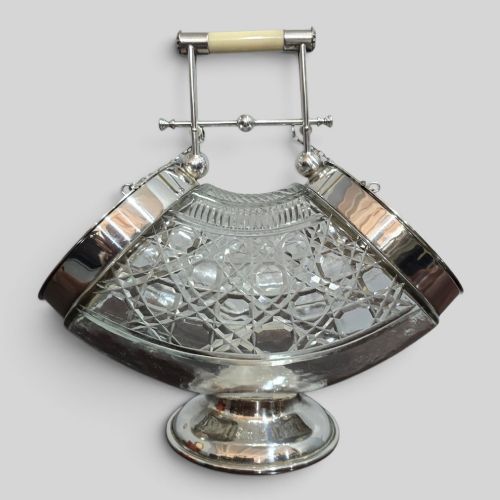
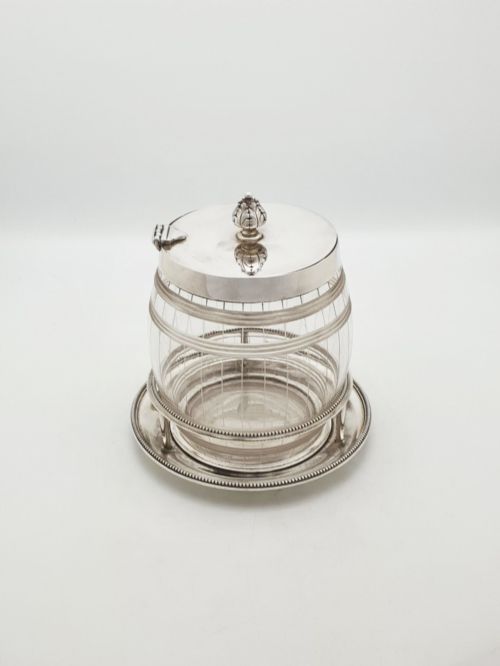
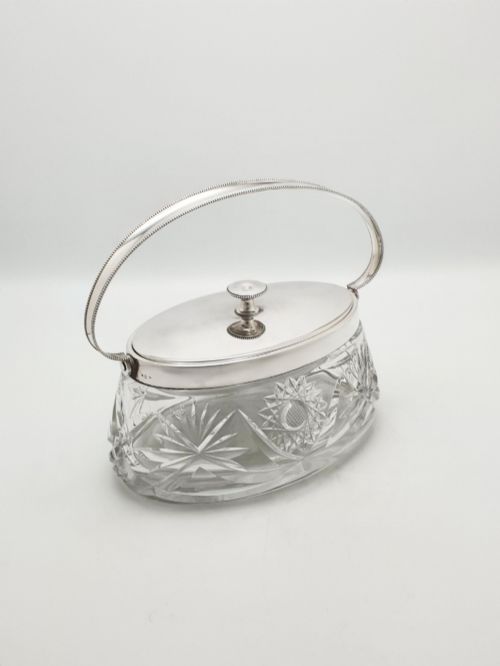
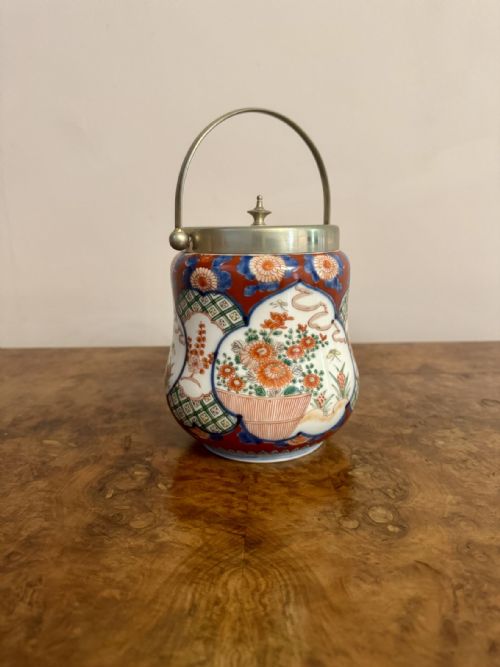
When you search for a vintage biscuit barrel, you encounter covered vessels engineered for parlour hospitality across the Victorian, Edwardian, and early twentieth-century periods. These lidded containers appear frequently in ceramic, glass, and silver plate, often featuring swing handles and matching stands designed for dining room presentation. Many examples survive from the Edwardian era and the late nineteenth century, reflecting the domestic rituals of tea and social entertaining.
The form spans straightforward cylindrical jars to elaborate novelty shapes including hats, weights, and drums. You will find earthenware bodies alongside cut glass and oak mountings, showing how dining table accessories evolved in response to shifting interior tastes. Some pieces integrate silver-plated mountings with ceramic bodies, while others rely entirely on faceted glass or stoneware construction.
What varies in quality
Quality differences emerge in the weight and crispness of the materials employed, separating standard production from finer workshop outputs. Heavier gauge silver plating and deeper, sharper glass cutting signal superior manufacturing standards. The precision of the lid hinge and the balance of the swing handle also indicate the level of care invested by the maker.
Decorative execution further defines the tier of the piece, from hand-painted enamel and heraldic finials to standard moulded earthenware. Maker attribution to established firms like Elkington, Doulton, or Wedgwood often accompanies higher refinement in both the ceramic body and the metal mounts.
Vintage Biscuit Barrel Retail Price Guide 2026
Typical asking prices for vintage biscuit barrel among the pieces listed under this phrase on Sellingantiques today, from the lower quarter to the upper quarter. They describe what is for sale here now, not the wider market.
Listings feature biscuit barrels spanning the Victorian, Edwardian, and George V periods, utilising silver plate, cut glass, oak, and stoneware.
Doulton Lambeth·Elkington·WMF·Crown Devon·Carlton Ware·Wedgwood·John Grinsell And Sons·James Dixon And Sons
The Vintage Biscuit Barrel Glossary
- Silver Plate
- A layer of silver fused to a base metal substrate, commonly used to mount rims, lids, and handles on glass and ceramic bodies.
- Jasper Ware
- A fine-grained, unglazed stoneware developed by Wedgwood, typically featuring white relief ornamentation against a coloured matte ground.
- Flow Blue
- A cobalt blue transfer-printing technique that intentionally blurred during kiln firing to create a rich, hazy aesthetic on earthenware.
- Hobnail Cut
- A raised, faceted glass pattern resembling the hobnails on sturdy boots, catching the light across the body of the barrel.
- Swing Handle
- An arched metal handle attached to opposite sides of the rim, allowing the lid to open freely while remaining mounted to the vessel.
Vintage Biscuit Barrel: Frequently Asked Questions
What is a vintage biscuit barrel?
A vintage biscuit barrel is a covered container specifically designed to hold and protect biscuits on the dining or drawing room table.
These vessels emerged as essential tableware during the Victorian period and continued through the Edwardian era into the twentieth century, combining utility with decorative craftsmanship.
How were biscuit barrels used?
They were kept filled in the parlour or dining room to serve guests during afternoon tea and formal social gatherings.
The fitted lid helped keep the baked goods dry and crisp within the decorative ceramic, glass, or wooden housing.
How do I identify an Edwardian biscuit barrel?
Edwardian examples often feature bright cut glass, floral transfer prints like flow blue, or lighter silver-plated mountings compared to heavier Victorian designs.
Stylistic cues lean towards early twentieth-century lightness, occasionally incorporating Jugendstil motifs or simpler geometric cutting.
Are all biscuit barrels made of glass?
No, materials vary widely across ceramic, stoneware, oak, and earthenware alongside cut glass and silver plate.
Many pieces pair a ceramic body with a metal lid and swing handle, while others utilise solid oak staves or entirely glass construction.