
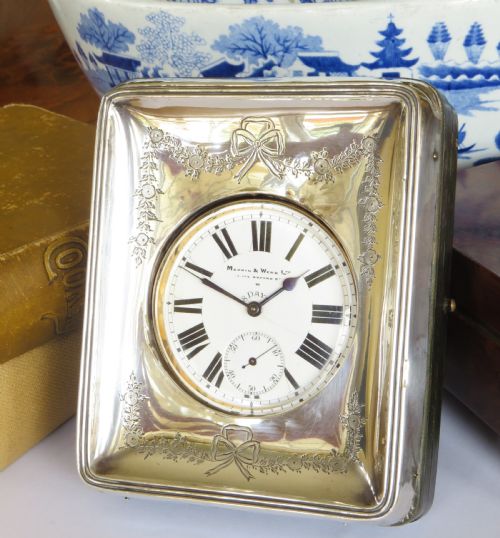


Vintage Bedside Clock
A vintage bedside clock brings mechanical character and period style to a mantel or night table, ranging from polished Art Deco chrome to Victorian silver cases.
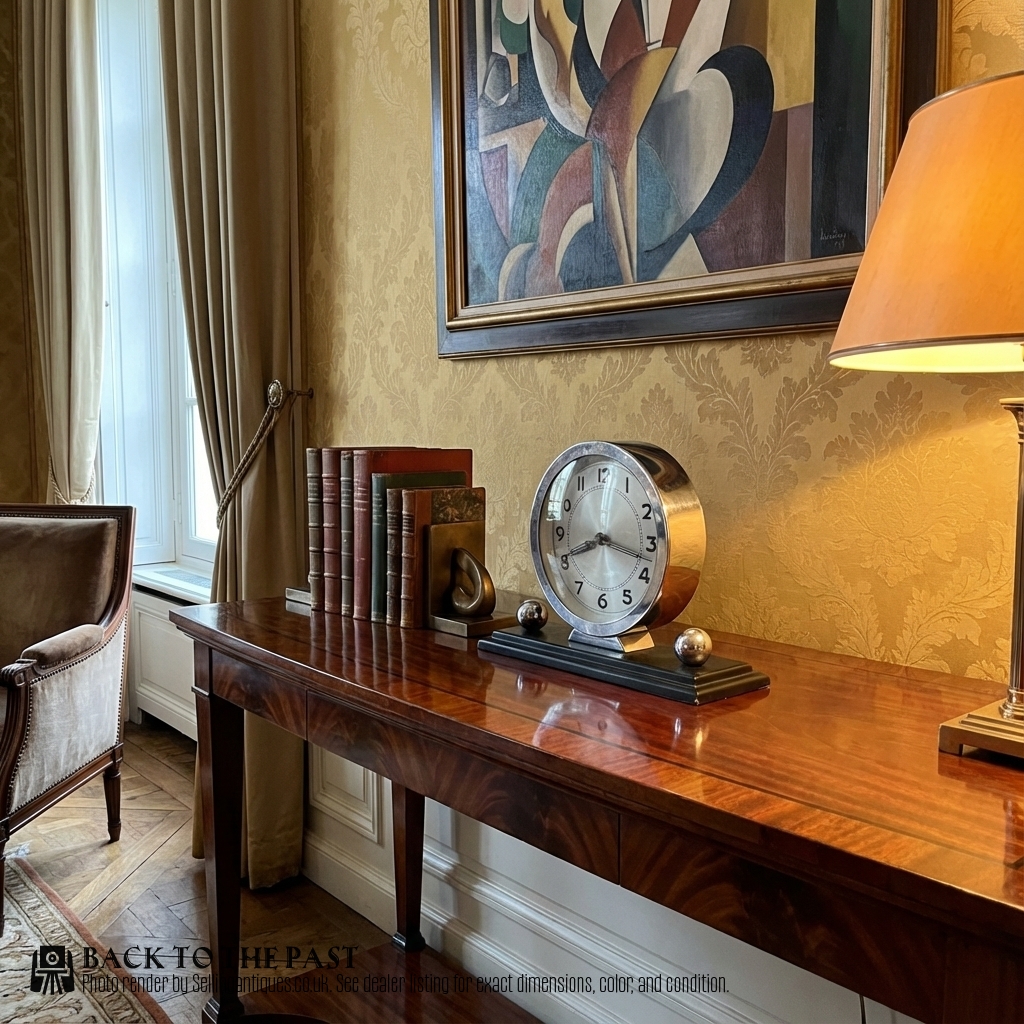
Vintage Bedside Clock
A vintage bedside clock is a portable timepiece designed for personal spaces, often doubling as a travel clock or a decorative desk accessory. These pieces span the Victorian, Edwardian, and Art Deco eras, capturing shifts in domestic design from ornate metalwork to modernist geometry.
The most common examples on this page date from the 1930s, taking the form of chrome-plated travel clocks, folding silver cases, and architectural desk clocks. Alongside these, buyers find miniature carriage clocks in silver and brass, electric mantel designs, and combination pieces that merge a lamp with a dial.
How they were made
Maker workshops built these timepieces using metals such as brass, gilt metal, and chrome-plated steel, frequently housing them in hallmarked sterling silver cases or heavy glass bodies. Artisans applied decorative techniques like hammering, chasing, and blue glass enamelling to enrich the metal surfaces.
Movements ranged from standard spring-driven mechanisms to eight-day movements and early electric systems. Many travel designs incorporated folding leather or silver outer cases to protect the glass dials during transit.
Vintage Bedside Clock Retail Price Guide 2026
Typical asking prices for vintage bedside clock among the pieces listed under this phrase on Sellingantiques today, from the lower quarter to the upper quarter. They describe what is for sale here now, not the wider market.
Listings span the 19th Century, Victorian, Edwardian, and 1950s periods, with a strong concentration of Art Deco pieces from the 1930s.
What varies in quality
Quality rests in the weight and finish of the casing, whether it is solid silver with crisp hallmarks or heavy chrome-plated metal with clean modernist lines. Superior examples display refined dial typography and intricate case details rather than plain stamped plates.
The presence of named makers, specialist retailers, or documented presentation inscriptions elevates the standing of a piece. Mechanical sophistication, such as an eight-day movement or an alarm function, also separates standard timepieces from high-end luxury items.
Mappin & Webb·Harrods of London·Van Cleef & Arpels·Smiths·Garrards·Jaeger LeCoultre·Blangy·Jaz·Bayard
The Vintage Bedside Clock Glossary
- Carriage clock
- A small, portable spring-driven timepiece originally designed for officers travelling in carriages. They typically feature glass panels on all sides and a swing handle on top.
- Strut clock
- A timepiece supported by a hinged prop or leg on the back, allowing it to stand upright on a desk or bedside table. These often feature silver or leather-backed folding cases.
- Travel clock
- A compact timepiece housed in a protective case, designed to be folded or closed shut when moved. Many include sliding metal doors or hinged leather outer shells.
- Art Deco
- A design style spanning the 1920s and 1930s characterised by sleek geometric shapes, stylised motifs, and modern industrial materials like chrome and bakelite.
- Hallmark
- An official stamp applied to precious metal items, indicating the purity of the silver, the assay office, and the year of manufacture.
Vintage Bedside Clock: Frequently Asked Questions
How do I wind an eight-day clock?
Eight-day clocks utilise a mainspring that requires winding approximately once a week using a matching key or a built-in winder. Care should be taken not to overwind the mechanism once resistance is felt.
Regular servicing keeps these vintage movements running accurately and prevents the oils from gumming up over time.
Are travel clocks meant for daily bedside use?
Travel clocks work well on a bedside table because their compact size suits smaller surfaces. Many include folding cases that protect the dial when not in use.
These pieces were originally built for portability, making them durable enough for daily placement by the bed.
How do I clean a silver clock case?
Silver clock cases benefit from gentle cleaning with a soft microfibre cloth to remove dust and tarnish. Care must be taken to avoid getting polish on the clock face or inside the movement.
For pieces with intricate chasing or hammering, a non-abrasive silver foam helps preserve the raised pattern.
How can I tell a 1930s clock from a Victorian one?
Victorian clocks often display ornate details, heavy silver cases, and traditional numerals, whereas 1930s pieces lean towards Art Deco minimalism with chrome, geometric forms, and Bakelite. The choice of materials and font styles on the dial usually signals the period.
Examining the backplate and hallmarks can also confirm the exact decade of manufacture.